Airport Tips 2026: The Complete Guide for Smarter Travel
Updated

Share

Airports in 2026 are faster, more expensive, and more complicated than ever. U.S. airports alone handled over 900 million passengers in 2024, and that number is climbing. Whether you fly twice a year or every week, what you do before, during, and after your airport experience can mean the difference between a smooth trip and a stressful one.
This guide covers every major airport tip travelers actually need in 2026 from security tricks and lounge access to gate strategy and carry-on hacks. These are not generic reminders to arrive early. These are the data-backed, field-tested strategies that save real time, real money, and real frustration.
Why Airport Tips Matter More Than Ever in 2026
The TSA screened 895 million passengers in fiscal year 2024, up 5.2% from the year before. Airport infrastructure has not scaled at the same pace. The result is longer queues, tighter gates, and more friction at every checkpoint. Add to that a wave of new airline fees and bag fees alone generated over $7.3 billion for U.S. carriers in 2023 and the average traveler is navigating a significantly more complex system than they were even five years ago.
Understanding why airport hacks matter in 2026 starts with knowing how much the travel landscape has shifted. This breakdown of key airport strategies shows exactly how much time and money travelers leave on the table by skipping basic preparation.
Here is what has changed in airport travel that makes preparation more critical than ever:
- TSA checkpoint wait times averaged 12.3 minutes in 2024, but spiked above 45 minutes at major hubs during peak windows
- Airlines introduced or raised over 20 new fee categories between 2023 and 2025
- REAL ID enforcement is now fully active as of May 7, 2025, changing what IDs are accepted at checkpoints
- Biometric boarding gates now operate at over 200 U.S. airports, reshaping the check-in process
- International travel added ETIAS authorization requirements for U.S. passport holders visiting Europe starting in 2025
Before You Fly: The Airport Preparation Checklist
Book Smarter and Save More
The average domestic airfare in the U.S. in 2024 was $371 per round trip, according to the Bureau of Transportation Statistics. Booking between 21 and 60 days in advance typically yields the lowest prices for domestic routes. For international, the optimal window is 4 to 6 months out. Tuesday and Wednesday departures are on average 15% to 20% cheaper than Friday or Sunday flights.
Fare alerts through Google Flights, Hopper, or Kayak track price movement so you are not manually checking every day. Setting alerts for flexible dates plus or minus 3 days from your target can surface significantly lower fares without changing your plans much.
| Booking Window | Avg. Savings vs. Last Minute | Best For |
| 60+ days out | Up to 30% | International routes |
| 21-60 days out | 15-25% | Domestic routes |
| 7-20 days out | 5-10% | Last-minute deals |
| Under 7 days | 0% or above market | Avoid unless flexible |
Documentation and ID Requirements in 2026
REAL ID enforcement became mandatory for domestic air travel on May 7, 2025. If your state-issued ID does not carry the gold or black star symbol, it will no longer be accepted at TSA checkpoints for boarding. You will need a U.S. passport, passport card, or other TSA-approved alternative.
International travelers heading to Europe need to be aware that the EU’s ETIAS system, the European Travel Information and Authorization System, is expected to be fully active in 2025. It costs 7 euros and is valid for three years. Skipping this step means being denied boarding before you even reach the airport. Check the official ETIAS website at etias.com for the latest status.
Always photograph your passport, boarding pass, and travel insurance documents before leaving home. Store copies in a secure cloud location separate from your phone. If your device is lost or stolen en route, you still have access to everything you need.
Enroll in a Trusted Traveler Program
TSA PreCheck costs $85 for a five-year membership and lets you use dedicated lanes with no laptop removal, no shoe removal, and no belt removal. Global Entry costs $120 for five years and includes PreCheck plus expedited customs re-entry for international flights. CLEAR uses biometrics to skip the ID check line entirely and costs $189 per year, though it is free with certain credit cards.
| Program | Cost | Term | Key Benefit |
| TSA PreCheck | $85 | 5 years | Expedited security lanes |
| Global Entry | $120 | 5 years | PreCheck + fast customs |
| CLEAR | $189/year | Annual | Skip ID check entirely |
| CLEAR + PreCheck | Combined | Annual | Fastest overall lane |
At the Airport: Smart Moves from Curb to Gate
Arrival Timing Strategy
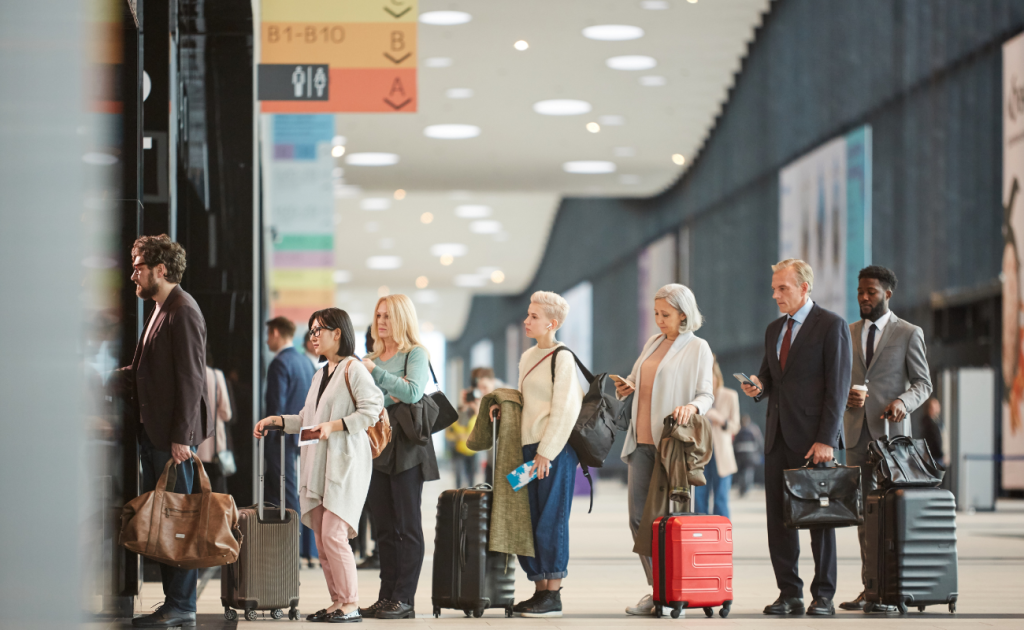
The standard recommendation is to arrive 2 hours before domestic flights and 3 hours before international. That is a solid baseline, but it ignores variables that matter. If you have TSA PreCheck or CLEAR, 90 minutes is plenty for most domestic routes. If you are flying out of a large hub like JFK, LAX, or ORD on a Friday afternoon, 2.5 hours is safer even with PreCheck.
The busiest TSA checkpoint hours at U.S. airports are 5:00 to 7:00 a.m. and 3:00 to 6:00 p.m. If you can avoid those windows, you will move faster with fewer people ahead of you. Mid-morning and early afternoon slots are consistently the least congested.
Many airports now show live security wait times on their websites and apps. JFK, for example, publishes real-time wait data at jfkairport.com. The TSA also publishes average wait times at major checkpoints through its app. Checking these 30 to 60 minutes before departure gives you a real number, not a guess.
How to Pack for Security Speed
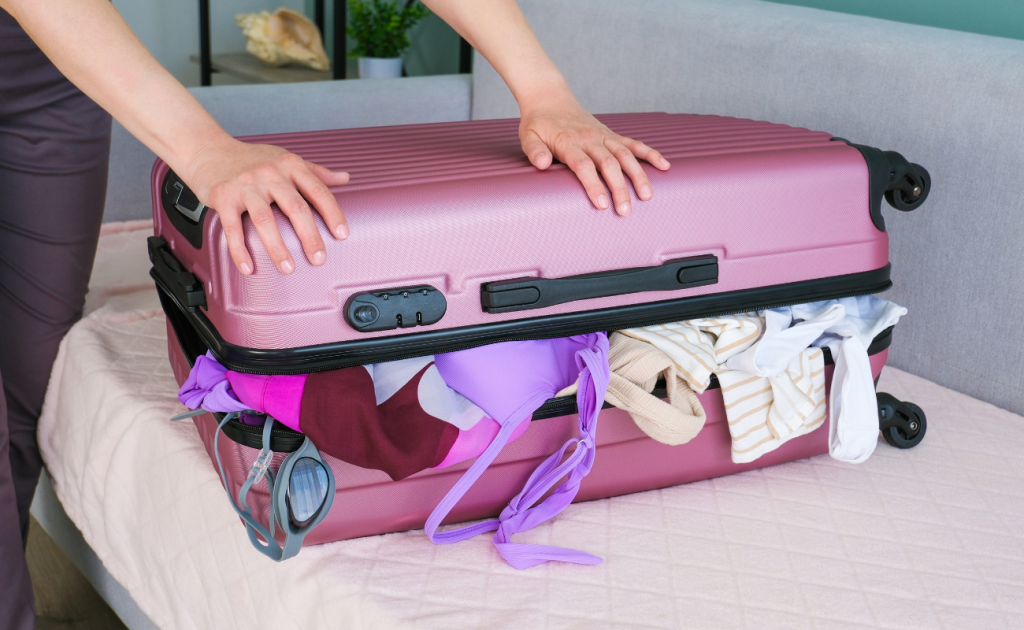
The single biggest cause of TSA delays is carry-on packing. Here is the checklist that moves you through fastest:
- Put laptops and large electronics in an easy-access outer pocket
- Use a quart-sized, clear zip bag for all liquids before you reach the checkpoint
- Wear slip-on shoes or shoes that come off in under three seconds
- Empty your pockets completely before reaching the conveyor belt
- Do not wear a belt put it in your bag before you leave home
- Keep your boarding pass accessible, not buried in email
If you are packing carry-on only, understanding the current carry-on luggage rules for 2026 by airline is essential. Size limits, personal item policies, and enforcement levels differ significantly across carriers.
Gate Strategy and Boarding Position
Getting to your gate early matters more than most people realize. It is not just about seat availability; overhead bin space fills up within the first two boarding groups on most full flights. Once bins are full, gate agents check bags at no charge, but that adds time on both ends of your trip.
Airlines have tightened boarding group enforcement in 2025. American and Delta have invested in software to flag early boarders and turn them away at the gate. Boarding in the right group also protects your carry-on space, your seat choice if you bought a non-assigned ticket, and your ability to stow larger items without checking.
| Boarding Group Tier | Who Qualifies | Bin Space Availability |
| Group 1 (First/Business) | Premium cabin, elite status | 100% available |
| Group 2 (Priority) | Credit card holders, higher status | 85-95% available |
| Group 3 | Basic frequent flyers | 60-75% available |
| Group 4-5 | Standard economy | 20-40% available |
| Last group | Basic economy, no status | Often none |
How to Handle Delays and Cancellations Like a Pro
Know Your Passenger Rights Before They Matter
U.S. travelers do not have the same passenger protections as European travelers under EU261, but the rules have been tightening. The DOT’s final rule issued in April 2024 now requires airlines to issue automatic cash refunds not vouchers for cancellations and significant delays. A significant delay is defined as 3 or more hours for domestic flights and 6 or more hours for international.
When your flight is delayed, take these steps immediately:
- Screenshot your original itinerary and departure time before any changes appear in the app
- Call the airline’s customer service line while also standing in the rebooking queue whichever connects first wins
- Ask agents specifically about the reason code for the delay weather delays limit airline liability; mechanical delays do not
- Request meal vouchers for delays of 3 hours or more many airlines provide them but do not advertise that policy
- Check partner airline availability if your carrier cannot rebook you for 24 hours or more
Rebooking and Compensation Tactics
Airlines are required to rebook you on the next available flight at no additional cost when they cancel your flight or cause a significant delay. That includes flights on partner airlines if the next available seat on your original carrier is more than 24 hours away. This is a right, not a favor.
If you are stuck overnight due to a non-weather cancellation or delay, the DOT rule effective from 2024 requires the airline to provide hotel accommodations and meal vouchers. Not all agents volunteer this information. You need to ask directly. If they say it is weather-related, request the delay code in writing before accepting any voucher.
Lounge Access and Airport Comfort Tips
How to Get Airport Lounge Access Without Paying Full Price

Full lounge memberships like the Amex Centurion Lounge or United Club cost $650 per year or more. But there are cheaper paths in. The Chase Sapphire Reserve card provides Priority Pass membership with access to over 1,300 lounges globally. The Capital One Venture X card offers access to Capital One Lounges plus Priority Pass. Both cards charge around $395 to $550 annually but offset much of that cost through travel credits.
Day passes at most airport lounges run $50 to $75 per person. For a solo traveler flying four or more times per year, a card with lounge access almost always pays for itself through the combination of lounge value, travel credits, and other perks.
| Access Method | Cost | Lounge Network | Guest Policy |
| Amex Platinum | $695/year card fee | Centurion + Priority Pass | 2 guests free |
| Chase Sapphire Reserve | $550/year card fee | Priority Pass 1,300+ | Guests at $27 each |
| Capital One Venture X | $395/year card fee | Capital One + Priority Pass | 2 guests free |
| Day pass (walk-in) | $50-$75 per visit | Varies by lounge | Paid separately |
Making the Most of Your Time in the Terminal
Even without lounge access, there are meaningful ways to improve your airport experience. Most major U.S. airports now offer free or low-cost Wi-Fi. Starlink-powered airport Wi-Fi is being piloted at several hubs in 2025, delivering speeds above 150 Mbps compared to the 10 to 20 Mbps traditional airport Wi-Fi averages. Connectivity quality is improving faster than most travelers realize.
Hydration is one of the most overlooked airport comfort factors. Cabin air on aircraft drops to 10 to 15 percent humidity, significantly lower than the 30 to 50 percent we are used to on the ground. Starting the flight already dehydrated makes jet lag worse, raises fatigue, and increases headache risk. Bring an empty water bottle through security and fill it at a post-security fountain.
Overnight Flights and Long Haul Airport Strategy
Red-Eye Flights: How to Prepare at the Airport
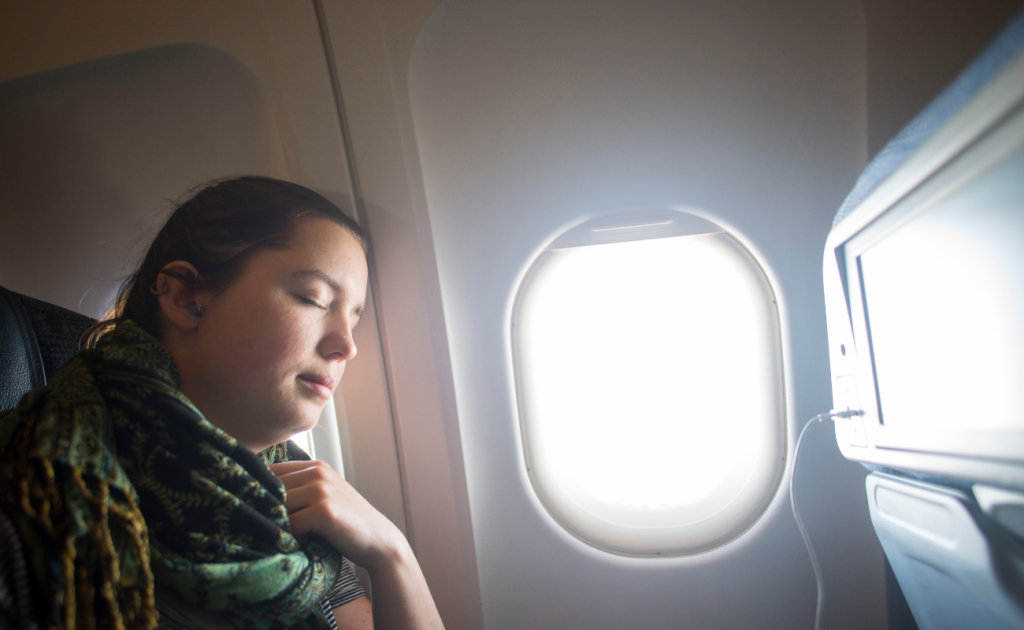
Red-eye flights are often the cheapest and least crowded option for long-haul domestic travel. But most travelers board them already tired, without a plan for sleeping, and arrive feeling worse than if they had taken a daytime flight. The airport phase of a red-eye trip matters more than people give it credit for.
There is real science behind how to sleep on overnight flights. A detailed guide on red-eye flights and how to sleep using science-backed methods covers exactly what to do in the hours before boarding to maximize your rest on board.
At the airport before a red-eye, the goal is to minimize stimulation. Avoid bright terminal lighting where possible. Skip alcohol even if it is free in the lounge it disrupts sleep architecture and leaves you more fatigued on arrival. Have a light meal two to three hours before departure rather than eating heavily right before boarding. Pack your sleep kit eye mask, ear plugs or noise-canceling headphones, neck pillow in your personal item, not in the overhead bin.
International Travel: Airport Tips That Are Often Missed
Customs and immigration clearance is where most international travelers lose the most time. The busiest customs halls at JFK’s Terminal 4 and LAX’s Tom Bradley International Terminal can see wait times exceed 90 minutes during peak international arrival windows. Global Entry cuts that to under five minutes in most cases.
If you are traveling internationally for the first time, the airport experience feels very different from domestic travel. Each country has its own customs declaration process, and many now use digital systems. Australia, Canada, and the UK all have electronic declaration forms that can be completed before arrival. Japan uses Visit Japan Web for customs pre-clearance. Doing this in advance at the airport lounge or gate saves meaningful time at arrival.
Technology and Connectivity Tips at the Airport
Using Your Phone Smarter at the Airport

Download your airline app and enable push notifications before you reach the airport. Gate changes, delay alerts, and boarding notifications hit the app faster than departure boards in most cases. American, Delta, and United all push gate change alerts within 60 to 90 seconds of a change being logged by the operations team.
One thing many travelers get wrong is disabling Bluetooth when they switch to airplane mode. In reality, Bluetooth works in airplane mode on both iPhone and Android meaning your wireless headphones, keyboards, and devices all function during the flight without violating any rules.
Power banks are essential for long airport days. Bring one with at least 10,000 mAh capacity if you are traveling with multiple devices. Lithium-ion power banks must be in carry-on baggage they cannot go in checked luggage under FAA rules. The limit is 100 Wh per battery, or roughly 27,000 mAh. Anything above that requires airline approval.
Navigating Airport Wi-Fi and Security Risks
Public airport Wi-Fi is convenient but carries real security risks. Cybersecurity researchers have consistently demonstrated that airport networks are vulnerable to man-in-the-middle attacks where a malicious actor intercepts data between your device and the router. If you must use public Wi-Fi, use a VPN. If you do not have one, use your phone’s mobile hotspot instead it is encrypted by default.
The alternative is using mobile data through your carrier’s international plan or a local SIM. For frequent international travelers, an eSIM service like Airalo or Holafly provides data in 190+ countries at significantly lower rates than carrier roaming plans. Coverage, speed, and cost vary by country, so comparing options before you land is worth doing.
Solo and First-Time Traveler Airport Tips
First International Trip: What to Expect at the Airport
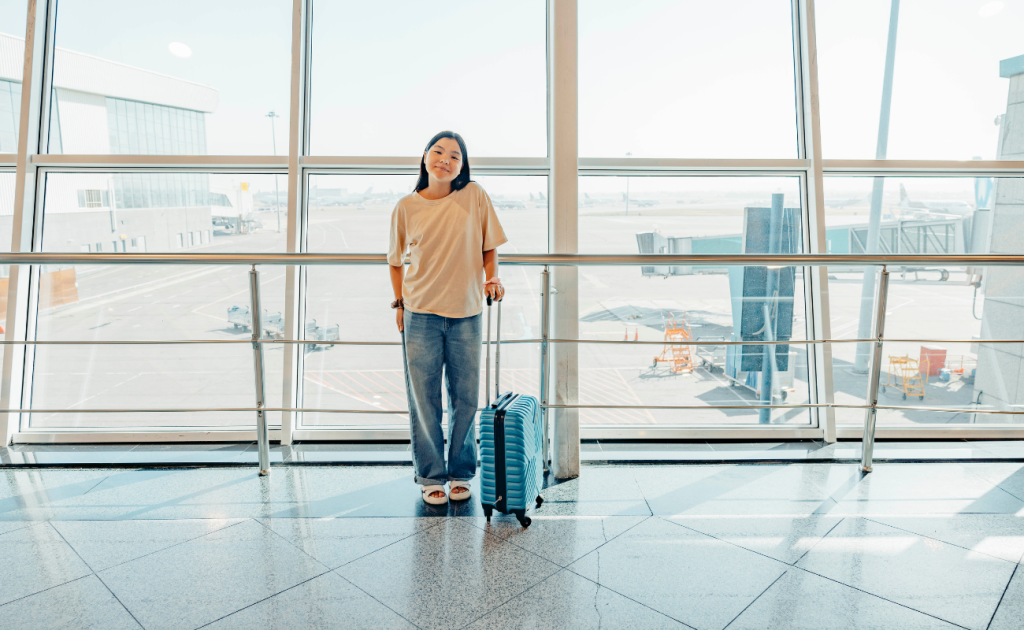
For first-time international travelers, the airport is the most overwhelming part of the journey. The process looks more complex than it is. Check in online 24 hours before departure. Print or download your boarding pass. Bring your passport not just your ID. Arrive three hours early for international departures from U.S. airports.
A full walkthrough on how to plan an international solo trip for the first time covers the airport process in detail alongside visa requirements, currency, and destination research all the parts that feel overwhelming when you are doing it for the first time.
At security, follow the lead of experienced travelers in front of you. Watch how they handle the tray shoes off, laptops out, liquids separate, pockets empty. You do not have to figure it out from scratch. The process is learnable in one or two runs.
Solo Traveler Safety and Logistics at the Airport
Solo travelers should share their itinerary with at least one trusted contact before leaving home. Include flight numbers, layover airports, and accommodation details for the first night. If something goes wrong a missed connection, a stolen bag, a medical situation someone on the ground needs to know where you were supposed to be.
Keep your most important documents passport, boarding pass, credit card, phone in a single location on your body, not spread across multiple bags. A neck wallet or inner jacket pocket works well. If you are carrying cash, keep small amounts accessible and larger reserves in a separate, harder-to-reach location.
Sustainable Travel at the Airport
Carbon emissions from aviation account for approximately 2.5% of global CO2 emissions, with a total climate impact estimated to be two to four times that figure when non-CO2 effects like contrails are included. Travelers who want to reduce their footprint have more options in 2026 than they did even two years ago.
The debate between sustainable aviation fuel and carbon offsets is an important one for environmentally conscious travelers. SAF reduces lifecycle emissions by up to 80% compared to conventional jet fuel, but supply is still severely limited. Offsets are cheaper and more available, but their quality varies widely.
At the airport itself, small choices compound. Skipping the printed boarding pass saves paper. Using the airport’s recycling bins which most major hubs now separate by type reduces landfill contribution. Choosing a direct flight rather than a connecting one also reduces your total carbon footprint significantly, as takeoff and landing produce disproportionately high emissions per mile.
Your Next Trip Starts Here
Every airport experience is a system you can learn to navigate faster, cheaper, and with far less stress. The tips in this guide are not one-off tricks they are repeatable habits that compound over dozens of trips. Arrive informed. Pack smart. Know your rights. Use the tools available to you.
For more travel guides, airline reviews, and airport strategy content, visit TalkTravel.com your resource for data-driven travel decisions in 2026.
Conclusion
Airports in 2026 reward preparation. With over 900 million passengers moving through U.S. airports annually and airline fees hitting record levels, the gap between a prepared traveler and an unprepared one has never been wider. The right ID, the right program, the right packing approach, and the right knowledge about your passenger rights can save you hundreds of dollars and hours per year.
Whether you are a first-time flyer or a road warrior chasing elite status, the fundamentals covered in this guide apply every time you step foot in a terminal. Bookmark it, share it, and use it before your next flight.
Frequently Asked Questions
How early should I arrive at the airport in 2026?
Arrive 2 hours before domestic flights and 3 hours before international flights. If you have TSA PreCheck or CLEAR, 90 minutes is usually enough for domestic routes. Add extra time during peak hours (5-7 a.m. and 3-6 p.m.) at major hubs.
What ID do I need to fly domestically in 2026?
You need a REAL ID-compliant state ID (marked with a gold or black star), a U.S. passport, a passport card, or another TSA-approved ID. REAL ID enforcement became mandatory on May 7, 2025. An ID without the star is no longer accepted at TSA checkpoints.
Is TSA PreCheck worth it in 2026?
Yes. At $85 for five years, TSA PreCheck costs less than $20 per year. It removes shoes, belts, laptops, and liquids from the screening process and gives you access to dedicated, faster lanes. For anyone flying more than twice a year, it nearly always pays for itself in time saved.
What are my rights if my flight is delayed or cancelled?
Under the DOT’s April 2024 final rule, airlines must issue automatic cash refunds not vouchers for cancellations and significant delays. A significant delay is 3 or more hours for domestic flights. Non-weather delays also trigger meal voucher and hotel accommodation requirements for overnight delays.
Can I use Bluetooth on airplane mode?
Yes. Bluetooth continues to function when airplane mode is enabled on both iPhone and Android devices. Airplane mode disables cellular and Wi-Fi radios, but Bluetooth can be manually re-enabled afterward. Your wireless headphones, mice, and keyboards all work during flights.
How do I get airport lounge access without a lounge membership?
The most cost-effective route is a travel rewards credit card that includes Priority Pass membership, such as the Chase Sapphire Reserve or Capital One Venture X. Both provide access to 1,300+ lounges globally. Day passes are also available at most lounges for $50 to $75 per person without a membership.
What are the best airport hacks for saving time and money?
Enroll in TSA PreCheck or Global Entry. Download your airline’s app for real-time alerts. Pack carry-on only to avoid bag fees. Check live security wait times before leaving for the airport. Use a travel credit card for lounge access and purchase protections. Book flights Tuesday or Wednesday for lower fares. Arrive at the airport during off-peak hours to avoid the longest queues.
Join the broader aviation and airport conversation on TalkTravel.
Share
Published by TalkTravel — a community of travel enthusiasts sharing real advice.
Have feedback? Contact our team.
More in Travel Destination

Travel Tips & Thoughts
How to Pack Shoes for Travel: Smart Hacks for Clean, Organized Packing

Travel Tips & Thoughts
Pack and Go Travel Tips: How to Travel Light Without Forgetting Essentials

Travel Destination
Dendera Temple of Hathor: Complete Travel Guide Egypt 2026

Travel Destination
5 Days Best Itinerary Tanzania Safari: Complete Guide 2026

Travel Destination
Luxury Travels All Around the World: Elite Agencies & Prices 2026

Travel Destination
How Much is a Trip to Paris for 2: Complete Budget Guide 2026

Travel Destination
Hot Air Balloon Festival Melbourne 2026 Complete Guide

Travel Destination