Carry-On Luggage Rules 2026: Airline Size Limits, Weight & Packing Tips
Updated

Share

Carry-on luggage rules in 2026 remain largely unchanged in terms of dimensions, with the standard U.S. size at 22 × 14 × 9 inches (including wheels and handles). However, enforcement has fundamentally shifted gate agents now use discretion rather than rigid bag sizers, oversized bags are checked more frequently, and fees have increased.
This comprehensive guide covers airline-specific sizes, personal items, weight limits, international variations, the October 2025 American Airlines policy change, common gate scenarios, expert packing strategies, and the best carry-on bags for 2026 compliance.
With full flights, reduced overhead bin space on regional jets, and rising gate-check fees ($40-$65), measuring your bag at home and packing strategically are essential to avoid surprises and extra costs.
What Changed: Carry-On Rules 2025–2026
Carry-on dimensions have not changed significantly, but key enforcement trends include:
1. American Airlines Removed Gate Bag Sizers (October 2025)
Starting October 6, 2025, American Airlines removed metal bag sizers from all gate areas nationwide. This marked a significant policy shift:
What Changed:
- Gate agents now visually assess bag sizes using discretion
- Agents instructed to “err on the side of the customer” when unsure
- Sizers still available at check-in lobbies for self-verification
- Follows similar move by United Airlines in 2020
What It Means for Travelers:
- Potentially more flexibility for borderline-sized bags
- Faster boarding (fewer gate bottlenecks)
- Less predictable enforcement (varies by agent/airport)
- Oversized bags still subject to checking and fees
Pro tip: American’s policy emphasizes catching oversized bags at check-in rather than at the gate, so use lobby sizers proactively to avoid surprises.
2. Increased Enforcement Despite Flexibility
While American eliminated gate sizers, enforcement overall has intensified:
- Gate agents use sizers more frequently on Delta, United, Southwest
- Full flights mean less tolerance for oversized bags
- Regional jets proactively gate-check even compliant bags due to bin size
3. Basic Economy Restrictions Expand
More airlines restrict overhead bin access for basic economy fares:
- Spirit, Frontier: Carry-on costs $35-$99 (only personal item free)
- United: Basic economy = personal item only (domestic; exceptions for international)
- American, Delta: Basic economy includes carry-on (for now)
4. Regional Jet Challenges
Smaller aircraft (American Eagle, United Express, Delta Connection) have limited overhead space:
- Even compliant bags often valet-checked at jet bridge
- Returned at arrival gate (not baggage claim)
- This is due to aircraft design, not size violations
5. Slight Fee Increases
Gate-check fees rose modestly in 2025-2026:
- American, Delta, United: ~$40 first bag (was $35)
- Low-cost carriers: $50-$99 at gate (Spirit, Frontier)
- Southwest: Still free (2 checked bags for all passengers)
You don’t need to fly every month to benefit from airline loyalty programs, our guide to the best frequent flyer strategies for the casual traveler explains how occasional flyers can still earn meaningful value without chasing elite status.
If your bag doesn’t arrive with you, United’s claims process moves faster when you act at the airport here’s everything you need to know about filing a United Airlines lost or delayed baggage claim before you leave the terminal.
Complete Carry-On Size Limits by Airline (2026)
U.S. carriers generally align on dimensions, but low-cost and international airlines vary significantly.
| Airline | Carry-On Size Limit | Weight Limit | Personal Item Size | Notes |
| American Airlines | 22 × 14 × 9 in | None (U.S. flights) | 18 × 14 × 8 in | Gate sizers removed Oct 2025 |
| Delta Air Lines | 22 × 14 × 9 in | None | 18 × 14 × 8 in | Focus on bin fit, strict enforcement |
| United Airlines | 22 × 14 × 9 in | None | 17 × 10 × 9 in | Basic economy = personal item only (domestic) |
| Southwest Airlines | 24 × 16 × 10 in | None | 18.5 × 13.5 × 8.5 in | Most generous U.S. carrier |
| JetBlue | 22 × 14 × 9 in | None | 17 × 13 × 8 in | Standard major carrier |
| Alaska Airlines | 22 × 14 × 9 in | None | 18 × 14 × 8 in | Consistent with oneworld partners |
| Spirit Airlines | 22 × 18 × 10 in | None | 18 × 14 × 8 in | Carry-on costs $37-$99 (personal item free) |
| Frontier Airlines | 24 × 16 × 10 in | None | 18 × 14 × 8 in | Carry-on costs $30-$99 (personal item free) |
| Hawaiian Airlines | 22 × 14 × 9 in | 25 lbs (inter-island) | 18 × 14 × 8 in | Weight enforced on smaller aircraft |
All measurements include wheels and handles. Earning miles is only half the equation; knowing the best ways to redeem miles can make the difference between a mediocre discount and a high-value long-haul flight or upgrade.
International Airlines (Stricter Rules)
International carriers often enforce smaller dimensions and weight limits:
| Airline | Carry-On Size | Weight Limit | Notes |
| British Airways | 22 × 18 × 10 in | 51 lbs | Generous but enforced |
| Lufthansa | 21.7 × 15.7 × 9 in | 17.6 lbs | Strict weight enforcement |
| Ryanair | 16 × 12 × 8 in | 22 lbs | Very restrictive, fees common |
| Emirates | 22 × 15 × 8 in | 15.4 lbs (economy) | Weight strictly checked |
| Air France | 21.7 × 13.8 × 9.9 in | 26.5 lbs | Standard European |
Always check your specific airline before international travel.
Personal Item Rules & Common Mistakes
Every airline allows one free personal item in addition to your carry-on. Personal items must fit completely under the seat in front of you.
Standard Personal Item Size: 18 × 14 × 8 inches
Acceptable personal items:
- Backpack (standard size, not hiking packs)
- Purse or handbag
- Laptop bag or briefcase
- Small duffel bag
- Camera bag (reasonable size)
What counts as personal items but often gets flagged:
- Overstuffed backpacks that don’t compress
- Large tote bags (must fit under seat)
- Multiple small bags (must consolidate)
- Duty-free shopping bags (may count toward allowance)
Common Personal Item Mistakes
1. Bringing Multiple Small Bags
Travelers often try carrying a purse + laptop bag + camera bag. Airlines count this as 3 items (only 2 allowed: 1 carry-on + 1 personal item).
Solution: Use a bag with compartments or nest smaller items inside your personal item.
2. Overstuffed Backpacks
A backpack technically within dimensions but bulging won’t fit under the seat.
Solution: Use packing cubes and compress contents. Test fit under a chair at home.
3. Assuming Duty-Free Doesn’t Count
Many airlines do count duty-free shopping bags toward your 2-item limit, especially if large.
Solution: If possible, fit duty-free items inside your carry-on or personal item before boarding.
4. Regional Jets = Tighter Enforcement
Smaller planes (CRJ, Embraer) have limited under-seat space. Personal items that work on mainline aircraft may not fit.
Solution: Bring your smallest personal item when flying regional jets.
Not every tote clears the sizer check the exact tote bag personal item size limits by airline before you pack to avoid a gate fee.
The answer depends entirely on your fare class find out exactly whether United Airlines charges for carry-on bags and which ticket types include one free.
Weight Restrictions: Who Enforces Them?
Most U.S. airlines don’t enforce carry-on weight limits for domestic flights. However, you must be able to lift your bag into the overhead bin without crew assistance.
Airlines That DO Enforce Weight:
International Carriers:
- Lufthansa: 17.6 lbs (8 kg)
- Emirates: 15.4 lbs economy, 22 lbs business
- Ryanair: 22 lbs (10 kg)
- Air France: 26.5 lbs (12 kg)
U.S. Carriers (Limited):
- Hawaiian Airlines: 25 lbs on inter-island flights
- Alaska Airlines: No official limit, but enforced occasionally
Practical Reality: Even without official limits, if you can’t lift your bag, you’ll be required to check it. Pack realistically for your physical capability.
Basic Economy vs. Standard Fares: Carry-On Differences
Basic economy fares often restrict overhead bin access to reduce costs:
| Airline | Basic Economy Carry-On Policy |
| United | Personal item only (domestic); carry-on allowed internationally |
| American | Carry-on included (all fare classes) |
| Delta | Carry-on included (all fare classes) |
| Spirit | Personal item only; carry-on costs extra |
| Frontier | Personal item only; carry-on costs extra |
| JetBlue | Carry-on included (Blue Basic and above) |
For travelers looking to build balances faster, this breakdown on how to earn airline miles faster covers practical tactics like partner spending, promotions, and credit-earning routes that don’t require constant flying.
Gate-Check Process: What to Expect
Even with compliant bags, you may need to gate-check due to:
- Full overhead bins (late boarding groups)
- Regional jets with limited space
- Visual assessment by gate agents
Gate-Check Scenarios
Scenario 1: Voluntary Gate Check (Free)
On full flights, airlines often request volunteers to gate-check bags for free:
- No fee charged
- Returned at arrival gate (jet bridge) or baggage claim
- Speeds up boarding
Scenario 2: Mandatory Gate Check (Size Violation)
Bag exceeds airline limits:
- $40-$65 fee (American, Delta, United)
- $99 fee at gate (Spirit, Frontier)
- Retrieved at baggage claim
Scenario 3: Valet Check (Regional Jets)
Aircraft can’t accommodate standard carry-ons:
- No fee (aircraft limitation, not passenger fault)
- Returned at jet bridge upon arrival
- Tag your bag clearly
Pro tip: If you know you’re flying a regional jet (CRJ-200, ERJ-145), pack essential items in your personal item. Your carry-on will likely be valet-checked regardless of size.
International Travel: Additional Complications
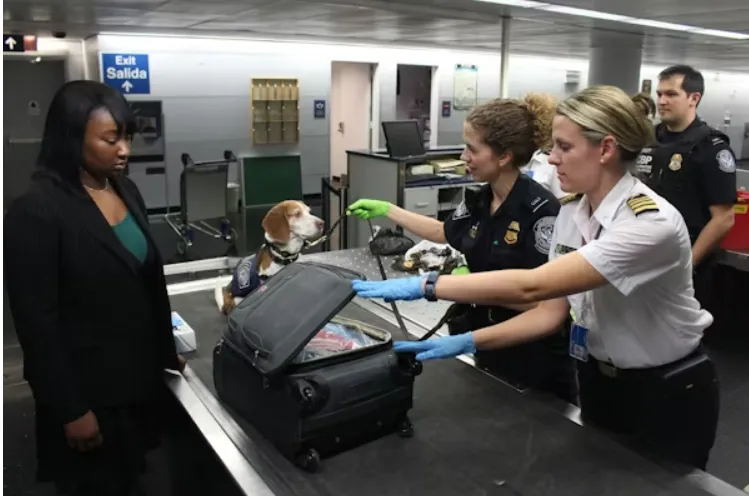
International flights introduce stricter enforcement and additional considerations:
1. Smaller Size Limits
European and Asian carriers often use smaller maximum dimensions (55 × 40 × 23 cm is common European standard vs. U.S. 56 × 36 × 23 cm).
2. Weight Enforcement
Unlike U.S. carriers, international airlines routinely weigh carry-ons at check-in and gates.
3. Fare Class Restrictions
Some international basic economy fares exclude carry-ons entirely:
- Ryanair: Basic fare = personal item only
- EasyJet: Similar restrictions
- Some Air Canada fares
4. Connecting Flights
When connecting through international carriers, you must meet the strictest rule of any airline on your itinerary.
Example: Flying United (U.S.) → Lufthansa (Germany)? Your bag must meet Lufthansa’s stricter limits (21.7 × 15.7 × 9 inches, 17.6 lbs).
5. Customs and Security Variations
Some countries have unique security rules affecting carry-ons:
- Liquids: 3.4 oz (100 ml) in most countries
- Electronics: May require separate screening
- Food: Restrictions vary by country
Expert Carry-On Packing Strategies for 2026
Smart packing isn’t about cramming, more it’s about peace of mind and compliance.
Strategy 1: Measure Your Bag at Home
Before every trip:
- Measure including wheels and handles
- Compare to airline’s published limits
- Test fit in a space approximating overhead bin (24″ wide × 18″ tall is common)
Pro tip: Most carry-ons sold as “airline compliant” actually measure 22.5-23 inches tall when you include wheels/handles. Verify with a tape measure.
Strategy 2: Use the “Essential Items” Principle
Place in personal item (always accessible):
- Medications and prescriptions
- Electronics (laptop, phone, chargers)
- Important documents (passport, boarding pass)
- One change of clothes
- Valuables (jewelry, cameras)
Reasoning: If your carry-on gets gate-checked, you retain access to essentials.
Strategy 3: Leverage Packing Cubes
Benefits:
- Compress clothing (saves 20-30% space)
- Organize by outfit/day
- Easy security screening (remove cubes as units)
- Prevent overstuffing (pre-measured compartments)
Recommended setup:
- Clothing cube (large)
- Toiletries cube (small, clear for liquids)
- Electronics cube (medium)
Strategy 4: Wear Heavy Items
Wear during boarding:
- Bulky jacket or coat
- Heaviest shoes
- Layered clothing
Benefit: Reduces bag weight and volume without “packing” these items.
Strategy 5: Follow the 3-1-1 Liquids Rule
TSA Requirements (U.S.):
- 3.4 oz (100 ml) maximum container size
- 1 quart-size clear zip-top bag
- 1 bag per passenger
Pro tip: Buy travel-size containers or decant products. Don’t bring full-size shampoo bottles they’ll be confiscated.
Strategy 6: Use Soft-Sided Bags for Flexibility
Hard-shell vs. Soft-sided:
- Hard-shell: Fixed dimensions, better protection
- Soft-sided: Can compress slightly, fits in tight bins
For maximum flexibility: Soft-sided bags have slight give when gate agents assess size.
Strategy 7: Check the Aircraft Type
Before booking/packing:
- Check your flight’s aircraft type (found on airline website or apps like FlightAware)
- Look up overhead bin size for that aircraft
- If it’s a regional jet (CRJ, ERJ), plan for valet check
Narrow-body aircraft with smallest bins:
- CRJ-200 (50 passengers)
- ERJ-145 (50 passengers)
- Dash 8 (37-78 passengers)
These aircraft can’t accommodate standard 22″ carry-ons.
How to Avoid Gate-Check Fees: 8 Pro Tips
1. Fly Southwest or check bags for free with airline credit cards
Southwest allows 2 free checked bags for everyone. Many airline credit cards (Alaska, Delta, American) provide a free first checked bag for cardholders.
2. Book early boarding
Priority boarding groups access bins before they fill. Options:
- Elite status
- Premium cabin tickets
- Paid priority boarding ($15-$30)
3. Measure bags BEFORE the airport
Use lobby bag sizers at check-in to verify compliance. Easier to check voluntarily than pay gate fees.
4. Consolidate at security
After security, rearrange items between carry-on and personal item to maximize efficiency.
5. Use compression bags for clothing
Roll-up compression bags (no vacuum needed) can reduce clothing volume by 30-50%.
6. Board as early as allowed
Even within your group, board promptly. Bins fill fast on full flights.
7. Consider checking bags for short trips
If your trip is 2-3 days and you’re checking bags anyway, skip the carry-on stress. Checking can be easier.
8. Use AirTags or Tile trackers
If your bag gets unexpectedly gate-checked, luggage trackers help locate it at baggage claim.
Best Carry-On Luggage for 2026 Compliance
Top Recommendations (All 22 × 14 × 9 inches or smaller):
1. Away Carry-On ($275)
- Exact dimensions: 21.7 × 13.7 × 9 inches
- Built-in battery (removable for TSA)
- Lifetime warranty
- Best for: Frequent travelers wanting premium durability
2. Samsonite Omni PC ($150-$200)
- Hard-shell polycarbonate
- Spinner wheels
- TSA-approved locks
- Best for: Budget-conscious travelers wanting hard-shell protection
3. Travelpro Maxlite 5 ($100-$130)
- Soft-sided, ultra-lightweight (4.8 lbs)
- Expandable (but measure before expanding!)
- Best for: Those maximizing weight capacity
4. Briggs & Riley Baseline ($500-$600)
- CX compression system (expands then compresses flat)
- Lifetime warranty including airline damage
- Best for: Those wanting buy-it-for-life quality
5. Amazon Basics Hardside Spinner ($40-$60)
- Budget option
- Meets size requirements
- Best for: Infrequent travelers or backups
Key feature to look for: Spinner wheels (4-wheel) for easier maneuverability vs. roller wheels (2-wheel).
Common Carry-On Questions Answered
Is 24-inch luggage too big for carry-on?
Yes. Standard U.S. carry-on limit is 22 × 14 × 9 inches. A 24-inch bag exceeds this. Exception: Southwest allows 24 × 16 × 10 inches.
Can I bring a carry-on AND a backpack?
Yes, if the backpack qualifies as a personal item (fits under seat). Most standard backpacks qualify; large hiking packs don’t.
Do airlines measure wheels and handles?
Yes. The published dimensions always include wheels and handles. This catches many travelers off-guard.
What happens if I show up with an oversized bag?
You’ll be required to check it and pay the applicable fee ($40-$99 depending on airline and timing).
Can I bring food in my carry-on?
Yes, with exceptions:
- Solid foods: Allowed
- Liquids/gels (soup, yogurt, peanut butter): Must follow 3-1-1 rule
- International: May face restrictions at customs
Do diaper bags count as a carry-on?
Most airlines allow a diaper bag in addition to your carry-on and personal item when traveling with an infant. Verify with your specific airline.
Are garment bags considered carry-ons?
Depends on size:
- Under 51 linear inches: Usually allowed as carry-on
- Over 51 linear inches: Must be checked
Conclusion: Preparation Equals Freedom
Carry-on luggage rules in 2026 reflect a travel landscape where preparation matters more than assumptions. While American Airlines’ removal of gate sizers suggests flexibility, enforcement across the industry remains strict and costs for non-compliance have risen.
Key Takeaways:
- Standard U.S. size: 22 × 14 × 9 inches (wheels/handles included)
- Southwest most generous (24 × 16 × 10 inches)
- International = stricter (smaller sizes, weight limits)
- Measure before you fly (test at home, verify at lobby sizers)
- Pack personal item strategically (essentials always accessible)
- Regional jets = expect valet check (aircraft limitation)
By choosing compliant luggage, packing intentionally, and understanding airline-specific policies, you protect your time, money, and sanity.
For ongoing travel tips, packing strategies, and airline policy updates, explore more guides at TalkTravel.
FAQs: Carry-On Luggage Rules 2026
What size carry-on luggage is allowed in 2026?
Most U.S. airlines allow carry-on bags up to 22 × 14 × 9 inches, including wheels and handles. Southwest allows slightly larger bags at 24 × 16 × 10 inches.
Do airlines weigh carry-on bags in 2026?
Most U.S. airlines don’t enforce weight limits, but you must be able to lift your bag unassisted. International airlines (Lufthansa, Emirates, Ryanair) enforce weight limits of 15-22 lbs.
Did American Airlines change their carry-on policy in 2025?
Yes. In October 2025, Americans removed metal bag sizers from gates. Gate agents now use visual discretion, but size limits (22 × 14 × 9 inches) remain unchanged.
Can I bring a backpack AND a carry-on?
Yes, if your backpack qualifies as a personal item (typically 18 × 14 × 8 inches max) and fits under the seat in front of you.
Note: Airline policies change frequently. Always verify specific requirements on your airline’s official website before traveling.
For the latest travel guides, airline reviews, and packing strategies, visit TalkTravel.
Share
Published by TalkTravel — a community of travel enthusiasts sharing real advice.
Have feedback? Contact our team.


