What Is a Coolcation — and Why the Geography of Desire Just Flipped


I live in San Francisco, which for most of its history was a city that apologized for its weather. The fog — locals eventually named it Karl, with the resigned affection you'd give a difficult roommate who at least pays the rent on time — was the thing you warned visitors about, the setup to a thousand Mark Twain jokes from uber drivers to visitors: about the coldest winter you ever spent being a summer here. Palm Springs was the perfect warm-weather escape. Many tourists wrongly thought the California of Anaheim was also found here.
Our climate has significantly shifted. On a random Tuesday this March I walked through Dolores Park and it was so packed with sunbathers you'd have thought it was August somewhere with actual seasons.

Friends of mine in Phoenix don't go outside between June and September — not comfortably, not safely. Palm Springs hits 115°F now. Scottsdale. Vegas. The places people used to flee to are the places people are fleeing from, and the city that spent decades apologizing for Karl is quietly one of the most enviable summer climates in North America.
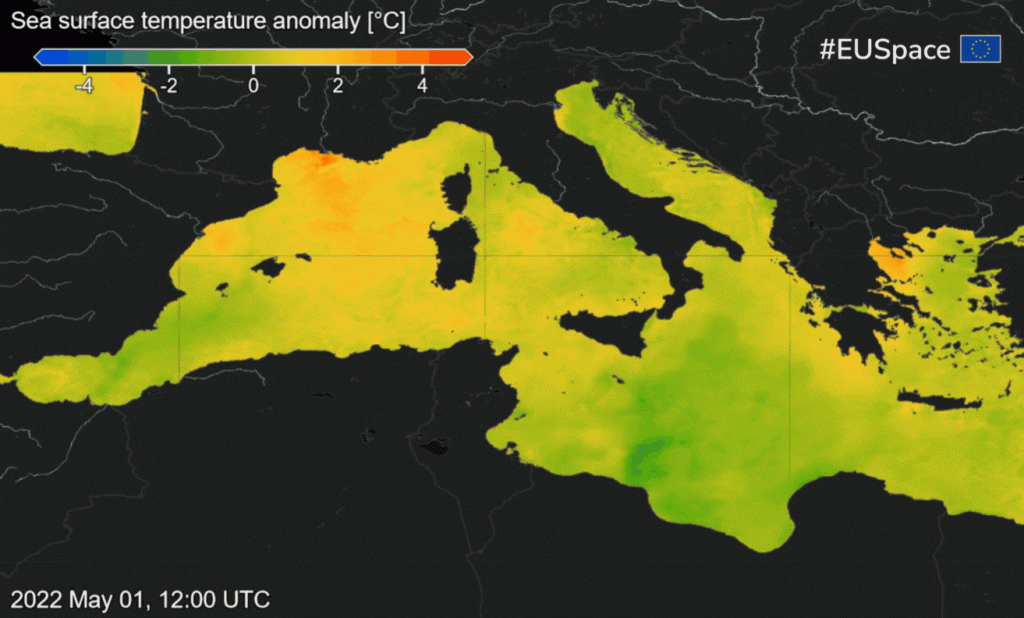
Summer in Europe now regularly reads like a weather emergency rather than a holiday forecast — 2021's heat dome killed hundreds in the Pacific Northwest, 2022's European heatwave pushed temperatures above 40°C in the UK for the first time in recorded history, 2023 broke the global average temperature record, and then 2024 broke it again. The Mediterranean, which built an entire tourism economy on the promise of perfect summer weather, now regularly sees July and August temperatures that keep tourists indoors between noon and 5pm. Phoenix had 31 consecutive days above 110°F in 2023. Japan's heat stroke deaths have climbed from 67 per year before 1993 to over 1,200 annually in recent years. Even places that felt immune — the Scottish coast, the Canadian interior, Siberia — are running warmer. The NOAA 2024 global climate report confirmed it was the hottest year in 175 years of recordkeeping, the first calendar year to average more than 1.5°C above pre-industrial temperatures — the threshold the Paris Agreement was designed to hold.
Previously the most desired hot spots for tourism were actually warm: New Yorkers going to Florida in winter, Canadians to Palm Springs, and Seattlites headed to Hawaii or Thailand. Now, we see people in warmer climates needing to flee to cooler climates. If you prefer depth over breadth, explore our guide to slow travel.
There's a word for what people are doing: coolcation. A deliberate trip somewhere cooler, often in the months when heat elsewhere has stopped being uncomfortable and started being dangerous. The portmanteau — cool + vacation — started appearing in travel media around 2023.
The Numbers Behind It
The World Economic Forum covered coolcations as an urban transformation story in 2024 and the data they cited is specific enough to take seriously. After record-breaking European heatwaves that summer, international arrivals to Norway, Ireland, and Sweden were all up more than 10%. Norwegian Air added 10 new routes between northern Norway and European cities — a commercial analysis and business strategy aligned for cool northern summers to justify permanent capacity.
Flight-ticketing firm ForwardKeys reported domestic air arrivals to Alaska up 10% year-on-year, driven by a 30% surge specifically from Dallas, Texas. Dallas. To Alaska. In summer. That's not a quirky travel choice — this is a mass behavioral shift endemic to enough regions around the world to call it a global shift.
The same summer, heat stroke-related deaths in Japan escalated to 1,253 annually — up from an average of 67 per year before 1993. In Hangzhou, 12.5 million people, the local government banned non-essential outdoor lighting in August just to keep the power grid from failing. In Shanghai the maximum electrical load exceeded 40 million kilowatts for the first time ever. It isn't surprising we are seeing this trend and should expect large transnational hospitality companies like Marriott to build new playbooks around this.
Heat Was the Long-Term Strategy
For most of the 20th century the entire architecture of vacation desire was built on the premise that warmth is the reward. The California dream. The Caribbean cruise. The family time-share to somewhere with a pool. Cold was what you escaped from.
The SF inversion is a useful case study because I've watched it happen in real time from inside it. The fog that locals apologized for is now a selling point. The natural air conditioning that made us seem like we'd drawn the short straw of California is now the thing people are relocating for. (My friends from LA talk about the weather here with the reverence they used to reserve for talking about LA weather to people from Seattle.)
San Francisco covered in fog

Fog from a San Francisco balcony
And you can see the same flip happening elsewhere. Edinburgh in August — genuinely, defiantly Scottish weather — is one of the most coveted summer experiences in Europe right now. Hokkaido, long overshadowed by Kyoto and Tokyo, is surging as a summer destination because it stays dramatically cooler than the rest of Japan. The Faroe Islands were once "for serious travelers only" and are now mainstream bucket list. Iceland has become so popular it is expanding policies to deal with overtourism — in a country where the main selling point is that it is cold and dark much of the year.

Heat Refugees
The most visible group is the heat refugees — people in Phoenix, Miami, Houston, coastal Southern Europe, the Middle East — whose local summer has become genuinely untenable. The outdoors is off the table at home, so they go somewhere it isn't. The Reuters measured Dallas-to-Alaska migration is the clearest example: people making vacation decisions about where they can actually be outside.
Before climate change accelerated, I might include myself as someone who also likes winter climates. As a demographic, we existed long before these heat waves: people who always preferred cool weather as an active pleasure, people whose ideal vacation involves moving — walking a city for hours, hiking something, wandering without a plan — rather than the horizontal inertia of a beach. In the 1980s coolcation wasn't a thing yet. Folks from Seattle still vacationed to Alaska for the nature, coolness, and even the similarity, not the contradiction, of the Pacific Northwest.

Why It Doesn't Reverse
Most travel trends are cyclical — they peak and then we move on. But the UN World Meteorological Organization confirmed the last decade was the hottest on record. Every summer that breaks a heat record converts more people. There's no scenario in which Phoenix in July becomes pleasant again, or the Mediterranean summer reverses.
Which creates a real strategic question for destinations. The places that win over the next decade aren't necessarily the ones with the best beaches — they're the ones where you can go outside in August without it being dangerous.
- →Scotland
- →Coastal Maine
- →The Azores
- →Hokkaido
- →Ireland
- →Coastal Oregon and Washington
- →The Pacific Northwest more broadly
Places that would have read as "a bit niche" or "not quite warm enough" in a travel conversation ten years ago are becoming first choices. See Coastal Maine for one destination example. Even Dolores Park in March feels like beach weather with plenty of citizens stripped down to swim trunks.
The traditional sun destinations are adapting with mixed success — more shade structures, adjusted outdoor programming hours, indoor alternatives for the worst of the day. Some are leaning into shoulder season marketing, which is an implicit admission that the peak summer product has been degraded. For now, it is still an advantage to market these hotspots as the "perfect Mediterranean summer" without acknowledging what's actually happening to temperatures. That strategy isn't forward-looking enough in the long run.
The Word Will Disappear Before the Thing Does
"Coolcation" will probably feel dated in five years — absorbed into normal usage the way "staycation" is now, the way you don't call something a staycation anymore, you just say you're staying home. What has my interest is that news media often focuses on the science of climate change, and perhaps this shift in where consumers vacation will feel more personal than the abstract facts of what a permanent change of 1 degree hotter might mean for the polar icecaps.
Frequently asked questions
What is a coolcation?
A coolcation is a deliberate trip somewhere cooler, often in the months when heat elsewhere has stopped being uncomfortable and started being dangerous. The portmanteau — cool + vacation — started appearing in travel media around 2023.
Why are coolcations becoming more popular?
Climate change has made traditional warm-weather destinations increasingly uncomfortable or dangerous in summer. International arrivals to Norway, Ireland, and Sweden were all up more than 10% after record-breaking European heatwaves, and domestic US air arrivals to Alaska surged 10% year-on-year.
What are good coolcation destinations?
Top coolcation destinations include Scotland, Coastal Maine, The Azores, Hokkaido (Japan), Ireland, Coastal Oregon and Washington, and the Pacific Northwest. These places stay dramatically cooler during summer months when other destinations become dangerously hot.
Is the coolcation trend permanent?
Yes. The UN World Meteorological Organization confirmed the last decade was the hottest on record. There is no scenario in which Phoenix in July becomes pleasant again, or the Mediterranean summer reverses. Every summer that breaks a heat record converts more travelers.
What kind of traveler are you — someone who needs to move through a city on foot in cool air, or someone who's genuinely happiest horizontal on a beach? If you have a coolcation story — or a place you've been fleeing to for years before there was a name for it — I'd love to hear about it in the topics.
Also on TalkTravel
What Is Slow Travel? The Case for Going Somewhere Slowly →