Sustainable Aviation Fuel vs Carbon Offsets: What Actually Works in 2026
Updated

Share
Sustainable aviation in 2026 is mostly about two tools. One is Sustainable Aviation Fuel (SAF). The other is carbon offsets. Both can reduce climate impact. Both can also be marketed in misleading ways.
This guide explains what SAF and offsets really do, what they do not do, and how to spot greenwashing before you pay extra. We’ll break down the real emissions impact and help you navigate the $2.8 billion voluntary carbon offset market targeting air travelers.
Travelers are actively discussing whether sustainable aviation fuel or carbon offsets make a real difference in 2026 over on the TalkTravel forums, sharing opinions and firsthand perspectives.
What “Sustainable Aviation” Means in 2026
Aviation still runs primarily on fossil jet fuel. Airlines and policymakers are trying to cut emissions while keeping planes flying. The current mainstream pathway relies heavily on SAF, plus a smaller share of operational improvements and offsets.
The key point is simple: “sustainable” does not mean “zero emissions.” It usually means “lower emissions than the baseline.” The details matter.
Commercial aviation produces approximately 2.5% of global CO₂ emissions, but understanding how airlines manage weather, routes, and fuel efficiency plays a major role in overall environmental impact.
Sustainable Aviation Fuel (SAF): What It Is and What It Can Achieve
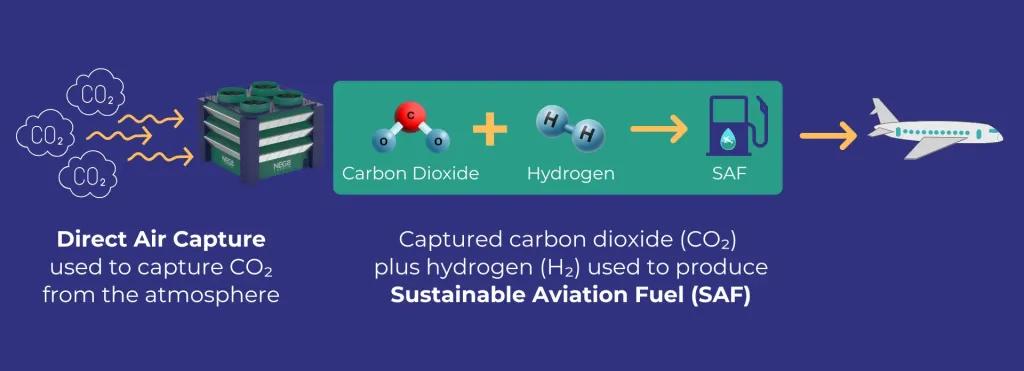
SAF is a drop-in aviation fuel designed to work with existing aircraft and infrastructure. It is often made from renewable or waste-derived feedstocks. It can reduce life-cycle greenhouse gas emissions compared to conventional jet fuel, depending on the pathway and feedstock.
Life-cycle matters. It includes emissions from production, processing, transport, and use. Some SAF pathways can deliver large life-cycle reductions, but results vary widely.
What SAF Does Well
SAF can cut emissions without waiting for brand-new aircraft fleets. It is compatible with current operations. It is one of the few options that can scale within today’s aviation system.
ICAO’s sustainability criteria establish standards for eligible fuels under CORSIA, the global carbon offsetting scheme for international aviation. These criteria assess feedstock sustainability and life-cycle emissions reduction thresholds.
Where SAF Can Disappoint
SAF is not automatically “green.” Climate benefit depends on feedstock, land-use impacts, and production method. That is why programs like ICAO’s CORSIA have sustainability criteria and life-cycle accounting rules for eligible fuels and lower-carbon aviation fuels (LCAF).
Supply is also a major constraint. SAF volumes in 2026 remain approximately 0.2% of total jet fuel consumption globally, with production costs 2-4 times higher than conventional fuel. The U.S. Department of Energy reports that scaling SAF production requires significant infrastructure investment and feedstock availability improvements.
| SAF Production Pathway | Typical Life-Cycle Emissions Reduction | Current Cost Premium vs Conventional Fuel |
| Used cooking oil (HEFA) | 60-80% | 2-3x |
| Agricultural residues | 70-85% | 3-4x |
| Power-to-liquid (e-fuels) | 85-95% | 4-6x |
Carbon Offsets in Aviation: What They Are and How They’re Used
A carbon offset is a credit that represents a claimed emissions reduction or removal elsewhere. Airlines may offer passenger offset add-ons. Offsets are also central to global aviation policy through CORSIA (Carbon Offsetting and Reduction Scheme for International Aviation), which is designed to address CO₂ emissions growth from international flights.
CORSIA includes monitoring, reporting, and verification elements and is being implemented in phases, with 2024-2026 referenced as the “First Phase” in FAA program materials.
What Offsets Do Well
Offsets can channel money into climate projects. They can be useful as a transitional tool, especially where direct emissions cuts are hard in the short term.
Where Offsets Can Fail
Offsets can become greenwashing if credits are low-quality or if claims are overstated. Investigations and analysis have raised concerns about eligible credit integrity, supply gaps, and reputational risk, especially when projects are controversial or lack strong safeguards.
The offset market faces verification challenges. A 2025 analysis found that 30-40% of voluntary carbon credits showed inflated emission reduction claims or questionable additionality meaning the projects would have happened anyway without offset funding.
For families navigating layovers while trying to minimize travel emissions, our guide to the best airports for family layovers in the United States helps you choose efficient routing that reduces both stress and fuel consumption.
How to Spot Greenwashing: A Traveler’s Checklist
If an airline or booking site makes “green” claims, look for specifics. These quick checks catch most misleading marketing.
1. Watch for Vague Language
Be cautious with phrases like:
- “Carbon-neutral flight”
- “Eco-friendly aviation”
- “Fly guilt-free”
If the claim lacks numbers, it’s a red flag. A credible claim states the mechanism (SAF use, operational change, or offsets) and the scope.
If you want better value from points and perks, start with this year’s strongest frequent-flyer programs
2. Ask “What Exactly Is Being Reduced?”
If it’s SAF, the relevant metric is life-cycle emissions reduction, not just “renewable.” ICAO emphasizes life-cycle emissions values for SAF in the context of CORSIA accounting.
3. If It’s Offsets, Check Quality Signals
High-integrity offsets typically address these concepts:
- Additionality: Would it happen without the credit revenue?
- Permanence: Will the carbon stay out of the atmosphere?
- Leakage: Does the problem shift elsewhere?
- Verification: Is it independently audited?
To avoid last-minute surprises at the gate, review what airlines count as a carry-on in 2026 before you pack.
4. Beware “SAF Claim Without SAF Proof”
Some offers say your purchase “supports SAF,” but do not clarify whether SAF is physically used on your route. Without transparency, it may function more like a contribution than a direct fuel swap. Strong programs explain how claims are accounted for and what standards apply.
IATA’s sustainable aviation fuel guidance outlines industry standards for SAF accounting and verification, helping travelers distinguish between direct SAF use and book-and-claim systems.
5. Don’t Confuse “Efficient” with “Low-Carbon”
New planes can be more fuel-efficient, but they still burn fossil jet fuel unless SAF is used. Efficiency helps. It is not the same as decarbonization.
Airbus reports that modern aircraft like the A350 achieve 25% better fuel efficiency than older models, but this improvement still operates within a fossil fuel framework without SAF blending.
SAF vs Offsets: Which Is “Better” in 2026?
If you’re choosing where your money goes, SAF is generally closer to direct emissions reduction inside the aviation system, while offsets rely on outcomes outside aviation. That said, SAF benefit varies by pathway, and offset quality varies by project.
A Practical Rule:
- Prefer transparent SAF programs with life-cycle accounting and recognized sustainability criteria
- If buying offsets, prefer high-integrity credits and avoid vague “neutral” claims that don’t disclose project type and verification
The reality is that neither option delivers zero-emission flying in 2026. SAF reduces life-cycle emissions by 60-85% in most pathways, while offsets theoretically compensate for emissions but depend entirely on credit quality.
What Travelers Can Do Now
You don’t need to be perfect. You need to be informed.
Avoid ultra-tight connections that increase disruption and re-routing risk, which adds unnecessary emissions from diverted flights.
If paying for “green” add-ons, choose offers with clear accounting and standards. Vague promises cost you money without guaranteed climate benefit.
Treat offsets as “helpful but not magic,” and prioritize transparency over slogans.
Before you lock in connections, it’s worth reading the airport shortcuts travelers are using in 2026 small changes can save real time and hassle.
Conclusion
Sustainable aviation in 2026 is moving forward, but it is not solved. SAF offers real potential to cut life-cycle emissions, yet supply is limited and benefits depend on how the fuel is produced. Carbon offsets can help in the short term, but only when credits are high quality and claims are honest.
For travelers, the biggest risk is greenwashing. Vague slogans, unclear “carbon-neutral” promises, and unsupported SAF claims should always raise questions. Real sustainability is specific, measurable, and transparent.
The most responsible approach is simple: look for clear data, not marketing language. Prefer airlines that explain how SAF or offsets are accounted for. Treat offsets as a bridge, not a cure. And remember that sustainability in aviation is a journey one that requires scrutiny as much as good intentions.
For more expert aviation insights and practical travel strategies, explore the complete guide at TalkTravel’s Blog.
Frequently Asked Questions
Does SAF eliminate emissions?
No. SAF can reduce life-cycle emissions versus conventional jet fuel by 60-85% depending on the production pathway, but it does not make a flight zero-emissions. Combustion in aircraft engines still produces CO₂, though the feedstock sourcing determines overall climate impact.
Are offsets the same as reducing aviation emissions?
Not exactly. Offsets compensate via reductions or removals elsewhere, such as forestry projects or renewable energy installations. Their climate value depends heavily on credit quality, verification standards, and whether the reduction is additional to what would have happened anyway.
What is CORSIA in simple terms?
CORSIA is a global scheme for international aviation that uses monitoring, carbon credits, and eligible fuels to address CO₂ emissions growth. Airlines must offset growth above 2019 baseline levels through verified credits or SAF use, implemented in phases through 2035.
How much does SAF cost compared to regular jet fuel?
SAF costs 2-6 times more than conventional jet fuel in 2026, depending on production pathway. Used cooking oil-based SAF costs approximately 2-3 times conventional fuel, while power-to-liquid e-fuels cost 4-6 times more. This price premium is why SAF represents less than 1% of global jet fuel consumption.
Can I trust airline carbon-neutral claims?
Approach with caution. Many “carbon-neutral” claims rely on low-quality offsets or lack transparency about verification standards. Credible programs disclose specific project types, verification bodies, life-cycle accounting methods, and whether SAF is actually used on your route versus purchased separately as a credit.
Which airlines use the most SAF in 2026?
United Airlines leads U.S. carriers with SAF commitments exceeding 1.5 billion gallons through 2030, though actual 2026 usage remains under 1% of total fuel. European carriers including KLM, Lufthansa, and Air France also maintain active SAF programs, primarily using HEFA (used cooking oil) pathways.
What’s the difference between SAF and biofuel?
SAF is a type of biofuel specifically certified for aviation use, meeting ASTM D7566 standards for safety and performance. Not all biofuels qualify as SAF aviation fuels require rigorous testing to ensure they perform identically to conventional jet fuel across all flight conditions, temperatures, and altitudes.
Share
Published by TalkTravel — a community of travel enthusiasts sharing real advice.
Have feedback? Contact our team.
More in Travel Tips & Thoughts

Travel Destination

Travel Destination
5 Days Best Itinerary Tanzania Safari: Complete Guide 2026

Travel Destination
Luxury Travels All Around the World: Elite Agencies & Prices 2026

Travel Destination
How Much is a Trip to Paris for 2: Complete Budget Guide 2026

Travel Destination
Hot Air Balloon Festival Melbourne 2026 Complete Guide

Travel Destination
Cologne’s Long Game:


Travel Destination