Varanasi is the oldest continuously inhabited city in the world—three thousand years of unbroken life along the banks of the Ganges. It is also where Hindus go to die, believing that cremation on these ghats breaks the cycle of reincarnation and delivers the soul directly to moksha.
I've been to its cousin. At Pashupatinath in Kathmandu, I sat across the Bagmati River and watched the pyres burn. Families arrived with bodies wrapped in white cloth—red if it was a woman whose husband still lived—and carried them down the stone steps to the water's edge. They washed the feet of the dead in the river. They built the pyre. The eldest son circled the body, then lit the fire.
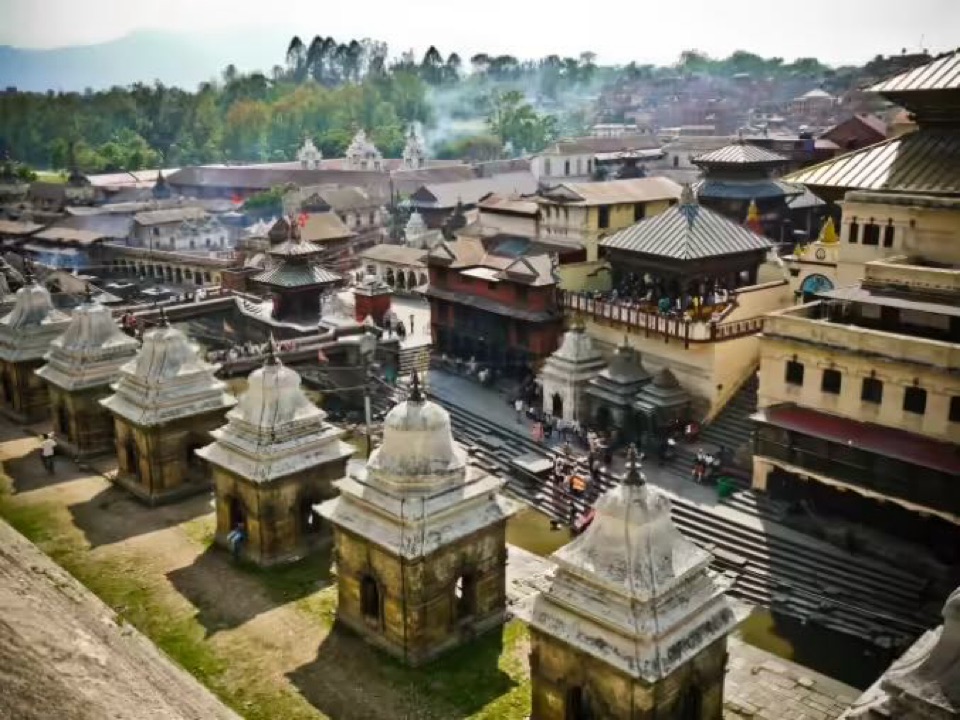
Meanwhile, on the opposite bank: children kicking a ball. Sadhus holy men with ash-smeared faces available to perform rituals or pose for seemingly non existant tourists. Kids playing downstream. Monkeys fighting over scraps. A man selling chai.
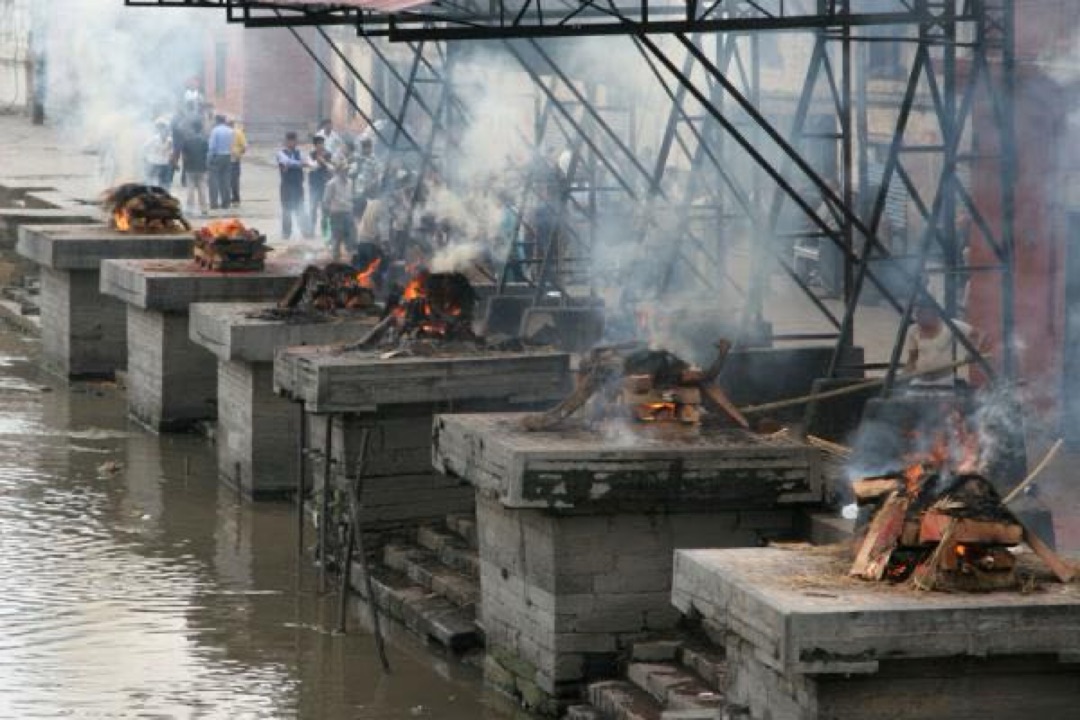
Everything happening at once. Birth rituals and death pyres. The sacred and the ordinary refusing to separate. I sat there for an hour, not because I understood anything, but because it was one time in recent history that felt completely foreign to me. When you travel too much you a rarely treated to an experience that rocks you soul and entire view of life. Something about that compression—the full spectrum of human experience in a few hundred meters of riverfront—rearranged something in me that hasn't gone back. My buddhist monks friends and an Ismali take me for breakfast one street over. It feels the most real and unreal at the same time.
Varanasi was on my mind when I was in my 20s oddly because of the famed monologist Spalding Gray. He went to India in the 1970s and he came back and turned the experience into one of his early monologues, India and After—a piece structured around randomness, with an assistant pulling words from a dictionary while Gray free-associated whatever thoughts or memories surfaced. Not to different than Mark Twain, his performance point was to say travel shows you new places; it shows you parts of yourself you'd successfully avoided at home.
I last watched Gray so long ago but he spent his whole career and travels chasing what he called "the perfect moment"—that instant when the noise in your head finally stops and you're just there, fully present, the observer dissolved into the observed. Perfect Moment when he was on a journey. He couldn’t complete the trip and go home until it happened. Idia, Mexico, Thailand—he kept going to new countries, hoping this time it would be different, this trip would leave him with some magical sense of well-being. It never happened. And yet he kept going.
In Swimming to Cambodia, he found his perfect moment off a beach in Thailand, floating so far out into the Andaman Sea that he lost all fear of sharks, of drowning, of time itself. Then his friend called him back to shore and the moment shattered. Playwright Athol Fugard told him: "There is no difference between Thailand and Krumville." The geography doesn't matter. The perfect moment is available everywhere. I don't think I believe this. As we build context, much like an AI model, we learn to predict, it is the unpredictable, or if you come from a family of four an experience a large family dinner, the dynamic is so different, so collegial in the sense that you're not just dad's favorite or least, you can be that for many.
Going somewhere without context is also dangerous as you go to more out of context places the chances of finding it again are less and less. This is not all there is to life, but I do hope to go to
I've been to India before. I've done the tourist circuit—the forts, the palaces, the temples, the chaos. I've been for weddings. I've been for work. I left feeling like I'd seen a lot but understood very little. The country overwhelmed me in ways I couldn't articulate, and I retreated into the comfortable posture of the observer: taking photos, collecting impressions, near death for me traffic round abouts. I even took a break from my first trip and hid inside my hotel for a day, eating the most delicious french fries in the world to recharge before stepping back out the next day.
I'm going back. Not for the Taj Mahal or the beaches of Goa or the backwaters of Kerala. I'm going for a riverbank where death happens in public, continuously, while everything else keeps happening around it.
In Western culture, we've gotten remarkably good at hiding death. The dying go to hospitals. The dead go to funeral homes. The whole process happens behind closed doors, sanitized, professionalized, kept at a safe distance from daily life. We encounter death as an interruption—a disruption to the normal order of things.
At the burning ghats, death is just another thing that happens. The pyres have been burning for three thousand years. They'll keep burning after I leave. And somewhere nearby, someone will be getting married, or bathing, or selling marigolds, or begging, or praying, or just sitting—watching everything happen at once. Varanasi
Gray kept searching for disconnection—from anxiety, from the running monologue of self, from the burden of being a witness to everything including himself. Varanasi offers the opposite: not escape but immersion. Not transcendence but confrontation. The full weight of human existence, compressed into a single view from a boat on the Ganges at dawn.
I feel lucky to have checked off most of my bucket list and of course rebuild it, occassionally revisit places again. I saved Machu Picchu, Peru to be the very end of the list only to finally visit. I don't plan to save Varanasi. I am not pushing it to the top of the list now, it will happen when it happens, but it is one of those places I am happy to read about, happy to discuss and perhaps the reason I posted this. It's the talking about the journey more than just going there.
 0
0