Ultra-long-haul flights are now a normal part of global travel in 2026. Routes lasting 16 to 20+ hours nonstop connect cities that once required multiple layovers. These flights save transfer time but demand far more physical and mental endurance from passengers.
Unlike standard long-haul trips, ultra-long-haul routes compress an entire day into a single cabin environment. Fatigue builds gradually and then accelerates. Small discomforts that feel manageable early can feel overwhelming by hour fourteen or fifteen.
Understanding what to expect and how to plan for it makes the difference between arriving functional or fully depleted.
What counts as an ultra-long-haul flight in 2026
An ultra-long-haul flight generally lasts 16 hours or more without a stop. Examples include New York–Singapore, London–Sydney, Auckland–New York, and Los Angeles–Melbourne. These routes cross multiple time zones and keep passengers airborne for nearly a full circadian cycle.
Airlines operate these routes using newer aircraft such as the Airbus A350 and Boeing 787. These planes offer higher cabin humidity, lower cabin altitude, and quieter interiors than older jets. These improvements reduce strain but do not eliminate fatigue.
The experience is less about speed and more about endurance. Planning sleep, meals, and movement becomes essential rather than optional.
How fatigue builds differently on ultra-long-haul routes
Fatigue on ultra-long-haul flights is cumulative. It comes from prolonged sitting, dry air, disrupted digestion, and circadian rhythm confusion happening simultaneously. Most travelers feel fine for the first six to eight hours.
Between hours ten and twelve, stiffness increases and concentration drops. After fourteen hours, irritability and decision fatigue become common. This is why “pushing through” rarely works on these routes.
Airlines are increasingly designing cabins and services around long-duration comfort rather than just faster boarding, a shift explained in the future of air travel in 2026.
Sleep strategy on ultra-long-haul flights
Sleep works best when planned in blocks rather than taken randomly. One main sleep block should align with destination night. A shorter recovery nap can be added if necessary.
Fragmented naps reduce sleep quality and worsen fatigue later in the flight. Planning your primary sleep window before boarding helps your body adapt faster after landing.
Protect sleep with an eye mask, earplugs or noise canceling, and reduce screen exposure for 60–90 minutes beforehand. Treat the cabin as a controlled sleep space.
Food timing and digestion at 35,000 feet
On ultra-long-haul flights, food acts as a timing signal for your body clock. When you eat matters more than how much you eat. Heavy meals late in the flight often worsen bloating and fatigue.
Digestion slows at altitude, especially during long periods of sitting. Light meals during sleep windows and protein-rich meals during wake periods support energy better.
Skipping a meal that clashes with destination time is acceptable on a single flight. Airlines design meal service for comfort, not circadian alignment.
Hydration and health considerations
Cabin air remains dry even on modern aircraft. Over eighteen hours, dehydration accumulates and often causes headaches, dry eyes, constipation, and muscle cramps.
Sip water consistently throughout the flight instead of relying on meal service. Small amounts every hour work better than large drinks taken occasionally.
Alcohol should be minimized or avoided. It disrupts sleep and worsens dehydration over very long durations. For health-based guidance, the CDC’s travel health resources provide useful context.
Seat strategy becomes critical
Seat choice matters more on an eighteen-hour flight than on a ten-hour one. Small ergonomic differences compound over time and affect circulation, sleep, and comfort.
Aisle seats work best for most travelers because they allow easier movement and stretching. Window seats suit deep sleepers but discourage regular movement.
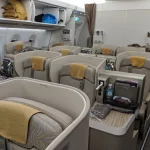
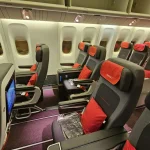
Premium cabins dramatically reduce fatigue due to lie-flat seating and space, which is why endurance-focused service is highlighted in reviews like the KLM Airlines review and the United Airlines business class review.
Movement and circulation management
Extended sitting increases stiffness and swelling on ultra-long-haul flights. Movement is the most effective countermeasure and should be planned into the journey.
Stand and walk every 60–90 minutes. Stretch calves and hamstrings near the galley. Simple ankle and foot movements help when seated.
Compression socks are strongly recommended on flights over sixteen hours, especially for travelers prone to swelling. Loose clothing improves comfort as the flight progresses.
Mental fatigue and boredom control
Mental fatigue becomes noticeable late in ultra-long-haul flights. Entertainment loses appeal, and time can feel distorted.
Breaking the flight into segments helps. Plan blocks for movies, reading, rest, movement, and meals to create mental milestones.
Offline content such as podcasts or audiobooks reduces reliance on screens and improves perceived comfort during the final hours.
Arrival strategy after ultra-long-haul flights
How you land determines how you feel for the next one to two days. Ultra-long-haul flights amplify jet lag, particularly on eastbound routes.
After landing, prioritize daylight exposure, gentle movement, and simple meals. Avoid long naps that delay adjustment.
Preparation during the flight makes post-arrival recovery faster and smoother.
What travelers should realistically expect in 2026
Ultra-long-haul flights in 2026 are more comfortable than a decade ago, but they remain demanding. New aircraft reduce strain but do not remove it.
Endurance defines the experience more than luxury. Travelers who plan sleep, food, and movement arrive significantly better.
These routes are efficient, but they reward preparation and punish improvisation.
FAQs about ultra-long-haul flights in 2026
Are ultra-long-haul flights safe in 2026?
Yes. Ultra-long-haul routes are operated under strict international safety regulations. Airlines use modern aircraft with multiple crew rotations and rest protocols to manage long durations safely.
Do ultra-long-haul flights cause more jet lag?
Yes. Crossing many time zones in one stretch intensifies jet lag. Fatigue and sleep disruption are more noticeable, especially on eastbound routes, unless sleep and light exposure are planned.
Is it better to eat all meals on ultra-long-haul flights?
No. Eating selectively based on destination time works better than eating every meal served. Heavy meals late in the flight often worsen fatigue and digestion.
Does seat choice really matter on 18–20 hour flights?
Yes. Aisle access, legroom, and the ability to move frequently have a major impact on comfort, circulation, and energy levels.
Is business class worth it on ultra-long-haul routes?
For many travelers, yes. Lie-flat seats, better sleep quality, and reduced physical strain significantly improve endurance on flights over 16 hours.
Planning an ultra-long-haul journey in 2026? Explore airline reviews, route insights, and smart travel strategies at talktravel and travel better, not harder.