
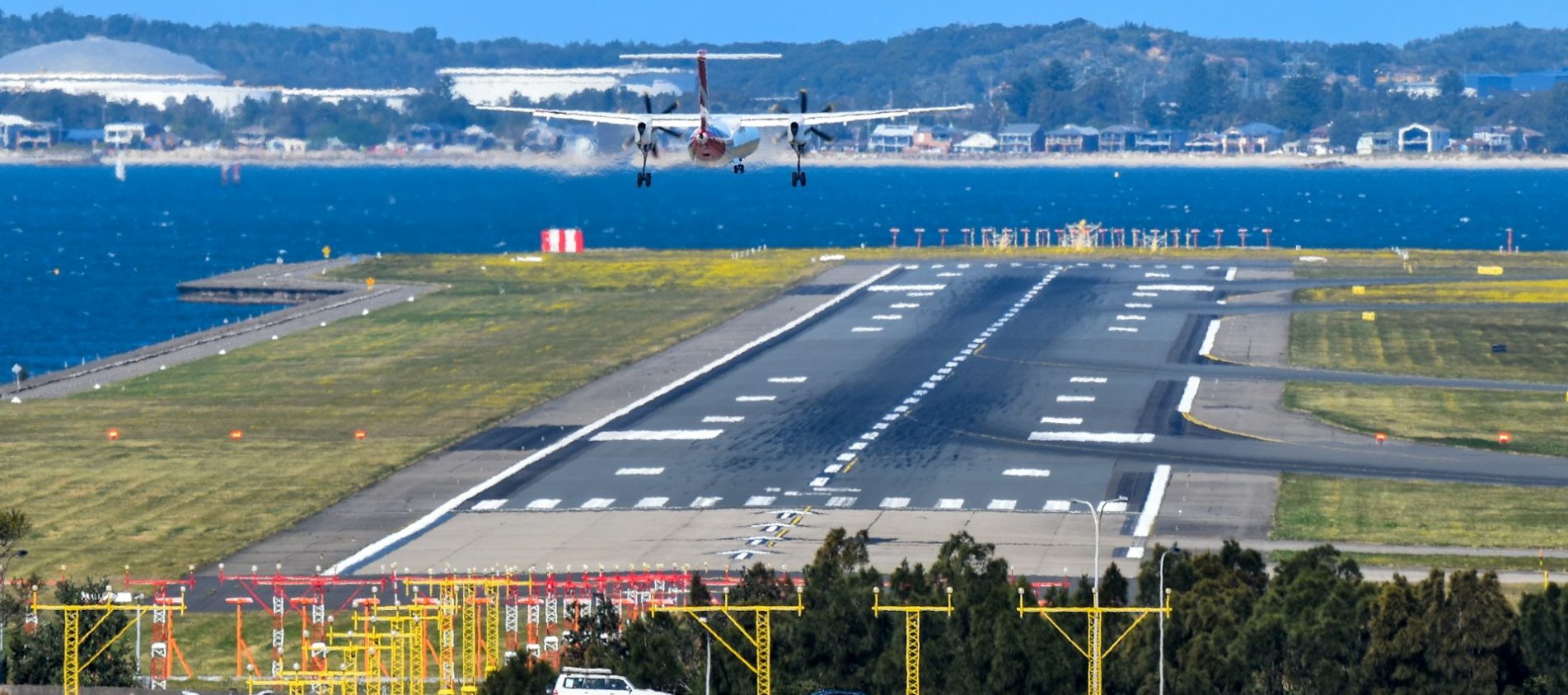
Most travelers only ever see one runway at a time the one their plane is barreling down at 180 mph. But the world’s largest airports are operating complex, multi-runway systems that move hundreds of aircraft every hour, around the clock, across multiple directions. The airport with the most runways is not just a big parking lot with planes. It is a precision-engineered system where every strip of asphalt has a job.
This guide ranks the world’s busiest multi-runway airports by runway count, breaks down how each layout works, and explains what all of it means for your next flight.
Which Airport Has the Most Runways in the World?
Chicago O’Hare International Airport (ORD) holds the record for the most runways at any commercial airport in the world, with 8 active runways as of 2026. Dallas/Fort Worth International (DFW) follows with 7 runways, and Hartsfield-Jackson Atlanta International (ATL) operates 5. No other commercial airport in the world currently matches O’Hare’s runway count.
O’Hare’s 8-runway configuration is the result of a $6.6 billion O’Hare Modernization Program (OMP), launched in 2005 and completed in phases through 2023. The OMP replaced the old diagonal runway grid, a relic of the 1960s, with a parallel east-west runway system designed to eliminate conflict points and increase hourly departure capacity.
- Runways at O’Hare: 8 active (4 north complex, 4 south complex)
- Runway orientations: Primary east-west, with crosswind runway 32L/14R
- Total paved area: Approximately 7,200 acres
- Annual operations: Over 900,000 aircraft movements in 2024 (FAA ATADS data)
- Operator: City of Chicago, Department of Aviation
The parallel runway layout allows O’Hare to run simultaneous independent approaches on multiple runway pairs during instrument meteorological conditions (IMC) , a critical capability in Chicago’s notoriously variable weather. If you have ever sat in the cockpit jump seat or followed FlightAware obsessively, O’Hare’s traffic density is immediately obvious.
How O’Hare’s 8-Runway System Actually Works
Runway Configuration and Traffic Flow
O’Hare’s runways are grouped into two complexes. The north complex handles the bulk of departures during peak hours, while the south complex manages arrivals. During high traffic periods, both complexes operate simultaneously, allowing the airport to process over 100 aircraft movements per hour.
| Runway | Length (ft) | Direction | Primary Use |
| 10L/28R | 13,000 | East-West | Long-haul departures |
| 10C/28C | 10,801 | East-West | Mixed operations |
| 10R/28L | 10,000 | East-West | Arrivals |
| 9L/27R | 7,500 | East-West | Regional jets |
| 9R/27L | 7,967 | East-West | Mixed |
| 4R/22L | 10,000 | Diagonal NE-SW | Crosswind ops |
| 4L/22R | 7,500 | Diagonal NE-SW | Crosswind ops |
| 32L/14R | 13,000 | North-South | Wind alternates |
The longest runway, 10L/28R at 13,000 feet, can handle fully loaded widebody aircraft including the Boeing 777-300ER and Airbus A380 at maximum takeoff weight. That matters for routes like ORD-Tokyo Narita, which United Airlines operates on the 787-9, a flight covering roughly 6,300 miles nonstop.
Runway separation at O’Hare meets FAA standards for simultaneous independent parallel approaches, which requires a minimum centerline separation of 4,300 feet for Category III ILS operations. O’Hare’s parallel pairs exceed this threshold, which is why the airport can land two aircraft simultaneously on adjacent runways even in near-zero visibility fog.
Airports With the Most Runways: 2026 Global Ranking
Top 10 Multi-Runway Airports by Verified Runway Count
The count below reflects active, paved, and operationally certified runways as documented by the FAA (for U.S. airports) and ICAO airport data for international facilities. Closed or decommissioned strips are excluded.
| Rank | Airport | IATA | Country | Runways | Annual Passengers (2024) |
| 1 | Chicago O’Hare International | ORD | USA | 8 | 80.1 million |
| 2 | Dallas/Fort Worth International | DFW | USA | 7 | 81.4 million |
| 3 | Denver International | DEN | USA | 6 | 77.8 million |
| 4 | Washington Dulles International | IAD | USA | 6 | 23.4 million |
| 5 | Hartsfield-Jackson Atlanta | ATL | USA | 5 | 104.7 million |
| 6 | Los Angeles International | LAX | USA | 4 | 75.1 million |
| 7 | London Heathrow | LHR | UK | 2 | 83.9 million |
| 8 | Dubai International | DXB | UAE | 2 | 92.3 million |
| 9 | Amsterdam Schiphol | AMS | Netherlands | 6 | 49.8 million |
| 10 | Frankfurt Airport | FRA | Germany | 4 | 59.4 million |
One data point stands out immediately: London Heathrow handles 83.9 million passengers annually on just 2 runways, making it the most efficient runway utilization rate of any major hub in the world. DXB operates 2 parallel runways serving over 92 million passengers. Compare that to O’Hare, which processes 80 million passengers across 8 runways. The physics of single-runway-pair operations at Heathrow are extraordinary and also why Heathrow has been campaigning for a third runway since 2016.
Amsterdam Schiphol operates 6 runways but uses a complex rotation system, closing certain runways overnight to limit noise exposure for nearby residential areas. This is a regulatory constraint, not a capacity one.
Why Runway Count Does Not Equal Airport Efficiency
The Heathrow Paradox: 2 Runways, 84 Million Passengers
This is where the data gets genuinely interesting. Runway count is only one variable in airport capacity. The real metrics are runway occupancy time (ROT), gate capacity, terminal throughput, and air traffic control efficiency.
Heathrow’s average runway occupancy time for arrivals is approximately 45 seconds among the fastest in the world. O’Hare’s average ROT runs closer to 55–60 seconds because of the mix of widebody and regional jet traffic across 8 runways. Heathrow’s 2-runway system is optimized around a narrow fleet mix (heavy widebodies) and precision scheduling that allows virtually zero buffer between landing aircraft.
Key factors that determine actual airport throughput beyond runway count:
- Runway occupancy time (ROT): Faster exits = more landings per hour per runway
- Taxiway design: Direct exits reduce ROT; complex taxi routes kill efficiency
- Gate count and terminal capacity: A runway can land a plane; the terminal has to absorb the passengers
- ATC staffing and technology: MLAT, ADSB, and surface radar all increase safe movement rates
- Fleet mix: Regional jets have faster ROT but lower passenger yield per movement
The FAA’s practical capacity benchmark for a single-runway airport is 60–80 operations per hour under visual meteorological conditions (VMC). O’Hare’s 8-runway system is theoretically capable of over 200 operations per hour, but the practical peak is approximately 120–130, constrained by taxiway congestion and gate availability.
You can find more data-backed airport operational breakdowns in this guide to essential airport tips every traveler should know.
Dallas/Fort Worth: The Runner-Up With a Different Strategy
DFW’s 7-Runway Layout and Its Logic
DFW International covers 26.9 square miles larger than Manhattan. Its 7 runways are arranged in three parallel pairs plus one crosswind strip, all oriented north-south to align with the prevailing southerly winds across North Texas.
| Runway | Length (ft) | Category |
| 17L/35R | 13,400 | Primary long-haul |
| 17C/35C | 13,400 | Primary long-haul |
| 17R/35L | 9,000 | Medium-haul |
| 18L/36R | 13,400 | Primary long-haul |
| 18R/36L | 9,301 | Medium-haul |
| 13L/31R | 9,000 | Crosswind |
| 13R/31L | 9,301 | Crosswind |
DFW handled 81.4 million passengers in 2024 while also serving as American Airlines’ largest hub the airline operates more than 900 daily departures from DFW. American’s dominance at DFW means the runway system is heavily optimized around the 737, 787, and A321 family rather than a diverse fleet mix.
The north-south orientation at DFW contrasts directly with O’Hare’s east-west system, which reflects the dominant wind patterns in each city. Chicago’s winds run predominantly from the west, particularly in winter and spring. North Texas is driven by Gulf southerlies through spring and summer.
If you are connecting through DFW and want to understand why your taxi time can approach 25 minutes, the answer is the airport’s physical footprint. At 26.9 square miles, it takes time to move from the south runway complex to Terminal D, even at 25 mph on an airport tug.
Denver International: 6 Runways and a Masterplan for Growth
Why DEN’s Runway System Is Built for the Future
Denver International opened in 1995 specifically to replace the outdated Stapleton Airport, which had been strangled by suburban encroachment and a lack of expansion room. The Denver site covers 53 square miles the largest airport footprint of any commercial airport in the United States.
DEN currently operates 6 runways:
- Three primary east-west runways (16R/34L, 16L/34R, 17R/35L)
- Two north-south runways (7/25, 8/26)
- One diagonal crosswind runway (25/7)
The master plan approved by Denver International includes room for up to 12 runways total as traffic demand grows. At 77.8 million passengers in 2024 a record for DEN the airport is already approving construction phases for a seventh runway, expected to be operational by 2028. Denver is the only major U.S. airport actively expanding its runway count in the current planning cycle.
DEN’s high elevation of 5,431 feet above sea level also affects runway performance. At high-density altitude, aircraft require longer ground rolls on takeoff, which is one reason DEN’s runways are consistently among the longest in the country. Runway 16R/34L measures 16,000 feet the longest public runway in the United States
International Airports With Multiple Runways
How European and Middle Eastern Hubs Compare
The United States dominates the top of the runway-count ranking, but several international airports deserve serious attention in this conversation, particularly as Middle Eastern hubs invest aggressively in capacity expansion.
- Amsterdam Schiphol (AMS): 6 runways, though only 4–5 operate simultaneously due to noise ordinances. Schiphol handles 49.8 million passengers under a strict nighttime runway closure schedule enforced by Dutch aviation law.
- Frankfurt Airport (FRA): 4 runways including the controversial Northwest runway (07R/25L) that opened in 2011 after decades of legal battles with local residents. FRA handled 59.4 million passengers in 2024.
- Dubai International (DXB): 2 runways, both at 4,000+ meters, serving the highest passenger volume of any single airport on the planet in 2024 at 92.3 million. The parallel runway system is supplemented by Dubai Al Maktoum International (DWC), which is currently undergoing a $35 billion expansion to become the world’s largest airport by 2030 with 5 runways and a capacity for 260 million annual passengers.
- Beijing Capital International (PEK): 3 runways across its main complex, now supplemented by the new Beijing Daxing International (PKX), which opened in 2019 with 4 runways and a planned expansion to 7.
For frequent flyers who connect through European hubs regularly, the two-runway constraint at Heathrow is the most consequential capacity bottleneck in global aviation. A single runway closure at LHR whether for maintenance, a wildlife strike, or an aircraft incident immediately triggers a minimum 30% reduction in hourly capacity, causing cascading delays across the network. This is why the best airports for family layovers in the United States tend to be multi-runway hubs: they absorb disruption far better.
How Runway Numbers Affect Your Flight Experience
Delays, Diversions, and What Runway Count Means for Passengers
If you have ever sat on a taxiway at O’Hare for 45 minutes waiting for a gate, runway count clearly does not guarantee a frictionless experience. But it does have measurable effects on delay patterns, diversion rates, and recovery times after weather events.
According to FAA Bureau of Transportation Statistics data for 2024:
- Airports with 4+ runways recover from weather ground stops 37% faster than single-runway airports
- O’Hare’s Ground Delay Program (GDP) activation rate is lower per annual operation than both LAX (4 runways) and JFK (4 runways), despite significantly higher traffic volume
- DFW had the lowest weather-related diversion rate among U.S. hub airports in 2024 at 0.08% of operations
- Single-runway regional airports experience, on average, 2.3x the weather delay minutes per operation compared to airports with 4+ runways
For passengers, this translates directly. Flying through a hub with more runways particularly during winter storm season gives your itinerary more resilience. American Airlines’ on-time performance at DFW consistently outperforms its performance at LaGuardia (LGA, 2 runways) by 12–18 percentage points in winter months, according to DOT data.
Understanding how airports absorb disruption is part of becoming a smarter traveler. If you want to dig further into managing airport complexity on the ground, there is useful context in this breakdown of why airport hacks matter more in 2026 than ever before.
Runway Naming, Markings, and What the Numbers Mean
How to Read a Runway Designation
Every runway number you see 10L, 28R, 17C is derived from its magnetic heading, rounded to the nearest 10 degrees and divided by 10. Runway 10 faces approximately 100 degrees (east). Its reciprocal end, 28, faces approximately 280 degrees (west). This is standardized globally by ICAO.
- L / R / C suffixes = Left, Right, Center used when parallel runways exist on the same heading
- A runway pair like 10L/28R is a single physical strip; you land from one end and take off from the other depending on wind direction
- Runways are renumbered periodically as magnetic north drifts this happens roughly every 10–20 years at most airports
The white numbers painted at each runway threshold are 60 feet tall. They are visible from final approach at standard descent angles, and they are one of the most recognizable elements of airport markings for aviation enthusiasts who follow approach plates or watch live ATC feeds.
For anyone curious about what happens at the operational level when pilots interact with ATC across a multi-runway complex like O’Hare, the mechanics of reading weather and clearances are covered in detail in this explainer on how pilots read aviation weather reports.
Future Airport Runway Expansions to Watch in 2026 and Beyond
Which Airports Are Adding Runways Right Now
Global air travel demand is projected by IATA to reach 7.8 billion passengers annually by 2040, up from approximately 4.7 billion in 2024. That demand is driving runway construction at scale across multiple continents.
| Airport | Project | New Runways | Target Year |
| Dubai Al Maktoum (DWC) | Phase 1 expansion | +2 (to 5 total) | 2030 |
| Denver International (DEN) | Runway 7 construction | +1 (to 7 total) | 2028 |
| Istanbul Airport (IST) | Phase 3 build-out | +2 (to 6 total) | 2027 |
| Beijing Daxing (PKX) | Phase 2 | +3 (to 7 total) | 2035 |
| London Heathrow (LHR) | Third runway | +1 (to 3 total) | TBD / post-2030 |
| Narita International (NRT) | New runway | +1 (to 3 total) | 2029 |
Heathrow’s third runway remains the most politically contested infrastructure project in European aviation. The UK government gave planning consent in 2018, but legal challenges, COVID-era demand collapses, and net-zero aviation targets have pushed the delivery timeline past 2030. If and when it opens, Heathrow would jump from 83 million to a projected capacity of 130 million passengers annually.
IATA’s 2024 World Air Transport Statistics report confirms that runway infrastructure, not aircraft capacity, is now the primary constraint on global aviation growth. You can access the full IATA report at iata.org.
Conclusion
Chicago O’Hare holds the record for the airport with the most runways at any commercial facility in the world, with 8 active strips built around a parallel east-west system capable of processing over 900,000 aircraft movements per year. But runway count alone does not tell the full story Heathrow moves 84 million passengers on 2 runways, and Dubai handles 92 million on the same. The real measure is how efficiently an airport converts each runway into actual throughput.
For aviation enthusiasts, the runway systems at O’Hare, DFW, and Denver represent some of the most complex airspace engineering on the planet. For frequent flyers, understanding which airports have the most runways and what that means for delays, diversions, and recovery times is genuinely useful information when choosing a connecting hub. Explore more aviation deep-dives, airport guides, and travel intelligence at TalkTravel.
Frequently Asked Questions
What airport has the most runways in the world?
Chicago O’Hare International Airport (ORD) has the most runways of any commercial airport in the world, with 8 active runways as of 2026. The runway system was rebuilt under the O’Hare Modernization Program, which replaced the old diagonal grid with a parallel east-west configuration completed in phases through 2023.
How many runways does Dallas/Fort Worth Airport have?
Dallas/Fort Worth International Airport (DFW) has 7 runways, all oriented predominantly north-south to align with prevailing winds across North Texas. DFW covers 26.9 square miles and handles over 81 million passengers annually, primarily as American Airlines’ largest hub.
Does more runways mean fewer flight delays?
Generally, yes airports with 4 or more runways recover from weather events 37% faster than single-runway airports, according to FAA data. However, runway count is one of several variables. Gate capacity, taxiway design, ATC staffing, and fleet mix all affect actual delay performance. O’Hare’s Ground Delay Program activation rate is lower than LAX and JFK despite higher traffic volume.
What is the longest runway in the United States?
Denver International Airport’s Runway 16R/34L, at 16,000 feet, is the longest public-use runway in the United States. Denver’s high elevation of 5,431 feet above sea level means aircraft require longer ground rolls on takeoff, which influenced the design of its runway lengths.
How are runway numbers determined?
Runway numbers are derived from the runway’s magnetic heading, rounded to the nearest 10 degrees and divided by 10. Runway 28 faces approximately 280 degrees (west). Parallel runways on the same heading get L (left), R (right), or C (center) suffixes. Runway numbers are updated periodically as magnetic north shifts over time.
Which international airport handles the most passengers per runway?
Dubai International (DXB) handles the most passengers per runway of any major hub in the world. In 2024, DXB processed approximately 92.3 million passengers across just 2 runways, roughly 46 million passengers per runway annually. London Heathrow handles approximately 42 million passengers per runway, also on a 2-runway system.
Is Heathrow getting a third runway?
The UK government granted planning permission for Heathrow’s third runway in 2018, but delivery has been pushed past 2030 due to legal challenges, environmental targets, and post-COVID demand recovery timelines. When operational, the third runway is projected to increase Heathrow’s annual capacity from approximately 83 million to 130 million passengers.