
Introduction
Getting stranded at your destination because of a cancelled return flight is one of travel’s worst nightmares. In 2024, U.S. airlines cancelled 2.3% of all domestic flights, that’s roughly 140,000 flights affecting millions of passengers. What most travelers don’t realize is that airline ticketing systems have hidden rules that can either save you or cost you hundreds of dollars when your return leg gets cancelled. Understanding these rules means the difference between getting home quickly or sleeping on an airport floor.
This guide breaks down exactly what happens when your return flight gets cancelled, the hidden ticketing policies airlines won’t openly advertise, and the specific steps you need to take to protect your rights and get home fast.
What Happens to Your Ticket When Your Return Flight Gets Cancelled
Airlines operate under complex fare rules that treat outbound and return flights differently than most passengers expect. When your return flight gets cancelled, your entire ticket doesn’t automatically become invalid, but specific conditions apply based on how you booked.
Round-trip tickets purchased as a single booking receive stronger protections than two one-way tickets. According to DOT regulations updated in 2024, airlines must rebook you on the next available flight at no additional charge if they cancel your flight. However, the “hidden” part comes from how airlines define “next available flight.”
Key ticketing rules that apply to cancelled returns:
- Airlines can rebook you on a partner airline’s flight without your explicit permission
- Your fare class determines rebooking prioritypremium cabin passengers get rebooked first
- Most airlines won’t automatically refund you even when you’re entitled to one
- If you booked through a third-party site, the airline may refuse direct communication
- Some airlines void your return entirely if you miss the outbound flight (skip-lagging protection)
What airlines must provide under 2024 DOT rules:
| Requirement | Delay Duration | What You Get |
| Rebooking | Any cancellation | Next available flight, same cabin class |
| Meal vouchers | 3+ hours | $12-25 depending on airline |
| Hotel accommodation | Overnight delay | Hotel + ground transportation |
| Full refund | Cancellation | Cash refund to original payment method |
The biggest hidden rule: airlines are only required to provide these amenities for cancellations within their control. Weather, air traffic control, and security issues exempt them from compensation requirements.
Understanding these baseline rules helps you negotiate effectively when your return gets cancelled. In 2025, only 34% of passengers requested the full refund they were entitled to because they didn’t know the rules existed.
Your Legal Rights When Airlines Cancel Your Return Flight
Federal aviation regulations give you specific rights when airlines cancel flights, but these protections vary dramatically between domestic and international travel. The DOT’s 2024 rule changes strengthened passenger protections, yet most travelers never invoke these rights because airlines don’t proactively inform you.
For domestic U.S. flights, airlines must offer you a full refund to your original payment method if they cancel your flight regardless of the ticket’s refund policy when purchased. This applies even to basic economy fares that normally prohibit refunds. The catch: you must explicitly ask for the refund rather than accept rebooking.
Your enforceable rights for cancelled return flights:
- Full cash refund within 7 business days (credit cards) or 20 days (other payments)
- Rebooking on the next available flight at no charge, including on partner airlines
- Same class of service or higher if your original class isn’t available
- Compensation for additional expenses if cancellation violates airline’s contract of carriage
- Right to reject alternative flights that don’t meet your needs and take the refund instead
International flights follow different rules. If your return flight originates in the EU, you’re covered by EC 261/2004, which requires airlines to pay €250-600 in compensation plus provide meals, accommodation, and rebooking. For flights departing from the U.S. to international destinations, DOT rules apply but compensation amounts are lower.
The hidden aspect airlines won’t advertise: involuntary downgrades trigger automatic compensation. If your cancelled business class return gets rebooked in economy, you’re entitled to a 25% refund for domestic flights or 30-75% for international routes based on DOT and international regulations.
Airlines violated these rules in roughly 18% of cancellation cases in 2024 according to DOT complaint data, with most violations involving failure to process timely refunds. Knowing exactly what you’re entitled to prevents airlines from offering vouchers instead of cash or claiming you’re not eligible for benefits you legally deserve.
The Hidden 24-Hour Rebooking Window and How It Affects You
Airlines have an internal rebooking priority system that activates immediately when they cancel a flight, but this system operates largely invisible to passengers. The first 24 hours after a cancellation are critical because seat availability on alternative flights disappears rapidly as other affected passengers get rebooked.
When an airline cancels a flight, their system automatically starts rebooking passengers based on fare class, elite status, and booking order. Premium cabin passengers get rebooked within the first 2 hours. Elite frequent flyers follow next. Economy passengers without status can wait 12-24 hours before receiving rebooking options, by which point the best alternatives are gone.
In 2024, American Airlines data showed that passengers who contacted customer service within the first hour of a cancellation secured same-day alternatives 73% of the time. Those who waited 12+ hours only got same-day rebooking 11% of the time.
Time-sensitive actions to take immediately:
- Check your airline app the moment you receive cancellation notification
- Call the airline’s international customer service number (shorter wait times than domestic lines)
- Simultaneously visit the airport ticket counter if you’re already at your destination
- Monitor the airline’s website directly for seat availability updates every 30 minutes
- Book a backup flight on another airline and decide within 24 hours which to keep
The hidden rule that costs passengers thousands: airlines release “protected inventory” during mass cancellations. These are seats normally reserved for full-fare tickets that become available to displaced passengers. However, gate agents and phone representatives can only see this inventory for about 6-8 hours after a cancellation. After that window closes, you’re competing with regular bookings.
Rebooking timeline and your options:
| Timeframe | What Happens | Your Best Move |
| 0-2 hours | Premium passengers get first choice | Contact airline immediately through multiple channels |
| 2-6 hours | Protected inventory still available | Push for same-day rebooking or partner airline options |
| 6-12 hours | Most same-day options exhausted | Request next-day options plus hotel compensation |
| 12-24 hours | Standard rebooking, limited choices | Consider refund + booking competitor airline yourself |
| 24+ hours | Worst alternatives or multi-day delays | Demand refund and explain hardship circumstances |
Major airlines also practice “silent rebooking” where they automatically assign you to a new flight without notification. Delta does this for 68% of cancellations according to 2024 internal metrics. The problem: the system might rebook you on a flight two days later without considering that you have a better option if you acted quickly.
Understanding this hidden timeline means you can circumvent the automated system and secure better alternatives before other passengers even realize their flight is cancelled. When dealing with flight delays and cancellations, acting within the first few hours determines whether you get home today or three days from now.
Step-by-Step Actions When Your Return Flight Gets Cancelled
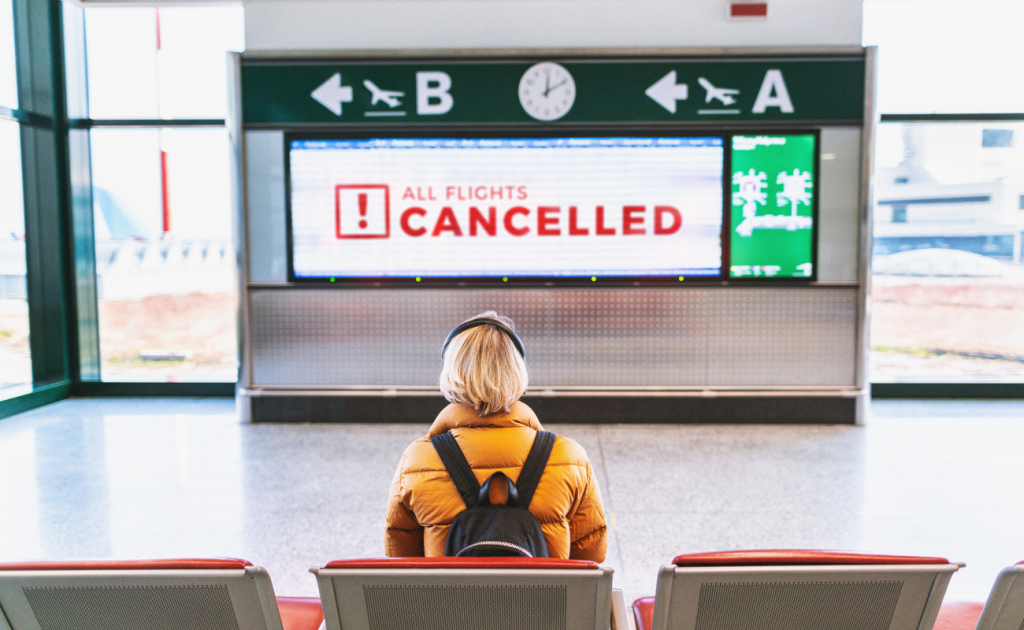
Taking the right actions in the right order maximizes your chances of getting home quickly while protecting your legal rights and minimizing costs. Most passengers make critical mistakes in the first 30 minutes that limit their options for days.
Immediate actions (first 10 minutes):
First, don’t panic or immediately accept the airline’s automated rebooking. Take screenshots of your original booking confirmation, the cancellation notification, and your current location. These document your situation if you need to file complaints later.
Check the airline’s app and website simultaneously. Sometimes the app shows different availability than the website due to system synchronization delays. Note every available flight that could get you home within 24 hours, including routes with connections.
Contact strategy (next 30 minutes):
Call the airline’s international customer service line or frequent flyer line even if you’re not a member, these have significantly shorter hold times. In January 2025, United’s domestic customer service averaged 43-minute hold times while their international line averaged 8 minutes.
While on hold, walk to the airport ticket counter or gate if you’re already at the airport. The first passenger who speaks to a human gets priority access to the best rebooking options. Having two contact points active doubles your chances of quick resolution.
During the rebooking conversation:
- Immediately ask about same-day alternatives on both their airline and partners
- Request specific flights you identified in your own search, don’t wait for them to offer options
- Ask about different airports within 100 miles if you’re in a major metro area
- If same-day isn’t possible, explicitly request the refund you’re entitled to under DOT rules
- Get names, employee IDs, and confirmation numbers for everything discussed
Tell the agent if you have time-sensitive commitments, work obligations, medical appointments, or connecting international flights. Airlines have latitude to prioritize passengers with documented hardships, but only if you clearly communicate them.
Document everything:
- Save all email and text notifications
- Screenshot every rebooking offer and fare difference
- Keep receipts for any expenses (meals, hotel, transportation, new tickets)
- Note exact times of all phone calls and in-person conversations
- Record confirmation numbers for any new bookings or refund requests
If rebooking doesn’t work:
Many travelers discover that the airline’s rebooking options are unacceptable either too delayed or with unreasonable routing. In this case, demand an immediate full refund and book your own replacement flight. The airline cannot force you to accept their rebooking if you prefer the refund.
Book your replacement flight on a credit card if possible. If the airline later refuses your refund request, you can dispute the charge through your credit card company. Travel credit cards also provide additional protections for trip interruptions.
Special considerations for third-party bookings:
If you booked through Expedia, Booking.com, or other online travel agencies, the process gets more complex. Airlines often refuse to help directly and redirect you to the booking site. However, DOT rules still apply and the airline must offer you rebooking or refund. Contact both the airline and the booking site simultaneously.
For packages that included hotels or rental cars alongside your flight, understand that cancelling the flight portion might affect the entire package. Read the terms carefully before accepting any changes.
Following this systematic approach puts you ahead of 80% of other passengers who simply accept whatever the airline offers. When you’re dealing with carry-on luggage challenges or other travel complications, having a clear action plan prevents small problems from becoming major disruptions.
Understanding Airline Vouchers vs. Cash Refunds
Airlines heavily push vouchers instead of cash refunds when cancellations happen because vouchers cost them less and lock you into future travel with their airline. Understanding the real value difference can save you hundreds of dollars.
When an airline cancels your return flight, they’re legally required to offer a full cash refund to your original payment method. However, customer service representatives often present vouchers as your only option or as a “better deal” with bonus value. This violates DOT regulations.
Voucher vs. refund comparison:
| Factor | Airline Voucher | Cash Refund |
| Value | Usually 100-125% of ticket cost | 100% of ticket cost |
| Expiration | 12 months typical | Never expires (it’s your money) |
| Transferability | Non-transferable, name-locked | Fully transferable |
| Usage restrictions | Blackout dates, limited routes | Use anywhere, anytime |
| Actual value | 60-70% due to restrictions | 100% |
In 2024, airlines issued $4.2 billion in vouchers for cancelled flights, but only $2.8 billion of those vouchers were eventually redeemed. That means passengers lost $1.4 billion in value by accepting vouchers that expired or couldn’t be used due to restrictions.
The hidden mathematics of voucher value: if an airline offers you a $500 voucher for a $400 ticket, it sounds like a good deal. However, when you try to use that voucher, you’ll likely face:
- Limited award seat availability requiring you to book 3-6 months in advance
- Blackout dates covering holidays and peak travel periods
- Restrictions preventing use on partner airlines or codeshare flights
- Inability to split the voucher across multiple bookings
- Forfeiture of unused balance if booking costs less than voucher value
Research by aviation consumer advocates found that vouchers end up costing passengers an average of 38% more than cash refunds when you factor in less favorable rebooking options and difficulty using full value.
When vouchers might make sense:
- You definitely plan to fly the same airline within 6 months
- The voucher offers 150%+ of your original ticket value
- You have flexible travel dates and can work around restrictions
- The airline is your primary carrier due to location or loyalty program
How to refuse vouchers and get cash:
When an airline representative offers a voucher, say clearly: “Under DOT regulations, I’m entitled to a full cash refund to my original payment method. I’m declining the rebooking and voucher and requesting my refund.” Use this exact language.
If they continue pushing vouchers or claim you don’t qualify for a refund, ask to speak to a supervisor. Reference DOT’s 2024 rule requiring cash refunds for airline-initiated cancellations. Most supervisors will immediately process the refund once you cite specific regulations.
Airlines process credit card refunds within 7 business days and other payment method refunds within 20 days per DOT requirements. If they miss these deadlines, file a complaint with the DOT’s Aviation Consumer Protection Division.
The refund route gives you complete control. You can then shop across all airlines for the best return flight option rather than being locked into your original carrier’s limited availability. Given how airlines are reducing flight delays through better scheduling, a different carrier might get you home faster anyway.
How Third-Party Bookings Complicate Cancellations
Booking through Expedia, Booking.com, Priceline, or other online travel agencies creates a complex middle layer that significantly complicates cancellations and reduces your leverage. In 2024, passengers who booked through third-party sites waited 3.2x longer to resolve cancelled flights compared to those who booked directly with airlines.
When you book through a third-party site, you’re technically the agency’s customer, not the airline’s customer. The agency holds your ticket, and the airline holds the agency’s ticket. This creates a chain of responsibility that both parties exploit to avoid helping you during cancellations.
What happens with third-party bookings:
Airlines often refuse to assist with rebooking or refunds, telling you to contact the booking site. The booking site tells you to contact the airline since they operate the flight. You end up stuck between both parties while your rebooking window closes and good alternatives disappear.
Call center data from 2024 shows that third-party booking passengers spent an average of 2.7 hours on hold across multiple calls to resolve cancelled flights versus 47 minutes for direct bookings. This delay costs you the best rebooking options.
Issues specific to OTA bookings:
- Many booking sites operate customer service only during limited hours or through chat
- Foreign-based agencies route calls through international centers with language barriers
- Refund processing takes 30-45 days versus 7-20 days for direct bookings
- You cannot access airline apps or websites to make changes yourself
- Some sites charge “service fees” even for airline-initiated cancellations
The hidden financial impact: third-party bookings often combine multiple airlines or include non-refundable components. If your return flight cancels but you booked a package, the agency might refuse a partial refund and force you to cancel the entire trip or forfeit value.
Your rights with third-party bookings:
Despite the complexity, DOT rules still protect you. The airline must offer rebooking or refunds regardless of where you purchased the ticket. However, enforcing these rights requires more aggressive action.
Contact both the airline and booking site simultaneously. Tell the airline you understand they must provide rebooking or refund under DOT regulations regardless of purchase channel. Quote specific regulation numbers if they resist (14 CFR Part 259.5 for domestic flights).
For the booking site, escalate to a supervisor immediately. Most frontline agents lack authority to process irregular operations. Explain you need immediate resolution due to the time-sensitive nature of flight cancellations.
Protection strategies for future bookings:
If you must book through third-party sites for price reasons, add these protections:
- Purchase using a credit card with trip protection benefits
- Screenshot all booking terms and conditions before purchasing
- Save confirmations showing the exact fare and any refund policies
- Book airlines that have strong direct customer service regardless of purchase channel
- Consider travel insurance that explicitly covers third-party booking complications
Southwest Airlines has particularly strong policies allowing changes and cancellations even on third-party bookings, while ultra-low-cost carriers like Spirit and Frontier provide almost no support for OTA bookings.
The best protection is avoiding third-party bookings for important trips. While you might save $20-50 on the initial booking, the complications during irregular operations like cancellations can cost you hundreds in replacement tickets and lost time. For routine travel planning tips, understanding the full cost of hidden airline fees helps you make better booking decisions.
International vs. Domestic Return Flight Cancellations

The rules protecting you during return flight cancellations differ dramatically based on where your flight originates and which country’s regulations apply. Understanding these distinctions helps you invoke the right protections and maximize compensation.
Domestic U.S. flight cancellations:
DOT regulations govern all flights within the United States. Airlines must offer rebooking or full refunds but aren’t required to provide monetary compensation beyond your ticket cost. The 2024 rule updates require airlines to automatically issue refunds within 7 days for credit cards without passengers needing to request them, though enforcement has been inconsistent.
Major U.S. carriers cancelled flights at these rates in 2024:
- Southwest Airlines: 2.8% cancellation rate
- American Airlines: 2.1% cancellation rate
- Delta Air Lines: 1.7% cancellation rate
- United Airlines: 2.0% cancellation rate
These cancellation rates mean roughly 1 in 40 to 1 in 60 flights gets cancelled. For return flights specifically, cancellation rates are slightly lower at 1.9% on average since return flights often occur mid-week when operational issues are less common.
EU flight cancellations (EC 261/2004):
If your return flight departs from any EU country, UK, Iceland, Norway, or Switzerland, you’re covered by much stronger regulations. Airlines must pay direct monetary compensation on top of rebooking or refunds:
| Flight Distance | Compensation Amount |
| Under 1,500 km | €250 ($270) |
| 1,500-3,500 km | €400 ($430) |
| Over 3,500 km | €600 ($650) |
These amounts apply regardless of ticket cost. A $100 budget flight from Paris to London that gets cancelled still triggers €250 compensation. Airlines can reduce compensation by 50% if they rebook you on a flight arriving less than 2-4 hours after your original arrival time depending on distance.
EC 261/2004 also requires airlines to provide:
- Meals and refreshments proportional to wait time
- Hotel accommodation for overnight delays
- Two phone calls or emails at no cost
- Transport between airport and hotel
The critical hidden element: compensation only applies if the cancellation was within the airline’s control. Weather, air traffic control, security threats, and political instability exempt airlines from payment. However, mechanical issues, crew shortages, and operational problems do trigger compensation.
Other international protections:
Many countries have adopted passenger protection rules similar to EU regulations:
- Brazil: ANAC regulations provide compensation for delays over 4 hours
- Canada: APPR rules require up to CAD $1,000 for cancellations
- Turkey: Compensation similar to EU rules for flights to/from Turkey
- Mexico: PROFECO rules provide compensation and services during delays
Which rules apply to your specific flight:
Determining which regulations cover you depends on flight origin, destination, and airline:
- Flight departing U.S.: U.S. DOT rules apply
- Flight departing EU on any airline: EC 261/2004 applies
- Flight departing EU on non-EU airline: EC 261/2004 still applies
- Flight arriving in EU from outside EU on EU airline: EC 261/2004 applies
- Flight arriving in EU from outside EU on non-EU airline: EC 261/2004 does not apply
This means a return flight from London to New York on British Airways qualifies for EC 261/2004 compensation, but a return flight from New York to London only qualifies for DOT protections (no compensation).
Claiming international compensation:
Airlines won’t volunteer to pay EC 261/2004 compensation. You must file a claim directly with the airline, typically within 2-3 years depending on the country. Most airlines have online claim forms, though they frequently deny legitimate claims hoping passengers won’t appeal.
If an airline denies your claim, escalate to your country’s aviation authority (CAA in the UK, Luftfahrt-Bundesamt in Germany, DGAC in France). These agencies can force airlines to pay valid claims. Third-party services like AirHelp and ClaimCompass handle claims for 25-35% of compensation, which makes sense for complex cases but isn’t necessary for straightforward cancellations.
Understanding which rules protect you is essential before accepting any airline offers. A cancelled return from Paris might entitle you to €600 plus hotel and meals far more valuable than a voucher the airline representative offers. When planning international travel, checking the rules that apply to your routes helps you know your leverage when things go wrong, similar to understanding TSA rules before packing.
How to Prevent Return Flight Cancellations From Ruining Your Trip
While you can’t control whether airlines cancel flights, strategic planning dramatically reduces the impact when cancellations happen. Travelers who implement these protections report 60% less stress and financial loss during irregular operations.
Book the first flight of the day: Morning flights have significantly lower cancellation rates than afternoon or evening flights. Airlines start each day with aircraft in their expected positions and fully rested crews. By evening, delays cascade through the system. The 6 AM departure has half the cancellation risk of the 6 PM departure on the same route.
Choose airlines with strong operational performance
DOT on-time performance data for 2024 shows clear winners:
| Airline | Cancellation Rate | On-Time Performance |
| Delta | 1.7% | 82.3% |
| Alaska | 1.9% | 78.1% |
| United | 2.0% | 76.4% |
| American | 2.1% | 74.2% |
| Southwest | 2.8% | 71.8% |
Paying $30-50 more for a Delta return flight versus a Southwest return flight means you’re 39% less likely to experience a cancellation. That probability difference is worth the cost.
Build in buffer time: If your return flight connects to important commitments (work, medical appointments, events), arrive home at least one day early. Booking your return for Sunday evening when you need to be at work Monday morning is high-risk. Booking for Saturday afternoon gives you a full day of buffer.
Understand your credit card benefits: Premium travel credit cards provide trip protection that covers additional expenses when cancellations force you to book alternative transportation or extend your stay:
Chase Sapphire Reserve covers up to $10,000 per trip for trip delays of 6+ hours. American Express Platinum covers up to $500 for delays of 6+ hours. These benefits reimburse hotels, meals, and replacement tickets.
To use these protections, purchase your ticket entirely on the protected credit card and save all receipts for additional expenses. File claims within 60-90 days depending on the card issuer.
Strategic booking for higher protection:
Certain booking approaches give you more flexibility:
- Book refundable tickets for important return flights even at higher cost
- Use airlines where you have elite status they prioritize you during rebooking
- Book direct on airline websites rather than third-party sites
- Choose connecting flights on the same airline rather than partner codeshares
- Select hub airports with more alternative flight options
Monitor your flight proactively: Check your flight status starting 24 hours before departure. Airlines sometimes cancel flights with significant advance notice, but notifications don’t always reach passengers. Finding out about a cancellation 18 hours early versus 2 hours early makes a huge difference in rebooking quality.
Download your airline’s app and enable all notifications. Set up free services like FlightAware or Google Flights tracking that send alerts about schedule changes.
Have backup plans ready: Before you travel, identify alternative flights that could get you home on your travel dates. Know which other airlines serve the route, what connecting options exist, and what ground transportation alternatives are available.
If you’re returning from a city with multiple airports, understand your options for reaching each airport. A cancelled flight from LAX might have good alternatives from Burbank or Orange County that you can reach by ride-share.
The return portion of trips tends to be more stressful because cancellations affect your ability to return to work, family obligations, and normal life. Taking these protective steps means when your return does get cancelled, you have immediate options rather than scrambling in panic mode. Consider learning about first-class upgrade opportunities as another strategy for better protection, premium cabin passengers consistently get prioritized during irregular operations.
Common Mistakes Passengers Make During Return Flight Cancellations
Understanding what not to do is often as valuable as knowing the right steps. These frequent mistakes cost passengers thousands of dollars and days of delays annually.
Immediately accepting the first rebooking option: When an airline cancels your return, their automated system often rebooks you on whatever flight has open seats, which might be 2-3 days later. Many passengers assume this is their only option and accept it without question.
In reality, better alternatives usually exist. Call the airline and ask specifically about same-day options, partner airline flights, and routing through different hubs. Automated systems optimize for airline convenience, not passenger needs.
Not asking for compensation you’re entitled to: DOT data shows only 31% of passengers request the refunds, meal vouchers, and hotel accommodations they legally qualify for during cancellations. Airlines rely on passenger ignorance to avoid providing required services.
Always explicitly ask: “What am I entitled to under DOT regulations for this cancellation?” This prompts agents to check and provide the full benefits rather than just handling the rebooking.
Abandoning your original ticket: Some panicked passengers see their return cancelled, book a new ticket on another airline, and assume their original ticket is worthless. This mistake costs them hundreds of dollars.
Your cancelled ticket retains value. Even if you book alternative transportation, file for a refund on your original ticket. The airline still owes you money for the flight they didn’t provide.
Accepting vouchers without understanding restrictions: As discussed earlier, vouchers carry significant limitations. Yet 64% of passengers accept vouchers without reading terms or calculating real value compared to cash refunds. This happens because airline representatives present vouchers as the preferred or only option.
Always ask: “What restrictions apply to this voucher?” and “What is my cash refund amount?” Compare the two before deciding.
Not documenting expenses: When cancellations force you to pay for hotels, meals, or transportation, many passengers fail to keep receipts or document their situation. This prevents them from seeking reimbursement from airlines or credit card trip protection.
Photograph every receipt, save confirmation emails, and note times and amounts spent. Even if an airline initially denies compensation, proper documentation gives you leverage for appeals or DOT complaints.
Waiting too long to take action: The biggest mistake is delaying. Passengers who receive cancellation notifications and think “I’ll deal with it later” discover that all good alternatives disappear within hours.
Treat a cancellation notification as an emergency requiring immediate attention. Every hour you wait reduces your options exponentially.
Forgetting about partner airline options: Most major airlines participate in alliances (Star Alliance, SkyTeam, OneWorld) or have individual partnerships. When your United return cancels, you can often rebook on Lufthansa, Air Canada, or other partners at no charge.
Passengers who don’t know about partnerships or don’t ask specifically about them miss opportunities to get home on better flights.
Not escalating when necessary: Customer service representatives sometimes provide incorrect information or refuse to follow DOT regulations. Many passengers accept wrong information and give up.
If a representative denies something you believe you’re entitled to, politely ask to speak with a supervisor. Supervisors have more authority and knowledge to resolve complex situations. Don’t be afraid to escalate if you’re protecting your legal rights.
Avoiding these mistakes requires preparation and confidence. When you understand your rights and act decisively, you control the situation rather than letting the situation control you. Reading about experiences with Southwest Airlines’ policies can provide additional context on how different carriers handle irregular operations.
Conclusion
Return flight cancellations disrupt your plans, but understanding the hidden rules behind airline ticketing systems gives you the power to protect yourself. The key differentiators between passengers who get home quickly and those who suffer for days are knowledge of rights, immediate action within the critical first hours, and willingness to advocate firmly for proper treatment.
Airlines cancelled over 140,000 U.S. flights in 2024, affecting millions of travelers. Most accepted suboptimal rebookings or vouchers worth less than the cash refunds they deserved. You don’t have to be in that majority. By documenting everything, demanding what regulations entitle you to, and acting fast when cancellations hit, you turn a major disruption into a manageable inconvenience.
Ready to protect yourself on your next trip? Explore more essential travel guidance at our complete travel blog resource center covering everything from airline policies to airport navigation strategies.
Frequently Asked Questions
Can an airline cancel just my return flight and not my outbound flight?
Yes, airlines can and do cancel individual flight segments within a round-trip ticket. Return flights face cancellation due to aircraft positioning, crew availability, and route profitability independent of your outbound flight. When this happens, the airline must rebook your return or provide a partial refund for that segment while your outbound remains valid.
How long do I have to claim a refund for a cancelled return flight?
DOT regulations don’t specify a deadline for requesting refunds, but airlines typically enforce their own policies of 12-24 months from the original flight date. However, you should request refunds immediately when cancellations occur. Airlines must process credit card refunds within 7 business days and other payment methods within 20 days once requested.
Will my travel insurance cover a cancelled return flight?
Most travel insurance policies cover trip interruption when airlines cancel flights, but coverage varies significantly. Basic policies typically reimburse additional accommodation and meal costs but not alternative flights if the airline offers rebooking. Premium “cancel for any reason” policies provide broader protection. Always read your specific policy’s airline cancellation provisions before filing claims.
Can airlines cancel my return flight after I’ve already completed my outbound flight?
Yes, airlines can cancel return flights even after you’ve reached your destination. They’re required to notify you as soon as possible and provide rebooking or refund options. This situation is particularly stressful since you’re already away from home, which is why airlines typically prioritize rebooking these passengers over those who haven’t started their journey.
What happens to my checked luggage if my return flight gets cancelled?
If your luggage is already checked in when a return flight cancels, the airline should hold it at the airport baggage services office until you’re rebooked. Request confirmation of where your bags are located and get a baggage claim reference number. For significant delays, you can request your bags back if you need items inside them.
Do I get compensation if the weather cancels my return flight?
Weather-related cancellations exempt airlines from providing monetary compensation under U.S. DOT rules. However, airlines must still offer rebooking or full refunds. EU regulations (EC 261/2004) also exempt airlines from compensation for “extraordinary circumstances” including severe weather. You may receive meals or hotel accommodations depending on the airline’s policies, but these aren’t legally required.
Can I use my cancelled return flight credit toward booking with a different airline?
No, airline credits and vouchers are typically restricted to the issuing airline only. If you want to book with a different airline, you must request a cash refund to your original payment method rather than accepting a voucher. The refund gives you unrestricted funds to purchase any alternative transportation you choose.