Introduction
The overhead bin debate frustrates millions of passengers annually as travelers compete for limited space while navigating conflicting airline policies. In 2024, U.S. airlines carried over 850 million domestic passengers, with gate agents reporting that overhead bin disputes and confusion account for roughly 40% of boarding delays. The central question causing this chaos: can you legally put your personal item in the overhead bin?
The answer depends on your airline, ticket type, and how strictly gate agents enforce the rules on your specific flight. Understanding these nuances prevents gate confrontations, speeds up boarding, and helps you maximize your limited storage space within the rules.
Understanding Personal Items vs. Carry-On Bags: The Official Definitions
Airlines distinguish between two categories of cabin baggage: carry-on bags and personal items. This distinction forms the foundation of all overhead bin policies, yet most passengers don’t understand the specific definitions each airline uses.
Carry-on bag definition:
A carry-on bag is your primary cabin luggage designed to fit in overhead bins. Airlines specify maximum dimensions, typically ranging from 22 x 14 x 9 inches to 24 x 16 x 10 inches depending on the carrier. These bags include rolling suitcases, large backpacks, duffel bags, and other substantial luggage pieces.
Full-fare economy passengers and all premium cabin passengers receive guaranteed overhead bin space for one carry-on bag. This represents your primary storage allocation.
Personal item definition:
A personal item is a smaller secondary bag that must fit under the seat in front of you. Airlines define specific maximum dimensions, typically 18 x 14 x 8 inches or similar measurements. Qualifying personal items include purses, laptop bags, briefcases, small backpacks, camera bags, and diaper bags.
The critical distinction: personal items are explicitly intended for under-seat storage, not overhead bins. Airlines state this clearly in their contracts of carriage, though enforcement varies dramatically.
Why airlines care about this distinction:
Airlines allocate overhead bin space based on carry-on allowances. When passengers place personal items in bins, they consume space allocated for other passengers’ legitimate carry-on bags. On full flights, this creates bin shortage situations forcing gate agents to check bags at the last minute, delaying departures.
Overhead bins on most narrow-body aircraft (single-aisle planes used for domestic flights) provide approximately 1.1-1.3 cubic feet per passenger when distributed evenly. However, actual bin space varies by seat locationforward bins fill first while rear bins often have excess capacity. This uneven distribution exacerbates conflicts.
Airline-specific size requirements for 2026:
| Airline | Carry-On Max Size | Personal Item Max Size | Stated Policy |
| American Airlines | 22 x 14 x 9 inches | 18 x 14 x 8 inches | Under seat only |
| Delta Air Lines | 22 x 14 x 9 inches | Under seat must fit | Under seat only |
| United Airlines | 22 x 14 x 9 inches | 17 x 10 x 9 inches | Under seat only |
| Southwest Airlines | 10 x 16 x 24 inches | 18.5 x 8.5 x 13.5 inches | Under seat only |
| Alaska Airlines | 22 x 14 x 9 inches | Under seat must fit | Under seat only |
| Spirit Airlines | Not included (fee) | 18 x 14 x 8 inches | Under seat only |
| Frontier Airlines | Not included (fee) | 18 x 14 x 8 inches | Under seat only |
| JetBlue Airways | 22 x 14 x 9 inches | 17 x 13 x 8 inches | Under seat only |
Every major U.S. airline explicitly states that personal items belong under the seat in front of you. This isn’t ambiguous in official policiesthe confusion arises from inconsistent enforcement and passengers ignoring or being unaware of the rules.
Understanding the technical definitions helps you navigate situations where gate agents enforce policies strictly, particularly on full flights or with budget carriers that generate revenue through bag fees.
The Technical Answer: What Airline Policies Actually Say
When examining airline contracts of carriage and official baggage policies, the answer to whether personal items can go in overhead bins is unambiguous: airlines officially prohibit it. However, understanding the nuances of these policies reveals why real-world practice often differs from written rules.
Official policy language:
American Airlines’ contract of carriage states that personal items “must fit under the seat in front of you.” Delta’s policy specifies personal items are “in addition to a carry-on bag and must be stowed under the seat.” United explicitly notes that personal items “should be able to fit underneath the seat in front of you.”
These policies aren’t suggestions they’re contractual terms you agree to when purchasing tickets. Airlines maintain legal authority to enforce these rules and can deny boarding to passengers who refuse compliance.
Why airlines implemented these policies:
The personal-item-under-seat requirement serves multiple purposes beyond just bin space allocation. Airlines designed this policy to ensure emergency egress paths remain clear, as items in overhead bins can shift during turbulence or emergencies and potentially block aisles or injure passengers.
Under-seat storage also keeps essential items accessible during flight. Federal Aviation Administration regulations require passengers to access personal items without using overhead bins during certain phases of flight, particularly during taxi, takeoff, and landing when aisles must remain clear.
Basic economy and restricted fare exceptions:
Budget airlines and basic economy fares on legacy carriers often restrict passengers to personal items only, with carry-on bags requiring additional fees. Spirit charges $35-65 for carry-on bags depending on when you pay. Frontier charges $30-60. United’s basic economy allows personal items only on most domestic routes.
For these fare classes, the personal item represents your only included baggage. Airlines enforce size limits more strictly because allowing oversized personal items undermines the revenue model that depends on carry-on bag fees.
Gate agents use sizing devices/metal frames displaying maximum dimensions to verify bags meet size requirements. If your personal item exceeds limits or if you have both a personal item and carry-on when your fare allows only personal items, agents can require you to check bags at gate-check fees ($65-99 typically).
Accessibility and medical equipment exceptions:
Airlines make exceptions for disability-related equipment, medical devices, and accessibility aids. The Air Carrier Access Act requires airlines to accommodate assistive devices without counting them against baggage allowances. Wheelchairs, walkers, crutches, CPAP machines, and other medical necessities don’t count as personal items or carry-ons.
Parents traveling with infants can bring diaper bags as additional items beyond standard allowances on most airlines. Breast pumps and baby food also receive exemptions from typical baggage restrictions.
International vs. domestic flight differences:
International flights often provide more generous baggage allowances. Many international carriers allow two carry-on pieces or specifically permit larger personal items. When flying internationally, verify the specific policies for your operating carrier, as international standards sometimes differ from U.S. domestic rules.
Connecting between domestic and international flights can create confusion when allowances differ. Your ticket’s most restrictive segment typically governs baggage rules for the entire journey. If connecting from international to domestic basic economy, the domestic restriction may apply throughout.
The gap between official policy (personal items under seats only) and common practice (many passengers use overhead bins) creates the confusion travelers experience. Understanding what policies actually require helps you make informed decisions about compliance and risk.
The Reality: How Airlines Actually Enforce These Rules
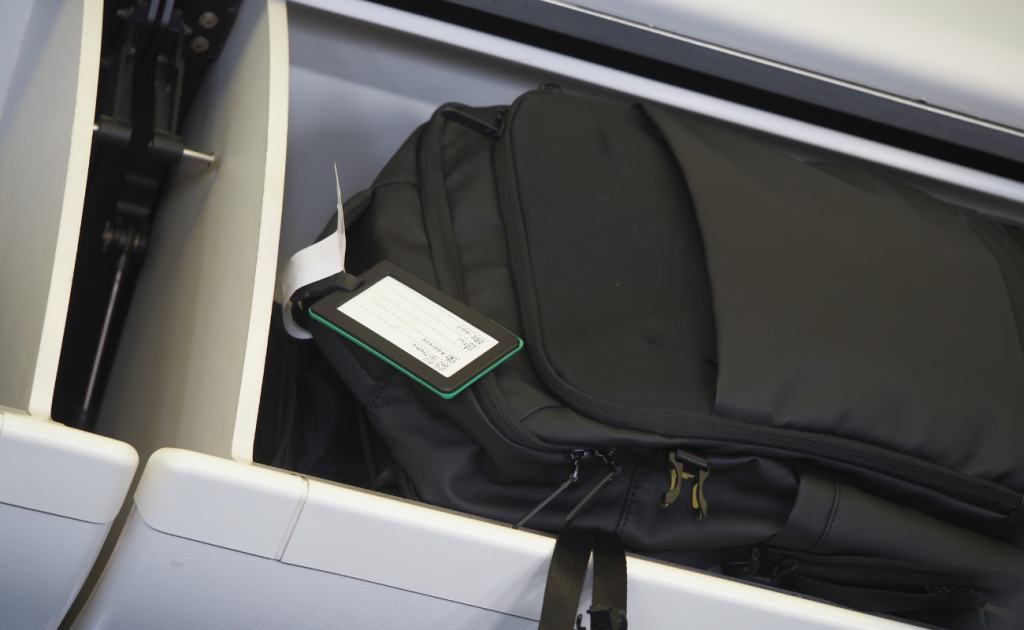
While airline policies explicitly require personal items under seats, real-world enforcement varies dramatically based on multiple factors that passengers rarely understand. This disconnect between written policy and actual practice creates the overhead bin confusion plaguing modern air travel.
Enforcement variation by flight load:
On flights with empty seats and available bin space, flight attendants typically don’t enforce personal-item-under-seat requirements. Many passengers place personal items in overhead bins on these flights without any intervention from the crew.
However, on full flights, particularly during holidays, summer travel, and busy routesgate agents and flight attendants strictly enforce baggage rules. They’ll require passengers to place personal items under seats to preserve overhead bin space for carry-on bags.
The same route on the same airline can have completely different enforcement depending on whether the flight is 60% full or 100% full. This inconsistency confuses passengers who successfully placed personal items overhead on previous flights but face strict enforcement when loads increase.
Basic economy enforcement:
Airlines enforce baggage rules most strictly with basic economy passengers. Gate agents specifically watch for basic economy passengers attempting to board with full-size carry-ons when their fare allows only personal items. Using sizing devices and scanning boarding passes that flag basic economy, agents intercept non-compliant passengers.
United reports that gate agents verify approximately 40% of basic economy passengers for compliance, with enforcement highest on popular routes where violations are common. Spirit and Frontier scan every boarding pass and verify baggage compliance for nearly all passengers due to their fee-based revenue model.
Gate agent discretion and priorities:
Individual gate agents exercise significant discretion in enforcement. Agents focused on on-time departures may prioritize boarding speed over strict bin-space policing. Others enforce rules meticulously, particularly if they’ve received complaints about bin space shortages on previous flights.
Time pressure affects enforcement dramatically. During tight connection windows or weather delays, gate agents rarely scrutinize what passengers put in overhead bins. However, during normal operations with adequate boarding time, enforcement increases.
Flight attendant involvement:
Once past the gate agent, flight attendants handle cabin baggage enforcement. Flight attendants often focus on bins in their assigned sections and may ask passengers to move bags from full bins to emptier bins rather than requiring under-seat storage.
However, flight attendants dealing with passengers who refuse to comply or who create boarding delays by placing multiple items overhead typically enforce rules more strictly. Confrontational passengers often receive stricter enforcement than compliant passengers.
Revenue protection motivation:
Airlines have financial incentive to enforce carry-on restrictions for basic economy passengers. Each passenger who upgrades their ticket or pays checked bag fees generates $30-65 in additional revenue. Gate agents receive training emphasizing the importance of bag fee collection.
Spirit and Frontier build substantial portions of their business model around ancillary fees. These carriers enforce baggage rules strictly to protect revenue, with agents authorized to charge gate-check fees without supervisory approval.
Regional and route-specific patterns:
Some airports and routes have reputations for strict enforcement while others are more relaxed. Major hubs like Atlanta, Denver, and Chicago often enforce rules more strictly due to high traffic volumes and full flights. Smaller airports with lighter loads typically enforce less aggressively.
Business routes (like New York to Chicago or San Francisco to Los Angeles) see stricter enforcement during weekday peak times when planes fill with business travelers carrying multiple bags. Leisure routes to vacation destinations may have more relaxed enforcement except during peak holiday periods.
What triggers strict enforcement:
Several factors cause gate agents to enforce policies strictly:
- Flight completely full with no empty seats
- Numerous passengers with multiple bags creating bin shortage
- Previous flights experiencing significant boarding delays due to baggage issues
- Supervisor or manager present observing gate operations
- Multiple basic economy passengers on the flight
- Complaints from passengers about bin space on previous flights
- Aircraft with particularly limited overhead bin space
Understanding these enforcement patterns helps you predict when strict compliance is necessary versus when you might have more flexibility. However, relying on inconsistent enforcement creates risk of facing unexpected gate-check fees or boarding denial. For more context on how airlines handle carry-on luggage policies, understanding the complete regulatory framework provides additional insight.
Overhead Bin Etiquette: The Unwritten Rules Passengers Should Follow
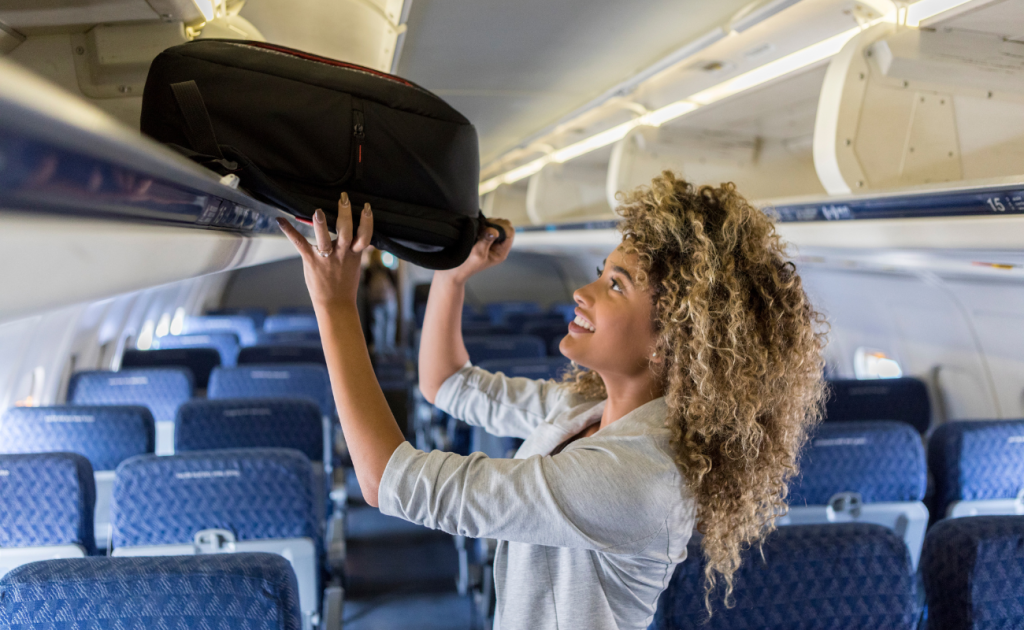
Beyond official airline policies and enforcement, overhead bin etiquette represents the unwritten social contract that makes shared cabin space work efficiently. Following these etiquette guidelines reduces conflicts, speeds boarding, and ensures fair space distribution.
The fundamental etiquette principle:
Overhead bin space directly above or near your seat belongs to you for your legitimate carry-on bag. Using bin space far from your seat disadvantages passengers seated there. This principle forms the foundation of bin etiquette.
When you place items in bins several rows ahead of your assigned seat, passengers in those rows must search for space elsewhere, creating cascading storage problems. On full flights, this causes gate agents to check bags unnecessarily.
Bin space allocation priorities:
Your carry-on bag takes absolute priority for overhead space. This is what airlines allocate bin space for and what passengers expect. If you have a proper carry-on, it belongs in the bin above or very near your seat.
Personal items belong under the seat in front of you. This isn’t just policy, it’s etiquette. Using overhead space for personal items when you have available under-seat space violates the shared understanding of fair space distribution.
If you only have a personal item (no carry-on), you still keep it under your seat unless bins remain clearly empty after all passengers board. Even then, placing it overhead late in boarding prevents creating the false impression of full bins during boarding.
What not to put in overhead bins:
Coats and jackets should go in the closet if available (first class/business class), on your lap, or folded on top of already-stored bags. Dedicating bin space to coats alone wastes scarce resources. Most airlines now discourage coat storage in bins during full flights.
Small purses, laptop bags, and items that easily fit under seats should not occupy overhead bin space. The passenger who places a tiny purse in the bin while their under-seat space sits empty commits a significant etiquette violation.
Duty-free shopping bags and food bags from airport restaurants should consolidate into your carry-on bag or personal item rather than occupying separate bin space. Multiple small items scattered across bins waste space that proper organization would preserve.
Bag positioning and space efficiency:
Place carry-on bags wheels-first into bins with the longest dimension aligned with the bin’s length. This orientation maximizes space efficiency. Bags placed sideways or handle-first waste space and prevent other bags from fitting.
Compress soft-sided bags to minimize volume. Don’t leave clothing or jackets laying loose in bins when they could fit inside your bag. Every inch of wasted space potentially forces another passenger’s bag to be gate-checked.
If your bag fits easily in the bin with room remaining, position it to allow space for additional bags. Don’t center your bag in an empty bin if positioning it to one side would allow another bag to fit.
Respecting other passengers’ space:
Don’t move or touch other passengers’ bags without asking permission unless a flight attendant specifically requests help reorganizing bins for space optimization. Other passengers’ property deserves respect regardless of how it’s positioned.
If you notice you’ve placed your bag in a bin far from your seat and nearby passengers need space, offer to move your bag before they must search elsewhere. This courtesy prevents cascading storage problems.
First-class and premium cabin considerations:
First-class and business-class passengers have priority for bins in their sections. Economy passengers should not use forward cabin overhead bins even if they board early. Flight attendants will ask you to move your bags if you violate this rule.
Some airlines explicitly prohibit economy passengers from using first-class bins. Others simply expect economy passengers to use bins in their ticketed cabin. Respecting these boundaries, premium cabin passengers paid significantly more and expected certain space privileges.
Families and group travel etiquette:
When traveling as a family or group, consolidate items into as few bags as possible rather than each person maximizing their individual allowances. Four people don’t need four carry-ons and four personal items when shared packing could reduce to three or four total pieces.
Parents with small children should use under-seat space for diaper bags and kid items that might be needed during flight. Reserve overhead space for bags that won’t be accessed until landing.
The “Golden Rule” approach:
Ask yourself: if every passenger used overhead bins the way I’m using them, would there be enough space? If the answer is no, adjust your behavior. This simple test resolves most etiquette questions.
Would you be frustrated if the passenger in front of you placed their personal item in the bin above your seat, leaving no room for your legitimate carry-on? Then don’t do it to others.
Following proper etiquette doesn’t just avoid conflicts, it makes the entire boarding process smoother for everyone. When passengers self-police and follow unwritten rules, flight attendants can focus on safety rather than baggage disputes. Understanding proper airport navigation and procedures helps you approach the entire travel experience with similar consideration for fellow passengers.
What Happens If You’re Caught Violating the Rules
When gate agents or flight attendants determine you’re violating baggage policies either by having too many items, oversized items, or placing personal items in overhead bins against instructions specific consequences follow based on the violation type and how you respond.
Gate-level enforcement:
Gate agents have authority to prevent boarding until baggage compliance is achieved. If you arrive at the gate with an oversized personal item and a carry-on when your basic economy fare allows only a personal item, the agent can require you to:
Check your carry-on bag at the gate for $65-99 depending on the airline and whether it’s the first or second checked bag. Choose which bag to check if both exceed regulations. Gate-check fees are higher than advance checked bag fees, creating a financial penalty for non-compliance.
Consolidate both items into one if possible and check the remainder. Purchase a carry-on allowance on the spot if your fare type allows upgrades.
Gate agents can deny boarding entirely if you refuse to comply with baggage requirements, though this rarely happens. Most passengers comply when faced with definite consequences.
Onboard enforcement:
If you board with non-compliant baggage and flight attendants notice, they’ll ask you to reorganize. Flight attendants typically use a progressive approach:
First, they’ll politely ask you to place your personal item under the seat. Most passengers comply immediately at this stage. If you refuse or argue, flight attendants escalate to firmer instructions, explaining that FAA regulations and airline policy require compliance.
Continued refusal after direct instructions can result in flight attendants involving the captain. The captain has ultimate authority over cabin operations and can remove passengers who refuse to follow crew instructions.
Potential consequences of non-compliance:
Refusing to follow crew instructions regarding baggage stowage violates federal aviation regulations. The FAA can fine passengers up to $37,000 per violation for interfering with crew duties. While fines this severe are rare, documented refusals to comply with baggage instructions have resulted in fines of $500-$2,000.
Airlines can ban passengers who create significant disturbances over baggage disputes. Multiple incidents or egregious behavior toward crew can result in permanent flight privileges suspension.
If your refusal to comply delays departure, airlines can charge you for operational costs, though they rarely pursue this. More commonly, they’ll simply ban you from future flights.
How to handle enforcement situations:
If a gate agent or flight attendant asks you to reorganize your baggage, comply immediately and politely. Arguing rarely changes outcomes and creates negative interactions that follow you through the rest of your journey.
Ask for clarification if you don’t understand the requirement. Sometimes gate agents can offer solutions like consolidating items or using available under-seat space more efficiently.
If you believe enforcement is inconsistent or unfair, comply first and then file feedback with the airline’s customer service after your flight. Arguing during boarding accomplishes nothing beyond delays and potential escalation.
Financial implications:
Gate-check fees represent the primary financial consequence of baggage violations. These range from $35 (Spirit’s advance carry-on fee) to $99 (some airlines’ second checked bag gate fee).
If gate agents determine your personal item exceeds size limits, they may require you to check it. Budget airlines are particularly strictSpirit and Frontier charge $65-99 for gate-checking oversized personal items that passengers claim fit requirements.
Missing your flight due to baggage disputes can cost hundreds or thousands if you must purchase a new ticket. Airlines don’t refund tickets when you miss flights due to refusing compliance with their policies.
Documentation and complaints:
If you believe enforcement was improper, document details: gate agent name or employee ID, flight number, date, specific instructions given, and what you observed other passengers allowed to do. This documentation supports customer service complaints.
Airlines occasionally provide compensation or goodwill gestures when their employees enforce policies inconsistently or rudely, though you’ll need documentation to support claims of differential treatment.
The Department of Transportation handles complaints about airlines but generally doesn’t intervene in baggage policy enforcement unless it involves discrimination or accessibility violations. Airlines have broad authority to enforce their published policies.
Preventing enforcement situations:
The simplest approach: follow the rules as written. Keep your personal item under the seat unless bins are clearly empty after boarding completes. Size your bags appropriately for your fare class. Comply immediately if asked to reorganize.
Arrive at the gate early during busy travel periods. Early boarding groups face less scrutiny since bin space remains available. Later boarding groups on full flights receive strictest enforcement.
Consider paying for checked bags on full flights rather than risking gate-check fees. Advance checked bag fees ($30-35) cost less than gate-check fees ($65-99) and eliminate stress about bin space entirely.
Understanding these consequences helps you make informed decisions about whether to follow official policies strictly or rely on inconsistent enforcement and prepares you to handle situations where strict enforcement occurs unexpectedly.
Strategic Approaches: How to Maximize Your Bin Space Legally
Smart travelers navigate overhead bin challenges by understanding both the rules and practical strategies that maximize available space without violating policies or etiquette. These approaches work within airline guidelines while optimizing your storage options.
Choosing the right bags for your trip:
Select personal items that maximize the under-seat space you’re required to use. Measure the space under typical economy seats approximately 18 x 14 x 8 inches and choose bags that fully utilize these dimensions.
Soft-sided personal items conform to irregular under-seat spaces better than hard-sided bags. Backpacks, duffel-style laptop bags, and flexible totes squeeze into spaces where rigid briefcases or structured purses waste potential volume.
For carry-on bags, choose models at maximum allowed dimensions (typically 22 x 14 x 9 inches) with compression features. Every inch of size difference matters when bins fill up. Soft-sided carry-ons compress to fit tight spaces, while hard-sided bags cannot adjust.
Packing strategies that reduce bag count:
Consolidate items between your carry-on and personal item strategically. Place items you’ll need during flight (electronics, reading materials, snacks, medications) in your personal item under the seat. Store items not needed until arrival in your carry-on overhead.
This organization means you won’t need to access overhead bins during flight, eliminating the temptation to place your personal item overhead for convenience. Flight attendants notice and appreciate passengers who can access necessities without standing and disrupting service.
Use packing cubes and compression bags to maximize density in your carry-on, potentially eliminating the need for a separate personal item. One well-packed carry-on beats a carry-on plus bulky personal item that barely fits under the seat.
Boarding strategy timing:
Board as early as your group allows. Earlier boarding groups consistently secure overhead bin space without competition or scrutiny. If you have elite status, premium credit cards that offer priority boarding, or willingness to pay priority boarding fees ($15-30), these investments pay off through stress reduction alone.
Gate agents scrutinize later boarding groups more carefully since bins fill progressively. If you board in groups 7-9 on a full flight, expect strict enforcement of baggage rules including requirements to place personal items under seats.
Some travelers intentionally check their carry-on bag at the gate for free (offered on full flights when bins fill) while keeping a larger personal item. This exploits the fact that gate-checked carry-ons fly free, making it cheaper than advance checked bag fees. However, this only works when you have time for baggage claim at your destination.
Leveraging fare class benefits:
First-class, business-class, and premium economy passengers receive boarding priority and better bin access. Upgrading for this benefit might cost $50-150 but guarantees bin space and reduces baggage stress significantly.
Credit cards offering priority boarding as a benefit effectively provide bin space security for $95-250 annual fee (typical for premium travel cards). For frequent flyers, this represents excellent value compared to repeated gate-check fees or baggage stress.
Equipment and route considerations:
Wide-body aircraft (used on transatlantic and transcontinental routes) typically have more generous overhead bin space than narrow-body planes. If choosing between similar routing options, wide-body aircraft provide more comfortable bin space situations.
Newer aircraft like Boeing 737 MAX and Airbus A320neo series have larger overhead bins designed for today’s carry-on bag prevalence. When booking, check aircraft typenewer planes mean better bin space odds.
Regional jets operated by partners (American Eagle, United Express, Delta Connection) often have smaller bins that require gate-checking standard carry-ons. If your routing includes regional jets, plan accordingly by using smaller bags or expecting to gate-check.
When to strategically check bags:
On complex itineraries with tight connections, checking bags reduces stress even when you’re allowed carry-ons. Missing connections while dealing with baggage often costs more than checked bag fees.
International trips with multiple flights benefit from checked luggage. Navigating foreign airports, customs, and connections while managing carry-ons and personal items creates unnecessary difficulty.
For trips longer than 4-5 days, checking a larger bag and traveling with minimal carry-on items often proves more comfortable than stuffing everything into carry-on bags that barely fit requirements.
Seat selection impact:
Seats near the front of your boarding zone provide better overhead bin access than seats at the rear of your zone. When selecting seats, choose forward positions if bin space concerns you.
Bulkhead seats (first row of a section) lack under-seat storage in front of you, requiring all bags to go overhead or inside bins. Airlines sometimes accommodate bulkhead passengers with adjacent bin space, but this isn’t guaranteed. Avoid bulkhead seats if you rely on under-seat personal item storage.
Exit row seats maintain normal under-seat space in most configurations and board relatively early, combining good bin access with extra legroom. These represent optimal seating for overhead bin strategy when available.
Technology and planning tools:
Apps like SeatGuru show aircraft configurations and identify planes with better or worse overhead bin space. Review your specific aircraft before packing to understand what space constraints you’ll face.
Airlines’ mobile apps sometimes indicate expected flight load factors (how full the flight is). Full flights require more careful baggage planning and strict compliance with size requirements.
Set up gate change notifications through airline apps. If your gate changes to one servicing a smaller aircraft, overhead bin space might become more limited, requiring you to adjust your baggage strategy.
These strategic approaches help you navigate overhead bin challenges while remaining compliant with airline policies and respectful of fellow passengers. The goal isn’t to game the system but to understand it well enough to make informed decisions that reduce your stress and improve travel experience. For additional context on navigating airline procedures smoothly, understanding check-in timing and requirements helps you approach the entire boarding process more strategically.
Future Changes: How Airlines Are Addressing Bin Space Issues in 2026
Airlines recognize that overhead bin conflicts frustrate passengers and delay operations, driving investment in solutions throughout 2026. Understanding these developments helps you anticipate how bin space dynamics may change in coming months and years.
Aircraft retrofit programs:
Major airlines are retrofitting older narrow-body aircraft with larger overhead bins designed for modern carry-on bag prevalence. United’s Boeing 737-900ER retrofit program adds approximately 30% more overhead bin volume. Delta’s similar program on Airbus A320 family aircraft increases capacity from 84 to 107 bags per aircraft.
These retrofits specifically target the bin space shortage that creates passenger conflicts. By late 2026, approximately 40% of domestic narrow-body fleets will have enhanced bins, with complete fleet upgrades expected by 2028-2029.
American Airlines reports that larger bins reduce gate-check frequency by 25% and cut average boarding time by 2-3 minutes per flight. These operational improvements justify the $500,000-800,000 per aircraft retrofit cost.
Boarding process innovations:
Airlines are testing new boarding procedures designed to improve bin space distribution. American’s system boards passengers from back to front while maintaining priority for premium cabins and elites. This prevents forward-cabin bin filling before rear passengers board.
United’s WILMA (window-middle-aisle) boarding in select markets reduces bin space conflicts by minimizing aisle congestion. When passengers aren’t climbing over each other, they can organize bags more efficiently in bins near their seats.
Southwest maintains their open-seating model but has adjusted how they board families and passengers with specific needs to balance bin space access more fairly.
Technology-enabled solutions:
Several airlines are testing overhead bin reservation systems where passengers can reserve bin space during booking for $5-15, similar to seat selection fees. This guarantees space and creates revenue while providing certainty to passengers willing to pay.
Delta’s testing of RFID-tracked carry-on bags allows gate agents to know exactly how many bags are on board and whether bin space will accommodate all passengers. When shortages are predicted, agents can offer incentives for voluntary gate-checking before conflicts arise.
Apps that show real-time bin availability during boarding could help passengers identify open space rather than assuming bins near their seats are the only option. This technology remains experimental but shows promise for optimizing space distribution.
Fee structure adjustments:
Some analysts predict airlines will eventually charge separately for guaranteed overhead bin access, unbundling it from base fares similar to how seat selection became an ancillary fee. Basic economy might evolve to personal-item-only while “economy plus bin” fares guarantee overhead space.
This potential change would create explicit pricing for overhead bin access rather than the current system where bin space is included but practically unavailable on full flights without priority boarding.
Enhanced enforcement technology:
Gate agents now use digital scanning devices that measure bag dimensions automatically rather than relying on sizing cages that passengers can manipulate. These devices connect to boarding pass scanners, flagging non-compliant bags before passengers enter the jet bridge.
American Airlines reports that automated size verification reduces gate-check disputes by 45% since passengers cannot argue their oversized bag “barely fits” the sizing requirements when digital measurements are objective.
Passenger education initiatives:
Airlines are investing in pre-flight education about baggage policies through email reminders, app notifications, and gate area signage. United’s pre-flight emails include videos demonstrating proper bag sizing and stowage techniques.
Better education aims to reduce the number of passengers who arrive at gates unaware their fare type restricts them to personal items only or who don’t understand overhead bin etiquette. Informed passengers create fewer conflicts and delays.
Industry standardization efforts:
The International Air Transport Association (IATA) continues promoting standardized carry-on dimensions that would work across all airlines and aircraft types globally. While progress is slow, increased standardization would reduce passenger confusion about varying size requirements.
Standardized basic economy policies across alliance partners would help passengers understand what to expect regardless of which airline operates their flight. Currently, basic economy means different things on different carriers, creating confusion for passengers with connecting flights.
Environmental and operational benefits:
Airlines recognize that reducing gate delays through better baggage management improves fuel efficiency and reduces emissions. Every minute saved during ground operations translates to environmental benefits and operational cost savings.
Fewer gate-checked bags mean faster turnarounds and improved on-time performance. Airlines track metrics showing that efficient bin space management correlates directly with departure punctuality.
These industry changes suggest overhead bin conflicts may decrease over the next 2-3 years as both capacity increases and enforcement becomes more systematic. However, fundamental tensions between limited space and passenger expectations will persist, making understanding of current rules and etiquette valuable for the foreseeable future.
Conclusion
The question “Can you put a personal item in the overhead bin?” has a clear official answer, airline policies require personal items under the seat in front of you. However, real-world enforcement varies dramatically based on flight load, airline, fare class, and individual gate agent discretion, creating the confusion passengers experience daily.
Understanding official policies, enforcement patterns, proper etiquette, and strategic approaches helps you navigate overhead bin challenges successfully. The key is following the rules when enforcement is strict (full flights, basic economy, budget airlines) while recognizing when you have more flexibility, all while respecting fellow passengers’ legitimate needs for shared space.
As airlines retrofit aircraft, implement new boarding processes, and enhance enforcement technology throughout 2026, bin space conflicts should gradually decrease. Until then, following official policies, practicing good etiquette, and planning strategically ensures you avoid fees, conflicts, and the stress of gate-side baggage disputes.
Ready to master other aspects of modern air travel? Explore comprehensive guides on everything from security procedures to airline policies at TalkTravel’s complete resource center.
Frequently Asked Questions
Will flight attendants make me move my personal item from the overhead bin?
Yes, flight attendants can and sometimes do require passengers to move personal items from overhead bins to under-seat storage, especially on full flights when bin space is limited. If a flight attendant specifically instructs you to place your personal item under the seat, you must comply. However, on flights with ample bin space, flight attendants rarely enforce this requirement. Compliance depends on how full the flight is and how strictly the crew enforces baggage policies that day.
Can I put my purse in the overhead bin?
Technically no airline policies classify purses as personal items that should go under the seat in front of you. However, many passengers place purses in overhead bins without intervention from crew, particularly on flights that aren’t completely full. On crowded flights, flight attendants may ask you to move your purse under the seat to preserve overhead space for larger carry-on bags. The safest approach is keeping your purse under your seat unless bins are clearly empty after boarding completes.
What if there’s no space under my seat?
Bulkhead seats (first row of a section) and some exit row configurations lack under-seat storage space in front of you. If you’re in one of these seats, you must store all items in overhead bins during takeoff and landing, then can retrieve small items during cruise when the seatbelt sign is off. Inform flight attendants if you’re in a no-under-seat-storage location they typically accommodate by allowing you to use nearby overhead space even for personal items in these specific situations.
Do basic economy passengers get any overhead bin space?
Basic economy passengers on most airlines are restricted to one personal item that fits under the seat they don’t receive overhead bin allowances unless they pay to add a carry-on bag. United, American, and Delta basic economy on domestic flights prohibits carry-on bags, meaning no overhead bin privileges. However, if you’re one of the last to board and bins remain empty, flight attendants rarely prevent basic economy passengers from using available overhead space for personal items, though technically this violates policy.
Can I use the overhead bin in a different section than my seat?
You should use overhead bins in your ticketed cabin section and preferably near your assigned seat. Economy passengers should not use first-class or business-class bins even if they board early. Using bins far from your seat disadvantages passengers in those rows.