Hidden Airline Fees You’re Probably Paying in 2026 (and How to Avoid Them)
Updated

Share

Quick Takeaways
- Airlines now generate 40 to 55% of profit from ancillary fees, not ticket prices
- Basic Economy triggers the highest number of hidden airline fees in 2026
- Seat selection and baggage fees remain the most common cost surprises
- Paying at the airport can raise fees by 50 to 80%
- Smart planning can save $150 to 400 per round trip
Introduction
Airfare in 2026 is designed to look cheaper than it really is. A $149 flight often turns into $289 once seats, bags, and boarding position are added.
This pricing isn’t accidental. Airlines deliberately unbundle essential services to keep base fares competitive in search results, then recover revenue through fees most travelers don’t fully understand.
This guide breaks down the hidden airline fees you’re probably paying in 2026, explains how airlines structure them, and shows exactly how to avoid them without sacrificing comfort, flexibility, or peace of mind.
The Seat Selection Trap
Seat selection fees are one of the most quietly expensive airline charges in 2026, even on traditional full-service carriers.
Many airlines advertise “economy seating included,” but restrict free seats to the least desirable rows. Travelers who want aisle seats, window seats, or to sit with companions are pushed into paid options.
These fees often appear late in the booking flow, making them feel optional even when they’re functionally necessary.
Typical Seat Selection Fees (One-Way)
| Seat Type | Typical Cost |
| Standard economy (advance selection) | $10–35 |
| Preferred seating (front cabin) | $25–60 |
| Extra-legroom economy | $40–100 |
Seat fees are most aggressive on Basic Economy and discounted fares. On full flights, free seat assignment may be delayed until check-in, increasing the risk of separation.
Booking a fare that includes seat selection is often cheaper than paying per segment after booking.
The Carry-On Bag Illusion
Carry-on bags are no longer universally included, especially on Basic Economy and ultra-low-cost fares. Many travelers still assume carry-ons are free because that was historically true. In 2026, this assumption regularly leads to gate fees.
Airlines charge the highest rates when travelers wait until boarding to resolve baggage issues.
Carry-On Fee Timing Comparison
| When You Pay | Typical Fee |
| At booking | $30–45 |
| Online check-in | $40–60 |
| At the gate | $65–99 |
Basic Economy fares are the most common trigger. Gate enforcement has increased on full flights with limited overhead space. If you travel with anything larger than a personal item, standard economy often costs less overall.
For a detailed breakdown of size limits and enforcement trends, see Carry-On Luggage Rules 2026.
The Checked Bag Price Ladder
Checked bag fees are no longer fixed prices. Airlines now charge more depending on when and where you pay.
This tiered pricing catches travelers who assume they can decide later without penalty. The bag is the same but the price isn’t.
First Checked Bag Cost (Domestic)
| Payment Timing | Typical Fee |
| During booking | $30–35 |
| Online check-in | $35–45 |
| Airport counter | $45–65 |
Second bags are usually priced even higher. International flights may include a bag outbound but not always on the return. Prepaying bags at booking remains one of the simplest guaranteed savings.
The Boarding Group Paywall
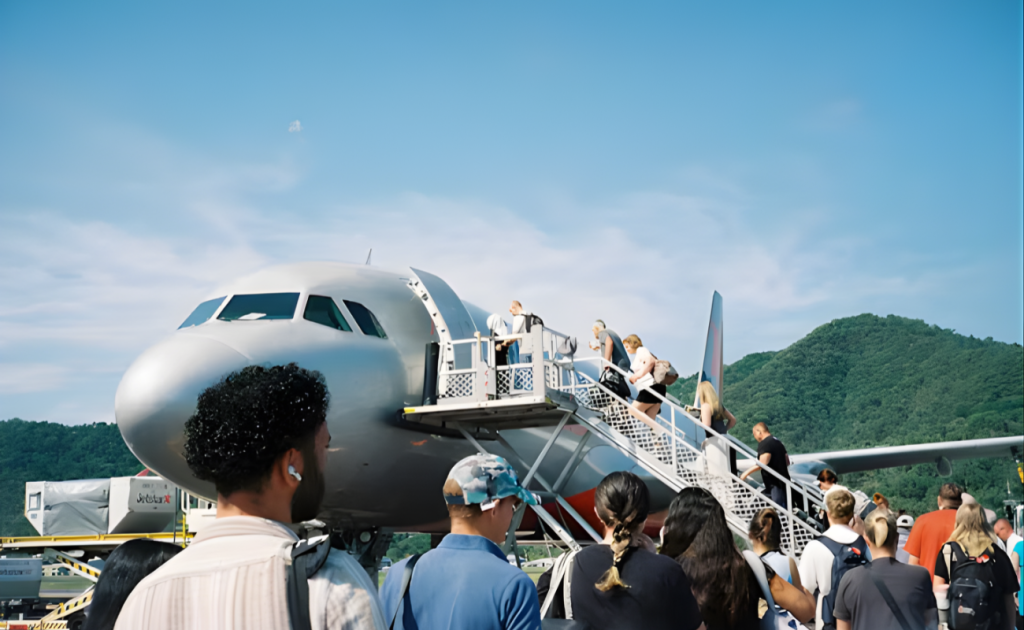
Boarding order is no longer operational, it’s monetized. Airlines sell early boarding as a standalone add-on or bundle it into higher fares. Late boarding increases the risk of forced gate-checking, even when carry-ons are technically allowed.
Boarding priority has effectively become a paid feature in 2026 rather than a simple boarding sequence. Travelers can purchase a priority boarding add-on for roughly $10 to $30 per flight, or receive early boarding automatically when it’s included as part of a higher fare bundle. Passengers who decline both options and board late often face a different cost altogether: limited overhead bin space that results in a forced gate check of carry-on bags, which can mean delays, inconvenience, or additional baggage handling risk even when no explicit fee is charged. This fee often compounds with baggage fees. Losing overhead bin space means losing control and time.
For travelers with carry-ons, boarding position quietly becomes mandatory.
The “No Change Fee” Myth
Airlines advertise “no change fees,” but flexibility is still tiered by fare type. Lower fares often convert refunds into flight credits with expiration dates. Same-day changes and standby privileges are frequently excluded.
Flexibility in 2026 is largely determined by fare type, and the rules are stricter than many travelers expect. Basic Economy typically does not allow changes at all and offers no refunds, which means you lose the ticket value if plans shift. Standard Economy generally allows changes, but refunds usually come back as flight credit rather than cash. If you need maximum protection, Flexible or Premium fares usually allow changes and provide either a refund or credit, making them the safest option when your schedule is uncertain.
Flexibility is now a paid feature. Cheaper fares often cost more once plans change. If your schedule isn’t firm, paying slightly more upfront usually saves money later.
The Airport Penalty Zone
Airlines increasingly penalize travelers who pay fees at the airport. This includes bags, seat changes, boarding passes, and assisted check-in. The logic is simple: self-service is cheaper for airlines.
Common Airport-Only Fees
- Bag payment surcharges
- Boarding pass printing fees
- Assisted check-in charges
These fees disproportionately affect infrequent travelers. Completing everything online before arrival avoids most of them.
The Basic Economy Everything-Else Fee
Basic Economy is the single largest source of hidden airline fees in 2026. What looks like a cheaper ticket often excludes multiple essentials most travelers need. Airlines rely on this fare to upsell after booking.
What Basic Economy Usually Excludes
- Basic Economy: Changes are not allowed, and no refunds or credits are provided if plans change.
- Standard Economy: Changes are typically allowed, but refunds are usually issued as flight credit rather than cash.
- Flexible or Premium fares: Changes are allowed, and refunds are issued either as cash back to the original form of payment or as credit, depending on airline rules.
Adding just one extra often erases the savings. Basic Economy only works for very light, inflexible travel.
Why Airlines Rely on These Fees
Airlines describe these charges as “choice” and “unbundling,” meaning the base fare covers transportation while add-ons let you pay only for the extras you want. In theory, this gives travelers more control over total cost by separating seats, bags, boarding priority, and flexibility into optional purchases.
In practice, many of these “optional” services are required for a comfortable or functional trip especially for travelers with carry-ons, families who need seats together, or anyone with uncertain plans. Delta Air Lines’ official investor disclosures make it clear that ancillary revenue is now a core growth strategy, which is why these fees continue expanding across the industry.
According to Delta Air Lines’ official investor disclosures, ancillary revenue is now a core growth strategy.
How to Avoid Hidden Airline Fees (Rules That Work)
Avoiding airline fees is about structure, not loyalty. Understanding when airlines charge more matters more than which airline you fly.
Practical Fee-Avoidance Rules
- Skip Basic Economy unless traveling extremely light
- Pay for bags at booking, not later
- Compare fare bundles, not base prices
- Select seats early or buy fares that include them
- Complete all add-ons online
Most fees are optional only in theory. Planning determines whether you pay them.
Common Mistakes That Trigger Fees
Most travelers pay hidden fees due to outdated assumptions. Airline pricing has changed faster than traveler habits. Avoiding these mistakes saves money repeatedly.
Frequent Fee Triggers
- Booking the cheapest fare without reading restrictions
- Assuming carry-ons are free
- Waiting until the airport to pay for bags
- Ignoring seat assignment rules
- Overlooking credit expiration dates
Hidden fees punish assumptions, not ignorance. Fix the process once, save money every trip.
For a broader pricing strategy, pair this guide with How to Find Cheap Flights in 2026.
Conclusion
Hidden airline fees in 2026 are baked into how tickets are priced, so the “cheap fare” you see first is rarely the real total. Seat selection, baggage timing, boarding priority, and fare restrictions are the most common places costs quietly stack up.
The biggest savings come from a few repeatable moves: avoid Basic Economy when you need bags or flexibility, pay for add-ons during booking (not at the airport), and compare fare bundles instead of headline prices. Those choices usually eliminate the most expensive surprise charges.
When you treat airfare like a systemnot a single numberyou stay in control. You’ll spend less, see fewer checkout shocks, and know the true cost before you click purchase.
FAQs
What are the most common hidden airline fees in 2026?
Seat selection, carry-on bags, checked bag timing, boarding priority, and flexibility restrictions tied to Basic Economy.
Are carry-on bags still free?
Not always. Many Basic Economy fares exclude carry-ons or charge more at the airport.
Is Basic Economy ever worth it?
Only if you travel light, don’t care about seats, and certain plans won’t change.
How can I avoid paying airline fees?
Book standard economy, prepay bags, choose seats early, and complete everything online.
Do all airlines charge the same fees?
No. Structures vary, but patterns are consistent across major carriers.
For more airline strategy guides, booking playbooks, and fee-avoidance tips, visit TalkTravel.
Share
Published by TalkTravel — a community of travel enthusiasts sharing real advice.
Have feedback? Contact our team.
More in Budget Travel


Travel Tips & Thoughts