
Introduction
Business class tickets typically cost 3-5 times more than economy fares, with transatlantic routes averaging $4,200 versus $850 for economy in 2025. Yet thousands of savvy travelers fly in lie-flat seats while paying closer to economy prices. The secret isn’t luck, it’s understanding airline upgrade systems, fare class rules, and strategic booking timing that most passengers never learn.
This guide reveals 12 proven methods to secure business class seats affordably in 2026, including specific airline policies, pricing strategies, and upgrade qualification rules that can save you $2,000-6,000 per international flight.
Understanding Business Class Pricing and Upgrade Eligibility
Airlines use complex revenue management systems that adjust business class prices based on demand, booking timing, route competition, and passenger loyalty status. Understanding these systems reveals opportunities to access premium cabins at a fraction of published rates.
Business class fares break into distinct booking classes that determine upgrade eligibility and pricing. Full-fare business class (booking codes J, C, D) costs the most but provides maximum flexibility. Discount business class (I, Z, P codes) offers the same seat at 30-50% less but restricts changes.
The hidden economics: airlines would rather sell a premium seat at discount rates than fly with it empty. Load factors for business class average only 68% compared to 85% for economy. This 17-point gap creates opportunities for passengers who know when and how to access discounted inventory.
Key factors affecting business class pricing:
- Route competition monopoly routes charge 40% more than competitive routes
- Seasonal demandsummer and holiday periods see 65% price increases
- Booking window prices peak at 3-4 weeks before departure
- Day of weekTuesday/Wednesday departures cost 15-25% less than Friday/Sunday
- Corporate contracts/business travelers subsidize leisure pricing through higher fares
Upgrade qualification tiers by airline type:
| Airline Category | Paid Upgrade Cost | Miles Required | Elite Status Priority |
| Legacy carriers (Delta, United, American) | $300-$1,200 | 25,000-80,000 | Platinum+ prioritized |
| International carriers (Emirates, Singapore, Lufthansa) | $400-$1,800 | 30,000-120,000 | Top tier only |
| Low-cost long-haul (Norse, JetBlue Mint) | $199-$599 | Not available | No elite programs |
Understanding these baseline economics helps you identify which strategies work best for your travel patterns. The following methods exploit specific gaps in airline pricing and upgrade systems.
Strategy 1: Book Premium Economy and Bid for Business Class Upgrades
Most major airlines now offer bidding systems where passengers can submit offers to upgrade from premium economy or economy to business class. These systems accept bids starting at $150-400 for domestic flights and $300-800 for international routes, far below standard upgrade costs.
Airlines introduced upgrade auctions to monetize empty premium seats while giving passengers price certainty. The systems operate through airline websites or apps 5-7 days before departure when the airline can assess likely premium cabin loads.
After booking your ticket, you receive an invitation to bid for an upgrade. The system shows minimum and maximum bid ranges based on route and availability. You submit your offer, and 72-24 hours before departure, the airline notifies you whether your bid was accepted.
Premium economy as a strategic base:
Booking premium economy instead of regular economy significantly improves your upgrade bid success rate. Airlines prioritize premium economy passengers for business class upgrades because they’ve already demonstrated willingness to pay for enhanced service. On popular routes, premium economy passengers win upgrades 3x more often than economy passengers with identical bids.
The pricing strategy works because premium economy typically costs only $200-500 more than economy on long-haul flights. If your $600 upgrade bid succeeds, you’ve accessed a $4,000 business class seat for roughly $1,100 totala 72% discount.
Data from successful bidders shows that winning bids typically fall in the 50-70% range of maximum suggested amounts. If the system suggests $400-$800, bidding $550-650 gives you the best probability of success without overpaying.
Airline-specific bidding rules:
| Airline | Minimum Bid | Bidding Opens | Award Notification | Elite Advantage |
| United Airlines | $250-$500 | 5 days out | 24 hours before | Premier 1K prioritized |
| Lufthansa | €150-€400 | 7 days out | 72 hours before | Senator/HON only |
| Air Canada | CAD $300-$900 | 7 days out | 48 hours before | Super Elite 75K+ |
| Virgin Atlantic | £200-£600 | 7 days out | 24-72 hours before | Gold/Platinum |
Virgin Atlantic reports 34% acceptance rates for economy-to-business bids on transatlantic routes during off-peak periods, dropping to 18% during summer peak season. Understanding these probabilities helps you decide whether to bid or pursue other strategies.
The bidding approach works best for flexible travelers who would be satisfied with their base ticket but want business class at the right price. It’s low-risk since you only pay if successful.
Strategy 2: Use Airline Miles and Points at Maximum Value
Frequent flyer miles and credit card points can book business class seats at valuations reaching 5-10 cents per point, far exceeding the 1-2 cents typical for economy redemptions. Strategic mileage redemptions represent one of the most powerful tools for accessing premium cabins affordably.
While a paid business class ticket might cost $5,000, the same seat might be available for 70,000-120,000 miles depending on the program and route. Credit card sign-up bonuses dramatically change this equation.
Credit card sign-up bonuses for business class:
Premium travel credit cards offer bonuses reaching 75,000-150,000 points after meeting minimum spending requirements:
- Chase Sapphire Preferred: 60,000 points after $4,000 spend
- American Express Platinum: 80,000 points after $8,000 spend
- Capital One Venture X: 75,000 miles after $4,000 spend
- Citi AAdvantage Executive: 50,000 miles after $5,000 spend
Strategic approach: open 2-3 travel cards over 6-12 months to accumulate 180,000-300,000 points, sufficient for round-trip international business class or 3-4 domestic business class flights.
Best mileage redemptions by region in 2026:
| Route Type | Program | Miles Required | Cash Equivalent | Value per Mile |
| US domestic | American AAdvantage | 25,000-50,000 | $800-$1,500 | 2.0-3.0 cents |
| US to Europe | United MileagePlus | 70,000-88,000 | $3,500-$4,500 | 4.5-5.1 cents |
| US to Asia | All Nippon Airways | 75,000-90,000 | $4,000-$6,000 | 5.3-6.7 cents |
| Europe to Asia | Singapore KrisFlyer | 80,000-110,000 | $3,000-$5,000 | 3.8-4.5 cents |
The mathematics strongly favor international business class redemptions over domestic or economy bookings. Using 70,000 miles for a $4,000 transatlantic business class seat delivers 5.7 cents per mile value, while 25,000 miles for a $350 economy ticket yields only 1.4 cents per mile.
Partner airline sweet spots:
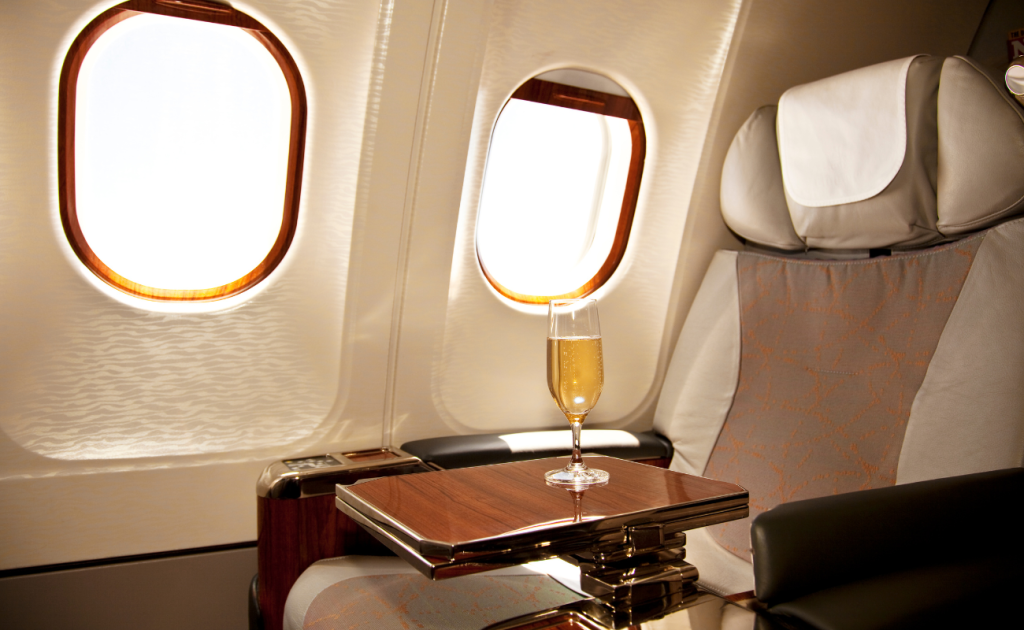
Alaska Airlines Mileage Plan stands out for exceptional partner redemptions:
- Japan Airlines business class to Asia: 60,000 miles one-way
- Cathay Pacific business class to Hong Kong: 50,000 miles one-way
- Emirates business class to Dubai: 90,000 miles round-trip
American AAdvantage excels for booking partner Etihad, Qatar Airways, and British Airways business class. United MileagePlus provides strong access to Lufthansa and Swiss business class inventory.
Airlines release limited award seats for mileage bookings, typically 5-15% of business class inventory. Search immediately when booking opens 11 months in advance for popular routes. Check frequently in the 2-3 weeks before departure when airlines release additional inventory.
Chase Ultimate Rewards, American Express Membership Rewards, Capital One, and Citi ThankYou Points all transfer to multiple airline programs. This flexibility lets you choose the program offering best availability and pricing for each booking rather than being locked into one airline.
Understanding these mileage strategies transforms premium cabin travel from an occasional luxury to a regular possibility. When combined with premium travel credit card benefits, you can access business class while building points for future travel.
Strategy 3: Book Discounted Business Class on New Routes and Airlines
Airlines launching new routes or entering new markets heavily discount business class fares to build passenger awareness and compete with established carriers. These promotional periods offer legitimate business class tickets at 40-70% below typical pricing, sometimes approaching premium economy costs.
2026 new route opportunities:
United’s new San Francisco-Hong Kong service started at $1,899 for business class versus $3,200 on competing carriers. Norse Atlantic expanded to Bangkok with introductory business fares at $1,299 versus $2,800 on established competitors. Delta’s new Seattle-Bangalore route launched with $2,499 business class versus $3,800 typical pricing.
Monitor airline press releases, aviation news sites, and flight search engines filtered for “new service” to identify these opportunities. Introductory pricing typically lasts 2-6 months after route launch.
Low-cost long-haul carriers:
New business models offer structurally lower business class pricing year-round:
- Norse Atlantic: New York to London from $699, Oslo from $799, Paris from $899
- JetBlue Mint: New York to London from $999, transcontinental from $499
- French Bee: San Francisco to Paris from $1,099, Tahiti from $1,399
These fares represent 50-65% discounts versus legacy carrier business class while providing lie-flat seats, premium meals, and enhanced service.
Error fares and mistake pricing:
Airlines occasionally publish incorrect business class fares due to currency conversion errors or system glitches. Recent examples include:
- Etihad: Los Angeles to Abu Dhabi business class at $480 (normally $4,500)
- British Airways: US cities worldwide at $550 (normally $3,000-$5,000)
- Singapore Airlines: US to Asia at $900-$1,200 (normally $4,000+)
Follow deal tracking sites like Secret Flying, The Flight Deal, and Going that monitor and alert subscribers about error fares within minutes of appearing. Act immediately, error fares typically last 1-6 hours before airlines correct them.
Strategic route selection:
Certain routes consistently price lower due to competition:
| Route Type | Average Discount | Best Airlines | Reasoning |
| West Coast to Asia | 25-35% lower | Chinese carriers, ANA | Multiple carrier competition |
| Secondary European cities | 30-40% lower | TAP, LOT Polish, Air France | Lower demand than London/Paris |
| Latin America | 35-45% lower | Copa, Avianca, LATAM | Smaller premium cabin demand |
| Middle East hubs | 20-30% lower | Emirates, Qatar, Etihad | Government-subsidized carriers |
Flying from San Francisco to Tokyo costs $3,800 on United but $2,600 on All Nippon Airways. Routing through secondary cities like Porto or Lisbon on TAP Portugal costs $2,200 versus $3,600 through London.
These strategies require monitoring and quick action but deliver authentic business class experiences at prices that challenge premium economy on legacy carriers.
Strategy 4: Leverage Elite Status for Complimentary Upgrades
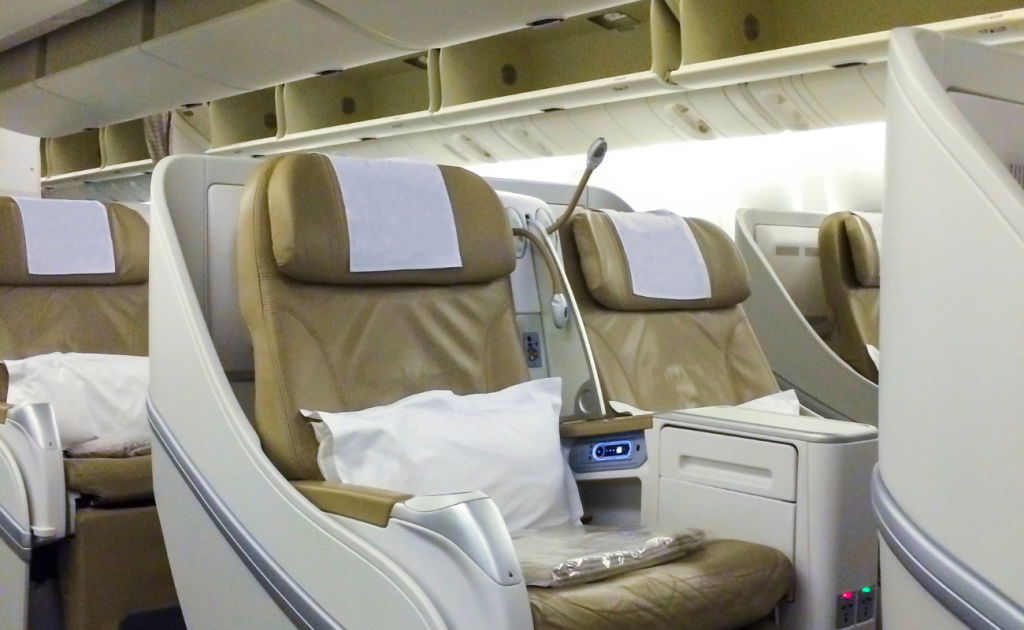
Airline elite status remains one of the most reliable paths to business class, particularly for frequent travelers on specific carriers. While earning top-tier status requires significant flying, the resulting complimentary upgrades can deliver thousands of dollars in value annually.
Top-tier status (75,000-125,000+ miles annually) delivers consistent upgrade success, with some programs offering guaranteed space-available upgrades. Delta Diamond members receive guaranteed upgrades on domestic flights when booked in eligible fare classes. United Premier 1K members receive 40 PlusPoints annually, enough for 6-8 domestic business class upgrades or 2-3 international upgrades.
Earning elite status efficiently:
The traditional path requires flying 50,000-125,000 miles annually at costs reaching $8,000-$20,000. Strategic approaches reduce this significantly:
Co-branded credit card spending: Delta Reserve cardholders earn 15,000 Medallion Qualifying Miles annually from $30,000 spend. This represents 20-30% of required miles for mid-tier status without flying.
Status matches and challenges: Airlines offer accelerated status to competitors’ elite members. Alaska offers status matches up to MVP Gold. United runs periodic status challenges requiring only 12,000 miles in 4 months.
Upgrade probability by route and tier:
| Route Type | Mid-Tier Status | Top-Tier Status | Optimal Booking Window |
| Domestic transcon | 15-25% | 65-80% | 5 days before departure |
| Domestic short-haul | 35-50% | 85-95% | Day of departure |
| International long-haul | 5-10% | 25-40% | At booking with points/miles |
| Hub to spoke routes | 40-60% | 80-90% | 3-7 days before |
Book early to appear higher on upgrade waitlists. Airlines process upgrades 5 days before departure, then again at 3 days, 24 hours, and at the gate. Choose less competitive flightsTuesday/Wednesday mid-morning departures have fewer elite passengers than Monday morning or Friday evening flights.
Elite status with one airline provides benefits across alliance partners. Star Alliance Gold status provides priority upgrade access on all 26 member carriers, multiplying the value since you can clear upgrades on international partners with less competition.
Strategy 5: Book Positioning Flights to Access Better Business Class Pricing
Business class fares vary dramatically based on departure city, creating opportunities to save $1,000-$3,000 by adding a short positioning flight. Airlines price based on market competition and local demand.
New York to London business class costs $4,200 on British Airways while Boston to London costs $2,900 on the same airline, a $1,300 difference despite Boston being only 190 miles from New York. The positioning flight costs $150-250, delivering net savings exceeding $1,000.
Cities with consistently lower business class pricing:
Secondary East Coast cities like Baltimore, Providence, and Philadelphia often price 25-35% below New York for transatlantic business class. West Coast alternatives like Seattle, Portland, and San Jose frequently undercut San Francisco and Los Angeles by 20-30% for Asia routes.
Calculate total cost including positioning flight, parking or transportation, potential hotel if overnight connection required, and travel time value. Savings must exceed $400-500 to justify the added complexity.
Example: San Diego to London business class costs $4,800. San Diego to Los Angeles economy ($180) plus Los Angeles to London business class ($3,200) totals $3,380s saving $1,420.
Geographic pricing patterns for 2026:
| Departure Region | Lowest Pricing Cities | Average Savings | Best Destinations |
| Northeast US | Boston, Baltimore, Philadelphia | $800-$1,500 | Europe, Middle East |
| Southeast US | Miami, Fort Lauderter Orlando | $600-$1,200 | Latin America, Europe |
| Midwest US | Chicago, Minneapolis, Detroit | $400-$900 | Europe, Asia |
| West Coast | Seattle, Portland, San Jose | $700-$1,400 | Asia, Oceania |
Miami consistently offers lowest business class pricing to Latin America$1,800 versus $2,600 from East Coast cities. Seattle prices $1,200 lower than Los Angeles for many Asia routes.
Book positioning and international segments separately unless you find a published through-fare. Build in minimum 3-4 hour connections for domestic-to-international positioning to avoid missing your international ticket if positioning delays occur.
Strategy 6: Target Last-Minute Upgrade Opportunities at the Gate
Airlines make final upgrade decisions 24 hours to boarding time based on actual passenger loads, creating opportunities for significantly discounted upgrades offered directly at gates or through airline apps. These last-minute upgrades average 40-70% below advance upgrade pricing.
Most airlines release discounted upgrade offers through their mobile apps 24-8 hours before departure. Delta shows available upgrades in the app with pricing starting at $99 domestically and $299 internationally. United offers “Same-Day Upgrade” options through the app and at gates.
Check your airline app every few hours starting at 24 hours before departure. Physical gate agents can process upgrades that might not appear in apps. After boarding begins, ask gate agents about upgrade availability.
Pricing patterns for gate upgrades:
| Route Type | Advance Upgrade | Gate Upgrade | Savings | Success Rate |
| Domestic under 1,000 miles | $199-$349 | $99-$149 | 40-50% | 60-70% |
| Domestic over 1,000 miles | $299-$699 | $149-$299 | 45-60% | 40-55% |
| International short-haul | $399-$899 | $299-$499 | 25-45% | 25-40% |
| International long-haul | $799-$1,499 | $499-$899 | 35-55% | 15-30% |
Success rates vary dramatically based on route popularity and season. Off-peak Tuesday/Wednesday flights see highest success rates. Friday evening and Sunday flights rarely have empty premium seats.
Check in exactly at the 24-hour mark to demonstrate engagement. Dress professionallygate agents exercise discretion and well-dressed, courteous passengers receive preference. Have payment method ready in mobile wallet for immediate transaction. Travel solo or as a couple, as finding 3-4+ adjacent business class seats is uncommon.
The gate upgrade strategy works best for flexible travelers without fixed premium cabin expectations. This opportunistic approach complements other strategies rather than serving as your primary business class access method.
Strategy 7: Book Through International Versions of Airline Websites
Airlines price tickets differently across country-specific versions of their websites, creating opportunities to save 20-45% by booking through foreign site versions. This pricing arbitrage exploits regional market differences and currency fluctuations.
A British Airways business class ticket from London to New York might cost £2,400 on BA.com’s UK site but $2,850 (£2,250) on the US site a $760 difference for identical seats.
Visit the airline’s main website and look for the country/region selector (usually bottom of page). Choose different countries and compare pricing for your exact itinerary. Use a VPN service if airlines block access based on your IP address, though many airlines now allow international bookings without VPN.
Countries with consistently lower business class pricing:
| Country Site | Typical Savings | Best Routes | Currency Considerations |
| India (.in) | 25-40% | India to US/Europe/Middle East | Rupee volatility creates opportunities |
| Mexico (.mx) | 20-35% | Mexico to US/Europe/Asia | Peso pricing often lags USD adjustments |
| Brazil (.br) | 30-45% | Brazil to US/Europe/Africa | Real pricing disconnected from USD |
| Indonesia (.id) | 25-35% | Southeast Asia to Europe/US | Rupiah pricing benefits strong USD |
Indian pricing particularly stands out. Air India, Emirates, Qatar, and Lufthansa often price business class 30-40% lower on their .in sites versus .com sites for identical routings.
Emirates regularly shows 25-35% savings booking through their India or Middle East sites versus US site. A Dubai to New York business class route that costs $5,200 on the US site might price at $3,800 on the Emirates India site.
Ensure your billing address and credit card are accepted. Most airlines accept international credit cards. Verify that booking confirmations show correct passenger names, dates, and routes. Check refund and change policies carefully, as some country-specific bookings have different terms.
Booking through international airline websites is completely legal. Airlines explicitly allow bookings from any country site you’re simply taking advantage of published pricing through legitimate channels.
Strategy 8: Utilize Corporate Discounts and Airline Partner Programs

Corporate discount codes and airline partner relationships provide access to unpublished business class fares averaging 15-30% below public pricing, often without requiring employment at the partner company.
When booking through airline websites, entering a corporate discount code in the “promo code” field triggers contracted corporate fares. These fares are separate inventory from published fares, sometimes with different availability and always with discounted pricing.
Legitimate access to corporate codes:
Many companies don’t restrict employee-discount codes to current employees. Alumni associations, professional organizations, and membership groups negotiate codes that members can use:
- American Express corporate codes available to cardholders
- AAA negotiated codes with various airlines
- AARP codes for members age 50+
- University alumni associations with airline partnerships
- Professional associations (medical, legal, engineering groups)
Airline-specific partner programs:
| Airline | Partner Program | Discount Range | Eligibility Requirements |
| United | Corporate Plus Partners | 15-35% off business | Varies by partner, often just membership |
| Delta | Corporate Sales | 20-30% off business | Employee or contractor status |
| American | Business Extra | 15-25% off business | Company enrollment, usage tracking |
| Alaska | Corporate Travel | 20-30% off first class | Small business friendly, easy enrollment |
Many airlines allow small businesses to establish corporate accounts with discount codes even for companies with limited travel volume. Alaska Airlines particularly welcomes small business enrollment with immediate access to corporate fares.
If you’re self-employed or own a business, enrolling in airline corporate programs provides legitimate access to business class discounts. Requirements often include just providing a business tax ID and company email with no minimum travel volume.
Join professional associations and alumni groups that offer airline partnerships. Annual membership fees of $50-150 quickly pay for themselves through a single business class booking discount. Maintain American Express business or premium personal cards that provide access to corporate booking tools.
Corporate codes often combine with other strategies. Book using a corporate code, then upgrade using miles or bid system for even better value. Some corporate fares earn full mileage despite discounted pricing, making them superior to published sale fares.
Strategy 9: Book During Airline Sales and Promotional Periods
Airlines run predictable sale cycles throughout the year, discounting business class during specific periods when demand dips. Understanding these patterns and acting quickly during sales captures business class at 30-60% below typical pricing.
Annual sale calendar for business class:
January-February sales launch early January to capture travelers booking spring and summer trips, offering 25-40% discounts on travel March through November. Fall sales in late August to September promote autumn travel with 30-45% business class discounts. Black Friday through Cyber Monday trigger major international business class promotions with discounts reaching 40-60%.
Airlines announce new sales Sunday evenings through Tuesday mornings. Competitors match within 24-48 hours. Sales typically end Thursday evenings or Sunday nights. Subscribe to airline email lists and set alerts on deal-tracking sites. Sales often feature limited inventory that sells out within 24-72 hours for popular routes.
Carrier-specific sale patterns:
| Airline | Best Sale Periods | Average Discount | Best Routes | Booking Window |
| United | January, September | 30-40% | Transatlantic, Latin America | 3-11 months out |
| Delta | February, Black Friday | 25-35% | Transatlantic, Asia | 2-10 months out |
| American | January, fall | 30-45% | Transatlantic, Caribbean | 3-9 months out |
| Emirates | March, November | 35-50% | US/Europe to Dubai | 2-8 months out |
| British Airways | January, September | 30-45% | US to London | 3-10 months out |
Emirates runs particularly aggressive sales twice annually, discounting business class to Dubai and connections beyond by 40-50%. British Airways January sales feature transatlantic business class starting around $2,000 round-trip (versus $4,000+ normally), but inventory sells out within days.
Beyond predictable sale periods, airlines occasionally launch unannounced flash sales lasting 12-72 hours when unexpected competition enters a market or load factors underperform. Following deal alert services (Secret Flying, Going, The Flight Deal) ensures you catch these unpredictable opportunities delivering 60-75% discounts.
Book refundable or changeable fares when available during sales. Prices might drop further, allowing you to rebook at lower pricing. Most airlines waive change fees on business class, making this risk-free. Book multiple options if considering different datesmost airlines allow 24-hour free cancellation.
Based on historical patterns, expect major business class sales around January 12-February 4, March 16-April 10, August 24-September 20, and November 27-December 1, 2026. Airlines increasingly coordinate sales around major shopping events knowing consumers are primed to make purchase decisions.
Strategy 10: Use Discounted Business Class Consolidators
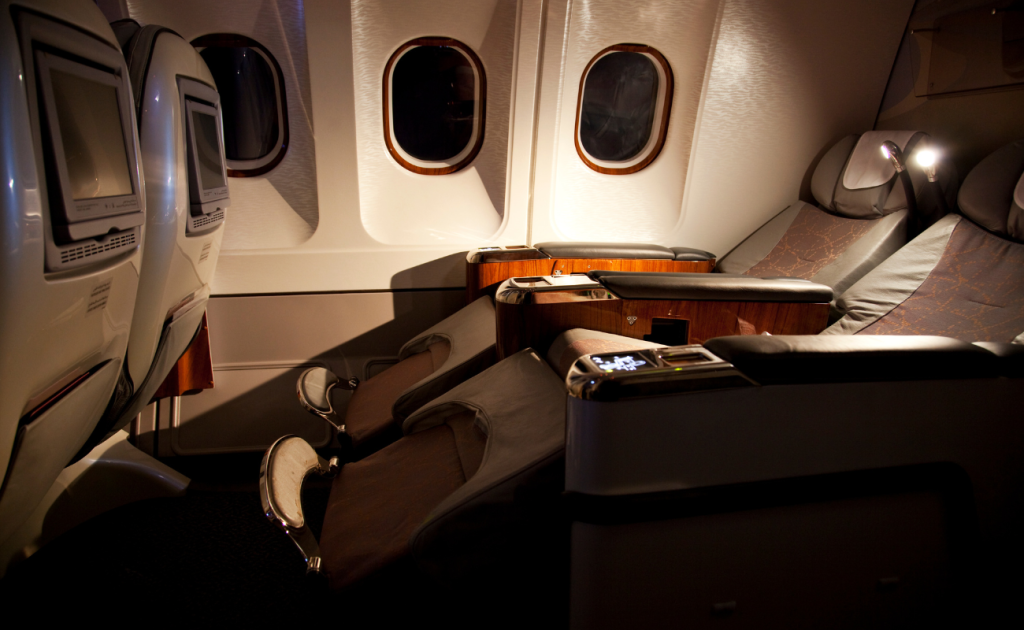
Specialized business class consolidators offer discounted premium cabin tickets by purchasing airline inventory in bulk or accessing unpublished fare classes unavailable through traditional booking channels. These specialized sellers consistently deliver 20-40% savings versus booking directly with airlines.
BusinessClassExperts.com specializes exclusively in premium cabin tickets with reported savings averaging 35% versus direct airline booking. They access unpublished fare codes and negotiate corporate rates extended to individual travelers.
FlightHub and CheapoAir maintain business class desk divisions handling premium cabin bookings with access to consolidated inventory. JustFly and FlyFar consolidate international business class, particularly on Middle Eastern and Asian carriers where they maintain strong airline relationships, with discounts reaching 25-40%.
Airlines provide consolidators access to special fare codes not visible to consumers through normal booking channels. These fares exclude standard commissions and distribution costs, passing savings to customers. Consolidators also purchase airline inventory speculatively during sales when airlines need to move seats.
The tradeoff: consolidator tickets often have stricter change and cancellation policies. Some consolidators charge service fees of $50-150 per ticket. Always verify your booking directly with the operating airline within 24-48 hours using your confirmation code.
Consolidator inventory fluctuates based on airline sales and available inventory. The best deals appear in January-February post-holiday low demand, September-October shoulder season, 2-4 weeks before departure when airlines assess loads, and Sunday evenings through Tuesday mornings when fare updates process.
International long-haul flights see greatest savings through consolidators/transatlantic, transpacific, and routes to the Middle East/Africa. Domestic US business class rarely shows significant consolidator discounts. For planned travel 3-6 months out, consolidators excel at finding promotional fares you might otherwise miss.
Strategy 11: Book Mixed Cabin Itineraries and Upgrade Selectively
Flying economy on shorter segments while paying for or upgrading to business class on long-haul portions creates optimized value, delivering premium comfort where it matters most at 40-60% of full business class journey costs.
Business class on 2-3 hour flights provides limited additional comfort versus economy. That same premium on 10-14 hour overnight flights transforms the travel experience through lie-flat seats and quality rest. Strategic cabin mixing delivers 70-80% of full business class benefits at a fraction of cost.
Book connecting itineraries with economy domestic positioning and business class international. Example: San Francisco to Newark economy ($250), Newark to London business class ($2,400) totals $2,650 versus $4,800 for full business class journey saving $2,150 while enjoying premium service on the meaningful segment.
Cost comparison for mixed-cabin strategies:
| Route Example | Full Business Class | Mixed Cabin Strategy | Savings |
| San Francisco-London-Rome | $6,200 | Economy positioning + Business transatlantic | $2,800 |
| New York-Dubai-Maldives | $8,400 | Business to Dubai + Economy regional | $3,600 |
| Los Angeles-Tokyo-Bangkok | $7,800 | Business LA-Tokyo + Economy regional | $3,200 |
Purchase economy or premium economy initially, then use miles or bid systems to upgrade only the long-haul segment. This conserves upgrade currency for flights where business class delivers maximum value. Use airline co-branded credit cards offering annual upgrade certificates specifically for overnight long-haul flights.
Book two one-way tickets instead of round-trips when mixed cabins make sense. Airlines price one-ways independently, sometimes creating economical combinations. Complex itineraries create opportunities for strategic cabin mixing through multi-city and open-jaw bookings.
The mixed-cabin approach requires careful analysis of each journey’s segments but delivers optimal value by investing in comfort where it provides genuine benefit while economizing on segments where cabin class differences matter less.
Strategy 12: Combine Multiple Strategies for Maximum Savings
The most sophisticated travelers layer multiple strategies to achieve business class access at 60-80% below published rates. Strategic combination multiplies savings beyond what any single approach delivers.
Optimal strategy combinations by traveler profile:

Frequent business travelers should concentrate spending on one airline’s co-branded credit card to earn elite status, use status for complimentary domestic upgrades, book international business class during sales using corporate codes, and deploy upgrade certificates strategically.
Annual cost: $8,000-12,000 in concentrated flying. Return: 15-25 business class flights through upgrades and strategic booking. Effective cost: $400-600 per business class flight.
Leisure travelers with flexibility should accumulate miles through credit card sign-up bonuses while monitoring consolidators and flash sales, book positioning flights to access better pricing, and use bid upgrade systems on premium economy base fares.
Annual cost: $3,000-5,000 in credit card spending for bonuses. Return: 3-5 international business class trips. Effective cost: $600-1,000 per round-trip.
Example of maximum strategy layering:
Goal: Round-trip business class New York to Tokyo for two passengers.
Accumulate 150,000 points through two credit card sign-up bonuses ($8,000 minimum spend over 3 months). Transfer points to All Nippon Airways for 75,000 miles each way per person. Book using points for $11.20 in taxes/fees per ticket.
Alternative if award availability unavailable: Monitor sales January-February, find Japan Airlines business class sale $2,600 per person versus $5,200 regular pricing. Check pricing on JAL’s Japan website for additional 15-20% savings ($2,200 per person). Book premium economy initially at $1,600, then bid $400-500 for business upgrade, total $2,000-2,100 if upgrade clears.
Result: Two passengers in business class combined $4,000-4,400 versus $10,400 at standard rates. Savings: $6,000+ per couple.
Time investment versus savings:
Initial setup requires 8-12 hours. Ongoing monitoring takes 2-3 hours monthly. Per-booking research needs 2-4 hours per trip. Average savings per business class booking: $1,500-3,500. Effective hourly return: $150-400 depending on frequency.
Start with 2-3 strategies matching your travel patterns. Master these before adding complexity. A business traveler should focus first on elite status and corporate codes. A leisure traveler should prioritize miles accumulation and sales monitoring. Track your results to identify which strategies deliver best returns for your situation.
Airlines continue expanding dynamic pricing, creating both challenges and opportunities. Competition from low-cost long-haul carriers pressures legacy carrier business class pricing, creating more frequent sales. Credit card sign-up bonuses remain strong as issuers compete for premium customers.
The combination approach transforms business class from aspirational luxury to accessible comfort for strategic travelers willing to invest time in learning and executing these strategies.
Conclusion
Accessing business class affordably in 2026 requires understanding how airlines price premium cabins, when they discount inventory, and which strategies deliver maximum value for your travel patterns. The 12 approaches covered herefrom upgrade bidding and mileage redemptions to strategic positioning and sales timing provide a comprehensive toolkit for reducing business class costs by 50-75%.
The most successful travelers combine multiple strategies, accumulating points through credit cards while monitoring sales, booking strategic routes while maintaining upgrade-eligible status. This layered approach delivers consistent business class access at costs approaching premium economy pricing. Whether you fly twice yearly or twice monthly, implementing even a few of these strategies transforms how affordably you can experience premium cabin comfort.
Ready to optimize your entire travel experience beyond just flight bookings? Explore comprehensive travel strategies, airline policies, and insider tips at TalkTravel’s complete resource center covering everything from security navigation to maximizing travel rewards.
Frequently Asked Questions
What is the cheapest way to fly business class internationally in 2026?
The cheapest approach combines credit card sign-up bonuses with award redemptions during off-peak periods. Accumulating 140,000-180,000 points through 2-3 card bonuses lets you book round-trip international business class for just taxes and fees ($50-200). Alternatively, booking during January-February sales on low-cost long-haul carriers delivers paid business class for $1,800-2,400 versus typical $4,000-5,000 pricing.
Can you upgrade to business class after booking economy?
Yes, through several methods. Most airlines offer paid upgrades ranging from $300-$1,200 depending on route and availability. Many carriers also run upgrade auction systems where you bid for upgrades 5-7 days before departure. Additionally,
elite status members receive complimentary space-available upgrades, and frequent flyer miles can purchase upgrades on most major carriers. Success rates vary dramatically by route, season, and your status level.
How many miles do you need for business class upgrades?
Domestic upgrades typically require 15,000-30,000 miles each way. Transatlantic upgrades need 30,000-50,000 miles one-way. Transpacific and other long-haul routes require 50,000-80,000 miles one-way. However, programs vary significantlyAlaska Airlines charges as few as 15,000 miles for partner upgrades while United can charge 80,000+ miles for international upgrades depending on route and fare class.
Are business class upgrade bids worth it?
Upgrade bids provide good value when you’re satisfied with your base ticket but would enjoy business class at the right price. Bid acceptance rates average 25-40% on international routes and 40-60% domestically. The risk-free nature (you only pay if accepted) makes bidding worthwhile. However, don’t bid amounts approaching the cost difference between booking business class directly, as you’re essentially pre-paying without guarantee of upgrade success.
Which airlines have the best business class upgrade programs?
Alaska Airlines offers the most generous mileage upgrade costs and highest success rates, particularly on partner airlines. Delta provides excellent value through their Medallion status complimentary upgrades on domestic flights. United’s PlusPoints system gives top-tier elites strong international upgrade access. For paid upgrades, Virgin Atlantic and Air Canada’s bidding systems show high acceptance rates at reasonable price points compared to legacy US carriers.
Can you book business class with credit card points?
Yes, most premium travel credit cards earn points that transfer to airline frequent flyer programs where you can redeem for business class awards. Chase Ultimate Rewards, American Express Membership Rewards, Capital One miles, and Citi ThankYou Points all transfer to multiple airline partners. Alternatively, Chase and Capital One let you book any flight through their travel portals using points at fixed redemption rates of 1.25-1.5 cents per point for business class.
Is it cheaper to book business class directly with airlines or through third parties?
Direct airline booking typically provides better prices and customer service for business class, though specialized consolidators occasionally beat direct pricing by 15-30%. For most purchases, booking directly with airlines provides better change/cancellation flexibility and customer service when irregular operations occur, which justifies any minor price premium over third-party sites.