
Introduction
Yes, you can bring a tote bag as a personal item on most airlines in 2026, but it must fit under the seat in front of you and meet specific size requirements that vary by carrier. Airlines are now strictly enforcing personal item dimensions, with gate agents checking bags more closely than ever before.
The 2026 crackdown means your tote bag needs to comply with airline-specific measurements or risk unexpected fees ranging from 35 to 75 dollars at the gate. Understanding these rules saves money and eliminates boarding stress.
What Qualifies as a Personal Item on Airlines in 2026
Airlines define personal items as smaller bags that must fit completely under the seat in front of you, not in the overhead bin. The Federal Aviation Administration requires all carry-on items to fit either under a seat or in enclosed storage compartments, but airlines set their own size restrictions.
Personal items typically include purses, laptop bags, small backpacks, briefcases, camera bags, and tote bags. The key distinction is size and placement. If your bag needs overhead bin space, airlines classify it as a carry-on, not a personal item.
Gate agents now use digital boarding systems that track bag counts and flag passengers with oversized items. In 2026, enforcement shifted from occasional checks to systematic verification at every gate.
Standard Personal Item Size Limits by Airline Type
Major US Carriers Personal Item Dimensions
The most common personal item size across major US airlines follows the 18 x 14 x 8 inch standard, though specific carriers vary slightly. Delta Airlines does not officially list exact dimensions but expects items to fit under the seat, generally accepting bags around this size range. American Airlines sets their limit at 18 x 14 x 8 inches, making it one of the most generous allowances among major carriers.
United Airlines restricts personal items to 17 x 10 x 9 inches, which is noticeably smaller than competitors. Southwest Airlines does not specify exact dimensions but requires items to fit under the seat comfortably. Alaska Airlines follows similar guidelines without publishing specific measurements.
These measurements always include handles, wheels, and any protruding pockets. Airlines now measure the total external dimensions of your packed bag, not the manufacturer’s empty bag specifications.
Budget Airlines Strict Size Requirements
Budget carriers enforce the strictest personal item rules because carry-on fees are a major revenue source, so they use gate sizers aggressively and frequently challenge borderline bags.
- Spirit Airlines: Personal item limit 18 x 14 x 8 in; charges roughly $35–$75+ if your bag is larger, depending on when you pay.
- Frontier Airlines: Same personal item limit 18 x 14 x 8 in with similar fee timing (cheapest online, most expensive at the gate).
- Allegiant Air: Smallest allowance at 7 x 15 x 16 in, more restrictive than most carriers.
- Breeze Airways: Personal item limit 17 x 13 x 8 in.
Enforcement: Many of these airlines place bag sizes at gates and check bags frequently, especially on full flights.
Newer 2025–2026 trend: Some routes apply combined weight limits across your personal item carry-on, often capping totals around 15–22 lbs, which increases the risk of surprise gate fees if you’re packed heavy.
International Carriers Personal Item Standards
International airlines typically use metric measurements and enforce weight limits more strictly than US carriers. Emirates allows economy passengers one bag not exceeding 7 kg with dimensions of 55 x 38 x 20 cm for cabin bags, though personal item specifications are less defined. Most European carriers follow the 55 x 40 x 23 cm standard for cabin luggage.
Asian carriers often enforce both size and weight restrictions, with many limiting personal items to 7 kg regardless of dimensions. Middle Eastern airlines tend to be more generous with checked baggage but watch cabin luggage weight closely on certain routes.
When flying internationally, always verify the operating carrier’s rules, not just the airline you booked through. Codeshare flights follow the operating airline’s baggage policies, which can differ significantly from the booking carrier.
2026 Airline Baggage Policy Comparison Table
| Airline | Personal Item Size | Carry-On Size | Personal Item Free | Weight Limit |
| American Airlines | 18 x 14 x 8 in | 22 x 14 x 9 in | Yes | None listed |
| Delta Air Lines | Fits under seat | 22 x 14 x 9 in | Yes | None listed |
| United Airlines | 17 x 10 x 9 in | 22 x 14 x 9 in | Yes (Basic Economy) | None listed |
| Southwest Airlines | Fits under seat | 24 x 16 x 10 in | Yes | None listed |
| Alaska Airlines | Fits under seat | 22 x 14 x 9 in | None listed | None listed |
| Spirit Airlines | 18 x 14 x 8 in | 22 x 18 x 10 in | Yes | 40 lbs combined |
| Frontier Airlines | 14 x 18 x 8 in | 24 x 16 x 10 in | Yes | 35 lbs carry-on |
| Allegiant Air | 7 x 15 x 16 in | 22 x 14 x 9 in | Yes | None listed |
| JetBlue Airways | Fits under seat | 22 x 14 x 9 in | Yes | None listed |
| Breeze Airways | 17 x 13 x 8 in | 22 x 14 x 9 in | Yes | 35 lbs carry-on |
Can Tote Bags Fit Within Personal Item Size Limits
Most standard tote bags exceed personal item dimensions when fully packed, which creates problems at the gate. A typical shopping tote measures 15 to 20 inches tall and 12 to 18 inches wide, putting it at or above the size limits for most carriers. The depth when packed often reaches 6 to 10 inches.
Structured tote bags with rigid sides and bottoms almost always get flagged by gate agents in 2026 because they cannot compress to fit under seats. Soft-sided, unstructured totes without internal frames have better chances of passing inspection if they remain under the size limits.
The new enforcement focuses on shape and volume, not just the bag type. Gate agents now look for bags that appear boxy or oversized, regardless of what you call them. A structured tote with visible contents above the rim draws immediate attention during boarding.
How Airlines Enforce Personal Item Rules in 2026
New Digital Tracking Systems at Gates
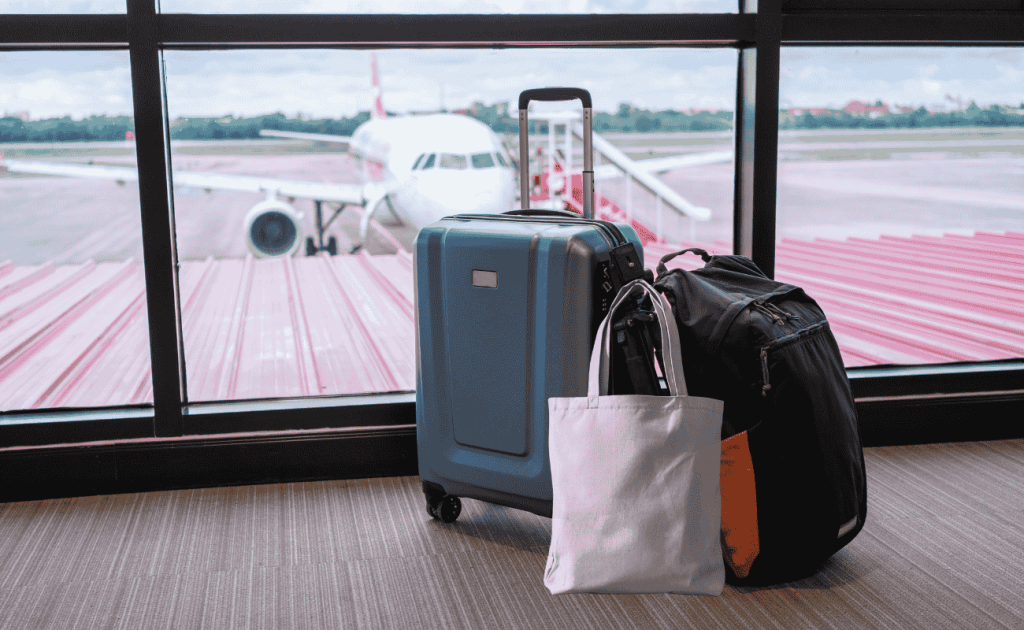
Airlines implemented digital boarding systems in 2026 that scan your boarding pass and display your bag allowance on agent tablets. The system flags passengers whose profiles show bag count violations or whose fare types restrict carry-ons to personal items only.
Gate agents receive alerts when passengers approach with items that appear to exceed allowances. This technology shift means agents have your bag information before you reach the podium, making enforcement more consistent and harder to negotiate.
American Airlines removed metal bag sizers from gates in October 2025, giving agents more discretion to assess borderline bags. However, other carriers increased enforcement with digital measurements and weight checks at boarding doors.
Weight Limits Now Combined with Size Checks
Many airlines started weighing personal items and carry-ons together in late 2025, particularly on international routes. The combined weight typically cannot exceed 15 to 22 pounds depending on the carrier. A heavy laptop bag packed with electronics can push travelers over this limit even if dimensions comply.
Spirit and Frontier combine weight allowances, meaning your personal item and carry-on together must stay under 40 to 35 pounds respectively. This catches travelers who pack light in one bag but heavy in the other.
Gate agents now use portable scales at boarding doors for random checks and targeted inspections. If your bag looks overstuffed or difficult to carry, expect a weight verification.
What Happens When Your Bag Does Not Comply
Gate agents will require you to check oversized or overweight personal items, with fees ranging from 35 dollars to 75 dollars depending on the airline and when payment occurs. The gate fee is always the highest option, often double what you would pay online during booking.
Some airlines offer gate checking for free if the overhead bins fill up, but this only applies to properly sized carry-ons, not oversized personal items. Budget carriers strictly enforce paid checking for any item exceeding personal item dimensions.
Refusing to comply can result in denied boarding. Gate agents have full authority to prevent passengers with non-compliant baggage from entering the aircraft. For more information on your rights during these situations, check out flight delays, cancellations, and passenger rights in 2026.
Step by Step Guide to Measure Your Tote Bag Correctly
Required Tools for Accurate Measurement
You need a flexible tape measure, a luggage scale, and access to the airline’s official website for current size requirements. Measure the bag when fully packed exactly as you plan to carry it, not empty from the store.
Place the bag on a flat surface in its natural packed state without forcing compression. Include all external dimensions including handles that do not retract, wheels, and any protruding pockets or zippers.
Digital luggage scales cost 10 to 20 dollars and prevent surprise fees at gates. Weigh your personal item separately from your carry-on to understand how close you are to weight limits.
Proper Measurement Technique for Personal Items
Measure height from the bottom of the bag to the very top, including handles if they extend above the main body. Measure width at the widest point side to side when the bag is packed. Measure depth from front to back at the thickest point after packing.
Add these three numbers together to get linear inches if the airline uses combined measurements. For example, an 18 x 14 x 8 inch bag totals 40 linear inches. Some carriers have both individual dimension limits and linear inch caps.
Take photos of your bag next to the measuring tape showing all three dimensions. This documentation helps if gate agents question your measurements during boarding.
Testing Your Bag at Home Before Flying
Create a makeshift under-seat space at home using airline specifications. Most economy seats have approximately 17 inches of width, 13 to 15 inches of depth, and 8 to 10 inches of height under the seat in front.
Use boxes or books to create these dimensions and test whether your packed tote bag fits without forcing. If you need to squeeze or push the bag to make it fit at home, it will fail at the gate.
Consider that airplane seats have metal bars and structures that reduce actual storage space below published dimensions. A bag that barely fits your test space will likely not fit under an actual airplane seat.
Types of Tote Bags That Work as Personal Items
Soft-Sided Collapsible Totes
Unstructured fabric totes without internal frames work best as personal items because they compress to fit available space. Canvas, nylon, and polyester materials allow the bag to mold around other items under the seat.
Avoid totes with rigid plastic or cardboard bottom inserts that prevent compression. These structures make bags appear larger and prevent them from fitting in tight spaces. Gate agents specifically look for rigid structures when assessing bags.
Foldable travel totes designed specifically for airline use typically measure 16 to 18 inches in length and compress to 6 to 8 inches in depth. These bags often include trolley sleeves to attach to rolling luggage handles for easier transport.
Underseat Travel Tote Specifications
Purpose-built underseat totes maximize the 18 x 14 x 8 inch allowance while maintaining organized storage. These bags feature multiple compartments for laptops, tablets, documents, and personal items without exceeding size limits.
Many underseat totes include compression straps that cinch the bag smaller for tight spaces. Water-resistant materials protect contents during overhead bin placement if space becomes available.
Premium underseat totes cost 30 to 80 dollars but pay for themselves by eliminating checked bag fees on budget carriers. Look for models specifically listing airline compliance for Spirit, Frontier, and other strict carriers.
What Tote Styles to Avoid at Gates
Large shopping totes, beach bags, and oversized grocery totes almost never qualify as personal items due to excessive height and width. Even when empty, these bags suggest capacity beyond airline limits.
Structured leather totes with reinforced sides and bottoms get flagged consistently in 2026 because they cannot compress. The professional appearance does not matter if dimensions exceed limits.
Totes with visible items sticking above the rim create an automatic red flag for gate agents. Any bag that appears stuffed or overpacked draws scrutiny regardless of actual measurements.
Smart Packing Strategies for Tote Bag Personal Items
Maximizing Space Within Size Restrictions
Use packing cubes to compress clothing and keep items organized without adding bulk. Roll clothes instead of folding to maximize every inch of available space inside your tote.
Pack heaviest items like shoes and electronics at the bottom where they distribute weight better and create a flatter profile. Place soft items like jackets around the edges to maintain a compliant shape.
Wear your bulkiest clothing items including jackets, hoodies, and heavy shoes during boarding rather than packing them. This strategy frees up significant space in your personal item for other essentials. Learn more about selecting comfortable seating when planning your flight through our guide on how to identify window seat types.
Items That Should Always Go in Personal Items
Keep all valuables, electronics, medications, important documents, and anything you need during the flight in your personal item. Airlines require carry-on bags to go in overhead bins, which may be several rows away from your seat.
Laptops, tablets, e-readers, phones, chargers, and headphones must stay accessible throughout the flight. Place these in easily accessible pockets so you can retrieve them during flight without disturbing overhead storage.
TSA-compliant toiletries in your quart-sized bag, snacks for the flight, and a refillable water bottle should go in your personal item for security checkpoint convenience. Having these items easily accessible speeds up the screening process significantly.
Organization Tips to Appear Compliant
To appear compliant at the gate, your goal is to make your tote look compact, structured, and easy to slide under the seat because bulging bags attract attention even when the dimensions are technically within limits.
- Pack below the rim: Keep items under the top edge so nothing sticks out, which makes the bag look smaller and more controlled.
- Use internal pockets to prevent bulging: Distribute weight evenly so the sides stay smooth and the bag holds its shape instead of looking overstuffed.
- Present it as a single setup while walking: Attach your personal item to your carry-on using a trolley sleeve or carabiner so it looks intentional and policy-compliant during airport navigation.
A tote bag can look “non-compliant” even when it meets size rules if it’s bulging or overflowing, so keep it compact, structured, and easy to slide under the seat. Pack below the rim, distribute weight evenly, and present it neatly at the gate to reduce scrutiny and avoid surprise fees.
Additional Free Items Allowed Beyond Personal Items
Items That Do Not Count Toward Limits
Airlines allow certain items in addition to your personal item and carry-on without counting them against your allowance. Jackets, coats, and other outer garments can be carried separately or worn during boarding on all major carriers.
Small umbrellas, walking canes, and assistive devices do not count as personal items. Child safety seats, strollers, and diaper bags for passengers traveling with infants receive exemptions from bag counts.
Food purchased after security, reading material like books or magazines, and prescription medications in reasonable quantities can be carried separately. These exemptions remain consistent across most US carriers in 2026.
Medical Equipment and Assistive Devices
CPAP machines, oxygen concentrators, and other medical equipment do not count as personal items or carry-ons. Airlines must accommodate medical devices as required by federal regulations regardless of size.
Mobility devices including wheelchairs, walkers, and crutches receive special handling and do not count toward baggage allowances. Gate agents will tag and check these items for you free of charge.
Carry documentation from your doctor for prescription medications and medical devices to expedite security screening. TSA allows quantities exceeding the 3.4 ounce liquid limit for essential medical items with proper notification.
Baby and Child Travel Exemptions
Parents traveling with infants can bring a diaper bag in addition to their personal item and carry-on at no charge. This exemption applies even on budget carriers that normally restrict free baggage strictly.
Breast pumps and reasonable quantities of breast milk, formula, and baby food exceed normal liquid restrictions without penalty. TSA provides expedited screening for these items when you notify agents at the checkpoint.
Collapsible strollers can be gate-checked free of charge and returned at the aircraft door upon arrival. This service applies universally across airlines and represents one of the most consistent policies in 2026.
Common Mistakes That Lead to Gate Fees
Misunderstanding Airline-Specific Rules
Assuming all airlines follow the same personal item size creates expensive surprises at budget carrier gates. Spirit and Frontier enforce much stricter limits than Delta or American, catching travelers off guard.
Booking through third-party sites sometimes obscures the actual operating airline’s baggage rules. Codeshare flights follow the operating carrier’s policies, not the airline you purchased tickets from.
Failing to check airline websites before departure leads to policy misunderstandings. Airlines update rules frequently, and 2026 saw significant enforcement changes across most carriers.
Overpacking Common Oversized Items
Laptop bags designed for 17-inch computers regularly exceed personal item dimensions when packed with accessories. These professional bags appear compliant but measure 18 to 20 inches in length when full.
Camera bags with multiple lenses and accessories quickly surpass size and weight limits. Photographers often underestimate how heavy and bulky their equipment becomes when traveling.
Purses or tote bags stuffed with purchases from airport shops create instant size violations. The items you buy after security still must fit within your existing personal item or count as additional bags.
Trying to Game the System
Carrying a tote bag loosely in your hand while boarding makes it appear larger and draws gate agent attention. Wear it on your shoulder or compress it against your body to minimize its visual profile.
Removing items from your personal item to temporarily reduce size at the gate does not work because agents check packed dimensions. They may ask you to repack the bag to verify it fits the sizer.
Arguing with gate agents about measurements wastes time and rarely changes outcomes. They enforce airline policies consistently in 2026, and confrontational passengers risk additional scrutiny or denied boarding. Understanding airline efforts to reduce flight delays helps explain why strict boarding procedures now occur.
Budget Airlines vs Full-Service Carriers Personal Item Policies
Why Budget Airlines Enforce Stricter Limits
Ultra-low-cost carriers generate substantial revenue from baggage fees, making enforcement a profit center rather than just a policy. Spirit Airlines reported that ancillary fees including baggage charges represented 48 percent of their total revenue in 2025.
Budget airlines design their business model around unbundling services, selling the lowest possible base fare and charging separately for everything beyond a personal item. This strategy keeps advertised prices competitive while generating revenue from add-ons.
The strict enforcement also improves boarding times and on-time performance metrics. Fewer oversized bags mean faster boarding, which reduces gate delays and helps airlines avoid penalties for poor punctuality.
Full-Service Carrier Flexibility Differences
Major airlines like Delta, American, and United generate most revenue from ticket sales and premium cabin upgrades rather than baggage fees. This makes them more lenient with borderline personal items that do not significantly disrupt operations.
American Airlines removed metal bag sizers in late 2025, giving gate agents discretion to assess bags based on appearance and passenger cooperation. This change reflects a customer service approach rather than strict enforcement.
Full-service carriers allow Basic Economy passengers one free personal item but restrict carry-ons, creating a middle ground between budget and premium fares. The personal item allowances remain generous compared to ultra-low-cost competitors.
Fee Structure Comparison Across Carriers
Spirit charges 37 dollars online during booking, 50 dollars during online check-in, and 75 dollars at the gate for carry-on bags. These escalating fees incentivize early payment and punish last-minute decisions.
Frontier uses similar pricing with bags costing 35 to 45 dollars online and jumping to 60 to 75 dollars at gates. The exact amount depends on route and travel date using dynamic pricing algorithms.
Major carriers typically charge 30 to 35 dollars for the first checked bag but do not fee properly sized carry-ons and personal items. This approach prioritizes passenger satisfaction over maximizing baggage revenue.
International Travel Personal Item Considerations
Metric Measurement Conversions for US Travelers
Understanding centimeter measurements prevents confusion when flying international carriers. The common 18 x 14 x 8 inch US standard converts to approximately 46 x 36 x 20 centimeters.
European carriers typically use 55 x 40 x 23 cm for cabin bags and 40 x 30 x 15 cm for personal items. These dimensions are slightly smaller than most US carrier allowances, requiring careful packing for international flights.
Weight limits matter more internationally, with many carriers enforcing 7 to 10 kg maximums for cabin baggage regardless of size compliance. A bag that fits dimensions but exceeds weight limits will incur fees.
Regional Policy Variations to Know
Asian carriers enforce weight restrictions strictly, often checking both carry-ons and personal items at check-in counters. Exceeding the 7 kg limit on many Asian airlines results in mandatory checking with associated fees.
Middle Eastern airlines like Emirates and Qatar Airways provide generous checked baggage allowances but monitor cabin baggage closely for safety and capacity reasons. Personal item policies remain less defined than US carriers.
European budget carriers including Ryanair and EasyJet have very small free personal item allowances around 40 x 20 x 25 cm. Anything larger requires purchasing priority boarding with larger cabin bag allowances.
Customs and Transit Connection Complications
Duty-free shopping after security creates personal item complications on connecting flights. Items purchased must fit within your existing personal item or count as additional bags on your next flight.
Transit connections through different countries may involve re-clearing security where bag counts and sizes get checked again. What passed on your first flight may not comply with the second carrier’s stricter rules.
Some countries including the United States require you to collect and recheck bags during international connections. This process provides opportunities to reorganize items between your checked bag and personal item before the next flight.
Special Situations and Exceptions
Business Travel Professional Bag Options
Business travelers need laptop access and document organization while maintaining compliance with personal item sizes. Briefcases and laptop bags specifically designed for air travel typically measure 17 x 12 x 6 inches.
Many professional bags include expansion zippers that increase capacity for short trips but compress flat for airline compliance. These convertible designs serve double duty as personal items and overnight bags.
Hard-sided laptop cases rarely work as personal items because they cannot compress and often exceed depth limits. Soft-sided professional bags with padded laptop sleeves provide better size management and protection.
Student Travel Backpack Guidelines
Students often carry backpacks larger than personal item limits, creating problems on budget airlines. A standard school backpack measuring 18 x 12 x 10 inches exceeds most carrier depth restrictions by 2 to 4 inches.
Slim laptop backpacks designed for commuting typically fit personal item requirements better than full-size hiking or school backpacks. Look for dimensions around 17 x 11 x 7 inches for airline compliance.
Pack textbooks and heavy items in checked baggage when possible to reduce personal item weight. Carry only essential electronics and materials needed during travel in your backpack.
Family Travel with Multiple Personal Items
Each ticketed passenger receives their own personal item allowance regardless of age. A family of four flying together can bring four personal items plus four carry-ons if the fare class permits.
Lap infants under age 2 without purchased seats do not receive separate personal item allowances. Parents must fit the infant’s supplies within their own bags or check additional items.
Coordinating family baggage requires planning to distribute items efficiently across multiple bags. One parent might carry electronics while another handles snacks and entertainment to maximize space utilization.
TSA Security Screening with Personal Item Tote Bags
Liquids and Gels in Tote Bags
TSA maintains the 3-1-1 rule in 2026 requiring all liquids, gels, and aerosols in containers of 3.4 ounces or less, placed in one quart-sized clear plastic bag per passenger. This single bag must be easily accessible in your personal item for screening.
Place your liquids bag in an outer pocket or on top of your personal item contents so you can quickly remove it at security. Fumbling through a packed tote bag holds up the security line and frustrates fellow travelers.
Exceptions exist for medications, baby formula, and breast milk in reasonable quantities exceeding 3.4 ounces. Notify TSA officers at the checkpoint beginning that you have these items for expedited screening procedures.
Electronics and Laptop Screening Requirements
Standard screening requires removing laptops from bags for separate X-ray scanning. Place your laptop in a bin by itself without other items touching it for clear imaging.
Tablets, e-readers, and phones can typically remain in your personal item during screening unless the officer requests removal. TSA PreCheck members can leave all electronics in their bags during expedited screening.
New CT scanners at some airports allow electronics to remain in bags during screening, but this technology is not universal. Check TSA signage at your specific security checkpoint for current procedures. Preparing these items properly helps you breeze through checkpoints, similar to having your boarding pass ready to print.
Food Items in Personal Items
Solid food items can pass through security in personal items without restrictions. Sandwiches, snacks, fruit, baked goods, and candy present no issues during screening.
Liquid or gel-like foods including yogurt, pudding, salsa, dips, sauces, and spreads count toward your 3.4 ounce liquid limit. Pack these items in your checked bag or purchase them after security to avoid confiscation.
Frozen foods are allowed if completely frozen solid during screening. Partially melted ice packs or frozen items count as liquids and face the 3.4 ounce restriction.
How to Choose the Right Personal Item Bag for Your Travel Style
Weekend Traveler Requirements
Weekend trips require balancing limited space with 2 to 3 days of essentials. A tote measuring 17 x 13 x 7 inches provides approximately 1,500 cubic inches of packing space when efficiently organized.
Focus on versatile clothing items that mix and match to create multiple outfits from fewer pieces. Pack one or two outfit changes plus essentials in your tote while wearing your bulkiest items during travel.
Compression packing cubes reduce clothing volume by 30 to 50 percent, allowing weekend travelers to fit more in compliant personal items. This investment costs 20 to 40 dollars but enables carry-on-only travel.
Frequent Flyer Priorities
Frequent travelers prioritize durability and organization over maximum size. Bags that constantly get stuffed under seats need reinforced stitching and quality zippers that withstand hundreds of flights.
Look for personal item bags with dedicated laptop compartments, multiple organizational pockets, and trolley sleeves for attachment to rolling luggage. These features maintain efficiency during regular travel.
Water-resistant or waterproof materials protect expensive electronics during unexpected spills or weather exposure. This feature becomes essential for travelers making 20 or more flights annually.
Occasional Traveler Basic Needs
Occasional flyers flying 2 to 4 times per year can use versatile bags that serve multiple purposes beyond air travel. A quality gym bag or large purse that happens to meet airline dimensions eliminates purchasing specialized luggage.
Focus on bags that compress when not fully packed rather than rigid structures that maintain shape. This flexibility allows the bag to work for various trip lengths and purposes.
Budget-friendly options from mainstream retailers like Target, Walmart, or Amazon provide adequate quality for occasional use. Spending 30 to 50 dollars gets a compliant bag without overinvesting in specialized travel gear.
Real Passenger Experiences and Lessons Learned
Gate agents denied boarding to passengers with oversized totes on Spirit Airlines flights throughout 2025, creating viral social media moments and heightened awareness. These incidents revealed that many travelers assumed their everyday bags automatically qualified as personal items.
A United Airlines passenger reported that their 19 x 13 x 9 inch tote passed inspection at one gate but got flagged at another airport the following week. This inconsistency highlights how different gate agents interpret borderline cases.
Budget airline passengers frequently report surprise fees of 60 to 75 dollars at gates for bags they believed were compliant. These experiences emphasize the importance of measuring bags before departure rather than estimating dimensions.
Expert Tips from Flight Attendants and Gate Agents
Flight attendants recommend packing your personal item the night before you travel so you have time to measure dimensions, adjust what’s inside, and confirm it meets airline rules without morning-of stress.
- Carry your bag on your shoulder during boarding instead of in your hand; a naturally worn bag looks smaller and draws less attention than one that’s awkwardly carried or overstuffed.
- Buy baggage online during booking when fees are lowest; paying later (especially at the gate) can cost $40+ more.
Future Changes Expected in Personal Item Policies
Airlines are testing automated bag measurement systems using 3D cameras and AI to assess dimensions without manual checks. These systems may become standard at major hubs by late 2026 or early 2027.
Some carriers are considering tiered personal item allowances based on fare class, where basic economy receives smaller allowances than standard economy. This change would mirror checked baggage policies already in place.
Weight enforcement for personal items will likely expand from international routes to domestic flights as airlines seek additional revenue and improved boarding efficiency. Portable scales may become standard equipment at all gates by 2027.
Conclusion
Bringing a tote bag as your personal item on a plane in 2026 is absolutely possible when you understand and follow airline-specific size requirements. The key to success involves choosing the right bag type, measuring it accurately when packed, and staying within the standard 18 x 14 x 8 inch dimensions that most major carriers accept.
Airlines now enforce these rules more strictly than ever before, using digital tracking systems and increased gate inspections to catch oversized items. Budget carriers maintain the strictest policies with immediate fees for violations, while full-service airlines offer slightly more flexibility with borderline bags.
Smart travelers measure their bags before leaving home, pack efficiently using compression techniques, and choose soft-sided totes without rigid structures that prevent fitting under seats. Understanding these policies prevents surprise fees ranging from 35 to 75 dollars and eliminates boarding stress. Always check your specific airline’s current requirements before each flight, as policies continue evolving throughout 2026. Stay informed about the latest travel updates and tips by visiting TalkTravel’s blog for more helpful guides.
Frequently Asked Questions
What is the largest size tote bag I can bring as a personal item?
The largest acceptable tote bag measures 18 x 14 x 8 inches on most major US carriers including American Airlines and Spirit Airlines, though United Airlines restricts personal items to 17 x 10 x 9 inches. These measurements include handles, wheels, and protruding pockets, so always measure your fully packed bag before heading to the airport. Budget airlines enforce these limits strictly with bag sizers at gates, while full-service carriers offer slightly more flexibility for soft-sided bags that compress. Exceeding these dimensions by even one inch can result in 35 to 75 dollar gate fees depending on the carrier.
Can I bring both a purse and a tote bag on the plane?
No, most airlines only allow one personal item in addition to your carry-on, meaning you must choose between your purse and tote bag or fit your purse inside your tote. The only exceptions involve medical items, diaper bags for infants, or other specifically exempted items that do not count toward your baggage allowance. If you need both items’ contents, purchase a tote bag large enough to hold your purse inside while staying within the 18 x 14 x 8 inch personal item limits. Some travelers wear small crossbody purses or belt bags that blend with their outfit and avoid classification as separate bags, though this strategy carries risk if gate agents notice.
Do airlines weigh personal items at the gate in 2026?
Many airlines now weigh personal items at gates, particularly on international flights and budget carriers like Spirit and Frontier, where combined carry-on and personal item weight limits range from 35 to 40 pounds. Full-service carriers like Delta and American do not officially list weight restrictions for personal items on domestic flights, but gate agents may check if your bag appears excessively heavy or difficult to handle. International carriers often enforce 7 to 10 kg weight limits for all cabin baggage regardless of size compliance. To avoid surprises, invest in a small luggage scale for 10 to 20 dollars and weigh your packed bags before leaving home.
What happens if my tote bag is too big at the gate?
Gate agents will require you to check your oversized tote bag with fees ranging from 35 to 75 dollars depending on whether you fly budget or full-service carriers and whether you pay online or at the gate. Budget airlines like Spirit and Frontier enforce the highest gate fees at 60 to 75 dollars, while major carriers charge 30 to 35 dollars for checked bags. Your bag will be tagged and placed in the cargo hold, then available for pickup at baggage claim at your destination. Refusing to comply can result in denied boarding, so cooperation is essential when gate agents determine your bag does not meet requirements.
Can I compress my tote bag to make it fit under the seat?
Soft-sided tote bags without rigid structures can be compressed to fit under seats, which is why unstructured canvas or nylon totes work better as personal items than structured leather or reinforced bags. However, gate agents measure the bag in its natural packed state, not when forcefully compressed during inspection. If you need to squeeze or force your tote to meet size requirements, it likely exceeds limits and may get flagged during boarding. Pack your tote loosely enough