
Quick Takeaways
- Lithium batteries are involved in 50–70 aviation safety incidents per year globally, mostly from overheating or short-circuiting
- Power banks and spare batteries are banned from checked bags 100% of the time
- Batteries up to 100 watt-hours (Wh) are allowed without approval
- 100–160 Wh batteries require airline approval
- Batteries over 160 Wh are prohibited on passenger aircraft
- Unlabeled or damaged batteries are among the top 10 items confiscated at airport security
Introduction
Lithium batteries are now present in nearly every item travelers carry. A typical traveler boards an aircraft with 5 to 10 lithium-powered devices, including a phone, laptop, earbuds, smartwatch, tablet, and often a power bank.
At the same time, lithium batteries are one of the highest-risk hazardous items in aviation. According to aviation safety reporting, lithium battery incidents including overheating, smoke, and fire occur multiple times per month worldwide, almost always involving passenger baggage.
This guide explains exactly how lithium battery rules work in 2026, with real size limits, approval thresholds, confiscation patterns, and packing requirements so travelers can avoid losing expensive devices or causing delays at security.
Why Lithium Batteries Are Regulated on Aircraft
Lithium batteries are regulated on aircraft because they can enter thermal runaway, a failure that causes rapid overheating, fire, and toxic smoke. Unlike many other hazards, battery fires can intensify quickly and are difficult to extinguish once they start.
The risk is higher in aviation because cargo holds have limited fire suppression, and batteries packed close together can ignite each other. In-flight conditions and confined spaces also make heat and smoke harder to manage.
Between 2015 and 2024, aviation authorities recorded 500+ lithium battery incidents globally, including fires in cabins and cargo compartments. That’s why regulators focus on keeping spare batteries accessible in the cabin and requiring safer packing rather than banning batteries outright.
Lithium-Ion vs Lithium-Metal: The Regulatory Difference
Lithium battery rules are based on battery chemistry, not the device you carry. That’s why a power bank and a laptop battery can face different limits even if they look similar—regulators classify them by how the battery behaves under stress and how its capacity is measured.
Lithium-Ion (Rechargeable)
- Found in phones, laptops, tablets, power banks
- Measured in watt-hours (Wh)
- Most common battery type carried by travelers
Lithium-Metal (Non-Rechargeable)
- Found in some cameras, watches, medical devices
- Measured in grams of lithium content
- Less common, but more strictly regulated
Over 90% of passenger battery enforcement cases involve lithium-ion batteries, not lithium-metal.
Carry-On vs Checked Bags: The Non-Negotiable Rule
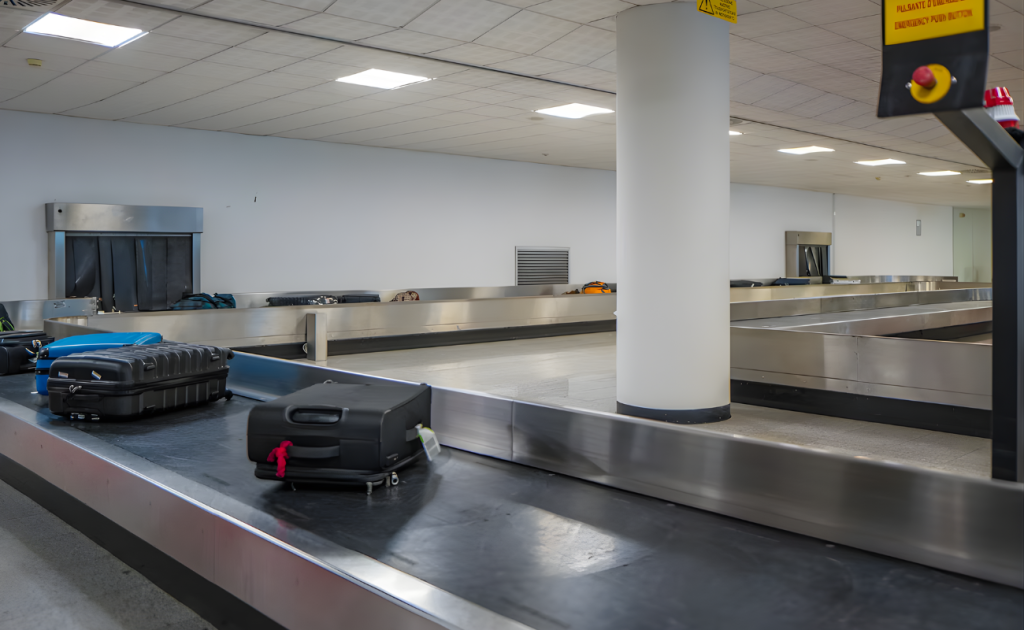
This is the single most important lithium battery rule in aviation: spare lithium batteries and power banks must be carried in the cabin, not checked. Aviation regulators and airlines treat loose (spare) batteries as higher risk because exposed terminals can short-circuit, and if a battery fails, the speed of detection and response matters.
Core Aviation Requirement (2026)
- Spare batteries: Carry-on only
- Power banks: Carry-on only
- Installed batteries inside devices (laptops, phones, tablets): Carry-on preferred; checked baggage is allowed in limited circumstances when the device is fully powered off and protected from accidental activation.
The practical reason is safety control. In the cabin, smoke or heat from a failing battery is noticed quickly and crew can respond immediately. In a cargo hold, a battery incident may go unnoticed longer, and response options are more limited.
Because of that risk difference, any spare lithium battery discovered in checked luggage is typically removed during screening, and it may be confiscated if it cannot be safely returned to you before departure.
Power Banks: What’s Allowed and What Isn’t
Power banks are regulated as spare lithium-ion batteries, not as “electronics accessories.” That classification matters because spare batteries carry a higher short-circuit and thermal runaway risk when packed loosely, which is why aviation rules treat them more strictly than devices with batteries installed.
In practical screening and airline enforcement, power banks are among the most frequently rejected battery items because travelers often pack them in checked luggage or carry units with no readable capacity marking. If staff cannot verify the rating from the label, they cannot confirm the power bank is within allowed limits.
Power Bank Rules (2026)
- Carry-on baggage only
- Never permitted in checked bags
- Capacity must be clearly labeled
- Terminals must be protected against short-circuiting
Power Bank Size Limits (Global Standard)
| Power Bank Capacity | Allowed? | Approval Needed |
| Up to 100 Wh | Yes | No |
| 100–160 Wh | Yes | Airline approval |
| Over 160 Wh | No | Prohibited |
More than 60% of confiscated power banks are removed because the capacity label is missing or unreadable.
A common confiscation trigger is a missing, worn, or unreadable capacity label, because screeners and airlines cannot verify compliance without it. Another frequent trigger is loose packing that leaves ports or terminals exposed, increasing the risk of short-circuiting in a bag.
Laptops and Tablets: Installed Battery Rules
Laptops typically contain batteries ranging from 40 to 99 Wh, placing them safely below approval thresholds.
Laptop Battery Facts
- Typical ultrabook battery: 45–60 Wh
- Typical business laptop: 60–80 Wh
- Gaming laptops may approach 99 Wh (airline limit)
Laptop Rules
- Allowed in carry-on bags
- Allowed in checked bags (airlines may restrict on some routes)
- Must be completely powered off if checked
- Must be protected from accidental activation
Some airlines prohibit laptops in checked bags during specific operations due to fire risk. For carry-on travel, laptops are always the safer option.
Phones, Wearables, and Small Devices
Phones and wearables contain small lithium-ion batteries, usually 3–15 Wh.
These devices account for very few safety incidents unless damaged.
Common Device Rules
- Allowed in carry-on and checked baggage
- Must be powered off or in airplane mode
- Damaged or recalled devices may be prohibited
Devices with swollen batteries are routinely confiscated due to fire risk.
Spare Batteries: The Hidden Risk Item
Spare batteries are a major risk because exposed terminals can short-circuit.
Spare Battery Rules
- Carry-on only
- No loose batteries
- Each battery must be individually protected
Acceptable Protection Methods
- Original retail packaging
- Dedicated battery cases
- Tape over exposed terminals
Loose batteries account for a significant percentage of mid-flight smoke incidents.
E-Cigarettes and Vapes
E-cigarettes and vaping devices are regulated in aviation primarily because they contain high-energy lithium-ion batteries, not because of the liquid or nicotine content. Aviation authorities classify vapes as a known ignition risk due to multiple documented incidents of devices overheating or activating unintentionally inside bags.
Vape Rules (2026)
- Carry-on baggage only: Vapes and e-cigarettes are prohibited in checked luggage because lithium battery fires in cargo holds are difficult to detect and suppress
- Checked baggage prohibited (100%): Any vape found in checked bags is subject to removal or confiscation during screening
- Accidental activation protection required: Devices must be powered off and protected so heating elements cannot activate inside a bag
Some countries ban possession entirely, regardless of airline rules.
Enforcement and Safety Data
- Lithium-battery-powered smoking devices account for a disproportionate share of battery fire incidents reported in passenger baggage due to accidental activation
- Multiple in-flight smoke events globally have been traced to vapes stored loosely without protective cases
- As a result, regulators mandate cabin carriage so any overheating can be detected within seconds
International Legal Considerations
- Airline approval does not override local law
- Several countries impose outright bans on possession of e-cigarettes and vaping devices, with penalties ranging from confiscation to fines
- Travelers may legally board a flight with a vape but still face enforcement upon arrival
Because of the combination of battery fire risk and destination-specific laws, e-cigarettes are one of the most strictly enforced personal electronic items in air travel despite their small size.
Bag structure and enforcement issues are detailed in Carry-On Luggage Rules 2026.
Items Most Commonly Confiscated at Airports
Airport security confiscations involving lithium batteries follow consistent, well-documented patterns driven by aviation safety rules rather than individual screener discretion. Across U.S. and international airports, enforcement actions are largely triggered by placement, labeling, size, and condition, not brand or intent.
Most Common Battery-Related Confiscations
- Power banks in checked bags: This is the single most frequent violation, as spare lithium-ion batteries are categorically prohibited in checked luggage due to cargo-hold fire risk
- Unlabeled power banks: If capacity (Wh or convertible mAh/voltage) is missing or unreadable, screeners cannot verify compliance, leading to removal or confiscation
- Loose spare batteries: Batteries carried without protective cases or terminal covers present a high short-circuit risk and are routinely removed
- Oversized batteries without airline approval: Batteries exceeding 100 Wh without documented airline authorization are commonly rejected at screening or boarding
- Damaged or recalled batteries: Swollen, leaking, or manufacturer-recalled batteries are considered unsafe and are confiscated immediately
These outcomes are governed by standardized safety protocols, not subjective judgment. Screeners are required to remove any battery that cannot be verified as compliant or safely packed, which is why most confiscations are preventable with correct labeling, placement, and protection.
Airline, TSA, and International Rule Hierarchy
Lithium battery rules in aviation follow a tiered regulatory structure designed to keep safety standards consistent across borders while allowing local authorities and airlines to manage risk. Understanding this hierarchy explains why enforcement can vary by country, airline, or route even for the same battery.
At the top level, ICAO and IATA establish global safety standards that define battery classifications, watt-hour thresholds, and where batteries may be carried on aircraft. These standards are then enforced by national aviation authorities such as the FAA in the United States or EASA in Europe, which may apply stricter controls based on local safety assessments. Finally, airlines are allowed to impose additional restrictions under their conditions of carriage.
When rules differ at any level, the most restrictive rule applies. For a battery to be allowed on a flight, it must comply simultaneously with international standards, national regulations, and the airline’s own policy.
International Travel: Where Rules Get Stricter
On international routes, lithium battery enforcement is often stricter than U.S. domestic travel, even though global standards are set by ICAO and IATA. Several countries have introduced tighter controls after documented in-flight battery incidents, focusing on capacity limits, labeling, storage location, and in-flight use, not just whether a battery is allowed on board.
Countries and regions known for stricter-than-U.S. enforcement include:
- South Korea: Limits the number of power banks per passenger, caps size at 100 Wh without exception, restricts in-flight charging, and requires batteries to remain accessible rather than stored overhead.
- Japan: Requires power banks to be kept visible or under the seat on some carriers, with bans on overhead bin storage and stricter control over in-flight use.
- China and Hong Kong: Enforce zero-tolerance policies for unlabeled batteries and restrict in-flight charging and storage practices on many airlines.
- Singapore: Allows power banks in carry-on within size limits but prohibits using or charging them on board on major carriers.
- Australia: Applies stricter airline-level limits on the number of power banks, bans in-flight charging on some carriers, and enforces immediate confiscation for non-compliance.
In these countries, unlabeled batteries, undocumented approvals for 100–160 Wh units, or improper storage can result in immediate confiscation, often with no option to remove the item from the trip. This is why travelers should always check airline-specific and destination-specific battery rules before departure, not just U.S. TSA or FAA guidance.
How to Pack Lithium Batteries Correctly
Most airport confiscations happen for three repeatable reasons: the item is in checked luggage, the battery is unprotected (terminals can short-circuit), or the capacity cannot be verified because the label is missing. Packing correctly removes nearly all enforcement risk because it directly addresses those failure points.
- Carry power banks in a personal item (not checked bags): Power banks are treated as spare lithium-ion batteries, which are carry-on only. Keeping them in a backpack or purse reduces the chance they’re accidentally checked and keeps them accessible if overheating occurs.
- Use cases for spare batteries (prevent short circuits): Spare batteries should be stored in original packaging or a dedicated battery case so terminals cannot touch metal objects (keys, coins, chargers). Short-circuiting is one of the main triggers for battery overheating incidents.
- Avoid damaged or swelling batteries (high rejection risk): Batteries that are swollen, leaking, cracked, or recalled are routinely refused because they are higher-risk for thermal runaway. If a battery shows physical deformation, do not travel with it.
- Verify capacity before you leave (100 Wh / 160 Wh thresholds): Standard passenger limits hinge on watt-hours: ≤100 Wh is allowed, 100 to 160 Wh requires airline approval, and >160 Wh is prohibited. If the Wh rating is not printed (or can’t be derived from mAh and voltage), the battery is more likely to be removed because staff can’t confirm compliance.
If you follow these steps carry-on placement, terminal protection, condition checks, and capacity verification you reduce screening problems to near zero and protect yourself from losing expensive gear at security.
Official Aviation Guidance
The most authoritative U.S. reference for flying with lithium batteries is the Federal Aviation Administration (FAA) PackSafe guidance, which airlines and airport security frequently align with for passenger carriage decisions.
That FAA guidance is the baseline travelers should use because it clearly defines:
- Carry-on requirements (especially for power banks and spare batteries)
- Watt-hour (Wh) thresholds that determine what’s permitted
- Approval thresholds (when airline permission is required)
- How spare batteries must be protected to prevent short-circuits
Common Myths (Corrected With Facts)
- “Small power banks can go in checked bags” → False (power banks are spare lithium-ion batteries and must be carry-on)
- “Capacity doesn’t matter if it’s small” → False (capacity determines whether approval is needed or the item is prohibited)
- “Confiscations are random” → False (most removals follow consistent triggers: checked placement, missing label, exposed terminals, damage)
- “mAh ratings are enough” → False (screeners and airlines often rely on Wh; mAh must be convertible using voltage)
Most battery losses at security are preventable by packing in carry-on, protecting terminals, and ensuring the capacity label is readable.
Most losses are avoidable with basic preparation.
Who Is Most at Risk of Confiscation
- Casual travelers unfamiliar with battery limits (most likely to pack power banks in checked bags)
- Travelers using aftermarket or unlabeled power banks (capacity cannot be verified)
- Travelers packing at the airport (more errors, less time to correct)
- International travelers (stricter enforcement and lower tolerance for missing labels or unclear approvals)
For casual-flyer risk reduction, see Best Frequent Flyer Strategies for the Casual Traveler.
Conclusion
Flying with lithium batteries in 2026 is safe, routine, and fully permitted when rules are followed. The vast majority of problems occur not because items are banned, but because they are packed incorrectly, unlabeled, or placed in checked baggage.
Power banks and spare batteries must always stay in carry-on luggage, with capacity clearly labeled and terminals protected. Installed batteries in devices like laptops and phones are broadly allowed, but damaged or oversized batteries quickly trigger enforcement.
When travelers understand real size limits, approval thresholds, and packing requirements, lithium batteries stop being a risk and become just another normal part of modern air travel.
FAQs
Can I bring a power bank on a plane?
Yes, but only in carry-on luggage and within size limits.
Are laptops allowed in checked bags?
Usually yes, but carry-on is safer and preferred.
Why can’t lithium batteries go in checked luggage?
Because fires in cargo holds are harder to detect and control.
Do international rules differ?
Yes. Some countries enforce stricter limits than U.S. rules.
What happens to confiscated batteries?
They are typically destroyed and not returned.
For more safety rules, packing guides, and airline policy breakdowns, visit TalkTravel.
Related posts:
 Airport Starlink Wi-Fi 2026: Which Airports Use It, How Fast It Is, and What Travelers Should Know
 Turbulence Anxiety in 2026: Tools, Seat Choices, and What Actually Helps
 Traveling With Kids Internationally in 2026: Seating, Bassinets, and Airline Policies
 United Airlines Boarding Groups: How They Work, WILMA, & Boarding Smarter