Quick Takeaways
- If you travel internationally even 1–2 times per year, Global Entry is usually the best value because it includes TSA PreCheck and adds expedited U.S. customs.
- If you only fly domestically, TSA PreCheck is the lowest-cost “quality of life” upgrade for security screening.
- CLEAR is the only option that can “skip to the front,” but it is expensive unless your credit card or airline status covers it.
- If two people in your household plan to enroll in PreCheck, act before Dec 31, 2025 to lock the $15 discount on the second enrollment.
- In 2026, the fastest setup for frequent flyers is typically Global Entry and CLEAR (only if CLEAR is free/reimbursed), because Global Entry includes TSA PreCheck and CLEAR can move you to the front of the lane.
Introduction
TSA PreCheck, Global Entry, and CLEAR all promise faster airport lines, but they solve different problems and in 2026 the cost differences are large enough that getting the wrong one is an expensive mistake.
CLEAR is now $209 per year, Global Entry is $120 for five years, and TSA PreCheck pricing varies by enrollment provider. Add in the limited-time TSA PreCheck family deal and the new kids under 18 Global Entry fee rule, and the best choice depends on how you actually travel: domestic vs. international, airport hubs vs. smaller markets, solo vs. family, and whether you can get reimbursements.
If you want the most up-to-date, practical checklist for what happens when airport systems break (cancellations, missed connections, involuntary rebooking), keep TalkTravel’s refunds explainer bookmarked so you’re not improvising at the counter.
Quick Comparison Chart
| Feature | TSA PreCheck | Global Entry | CLEAR |
| Cost | $78-$85 (5 years) | $120 (5 years) | $209 (annual) |
| Effective Annual Cost | $15.60-$17 | $24 | $209 |
| Domestic Flights | Expedited security | Expedited security | Skip to front of line |
| International Arrivals | No benefit | Expedited customs | No benefit |
| Children Under 18 | Free with parent | Free with parent (since Oct 2024) | Free in lane with member |
| Airports | 200+ | 75+ (for customs) | 50+ |
| Valid Period | 5 years | 5 years | Annual renewal |
| Background Check | Required | Required (more extensive) | Optional (for facial recognition) |
| Interview | In-person | In-person | None |
| Processing Time | 3-5 days | 48 hours – 2 weeks (improved in 2025) | Instant at airport |
| Keep Shoes On | Yes | Yes (includes TSA PreCheck) | No (unless you also have PreCheck) |
| Keep Laptop In Bag | Yes | Yes (includes TSA PreCheck) | No (unless you also have PreCheck) |
| Best For | Frequent domestic travelers | International travelers (2+ trips/year) | Travelers with premium credit cards |
What Each Program Actually Does
TSA PreCheck: The domestic security fast lane
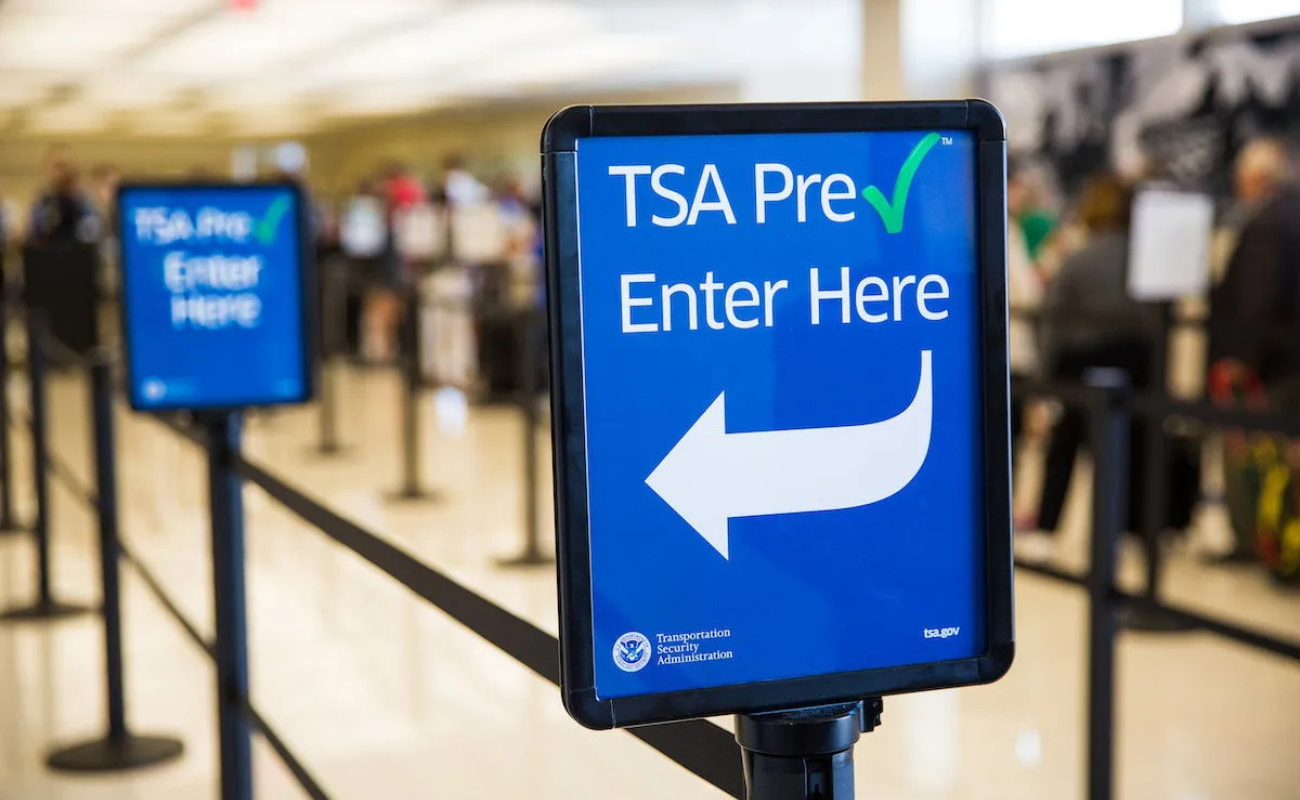
TSA PreCheck gives you access to dedicated PreCheck lanes at hundreds of U.S. airports, and it typically reduces what you have to take off or take out (shoes, laptops, liquids). You still wait in the PreCheck queue, but it’s usually shorter and more predictable.
What you get:
- Dedicated TSA PreCheck lanes at 200+ U.S. airports
- Typically keep shoes/belt/light jacket on
- Typically keep laptops and liquids in your bag
- Valid for 5 years
What you don’t get:
- No expedited U.S. customs benefit
- No benefit at non-U.S. security checkpoints
- No “line cutting”you still queue, just in a faster lane
Important context for 2026: TSA announced a major policy change in July 2025 allowing passengers to keep shoes on at TSA checkpoints, which narrows one specific advantage PreCheck had over standard screening. PreCheck still offers process simplification and typically faster lanes, but you should evaluate it primarily as a “time + friction reduction” program, not just “shoes.”
Global Entry: International traveler’s Swiss Army knife
Global Entry includes the full TSA PreCheck benefit set and adds expedited entry when returning to the U.S. from abroad. It’s the option that combines domestic security speed + international arrival speed in one membership.
What you get:
- TSA PreCheck included
- Expedited U.S. customs on international return
- Valid for 5 years
- Additional border processing benefits (depending on lane/partner programs)
What you don’t get:
- It only speeds up entry into the U.S., not entry into other countries
- It requires a more extensive background check and an interview
- The fee is generally non-refundable if denied (plan for eligibility before applying)
Family highlight: the Global Entry rule change that exempts minors from the fee when a parent/legal guardian is a participant or applying is a major cost reducer for families.
CLEAR: The line-cutting service

CLEAR is the only one of the three that can move you toward the front of the security line through identity verification, but it does not replace TSA screening rules unless you pair it with PreCheck. CLEAR’s value is highly airport-dependent: it can be excellent at certain hubs and underwhelming when the CLEAR lane itself backs up.
What you get:
- “Skip to the front” access (regular or PreCheck lanes where available)
- Biometric identity verification
- Enrollment can be quick at participating airports
- Annual membership model
What you don’t get:
- No expedited customs benefit
- No reduced screening rules unless you also have TSA PreCheck/Global Entry
- Limited airport footprint compared with PreCheck
- Annual cost is high ($209/year).
Real Wait Time Comparison: How Much Time Do You Actually Save?
The realistic time savings come from two variables: (1) which line you’re eligible to use and (2) how crowded the program’s lane is at your home airport.
Use this operational benchmark when deciding:
- TSA PreCheck is built for consistent “most of the time” improvements.
- CLEAR is built for “worst-day insurance” (when the line is terrible), but it can lose value if the CLEAR pod line is also long.
- Global Entry is the only one that can reliably compress international arrival waits (customs), which can be a big time win on peak arrival banks.
Cost Breakdown: The True Price (What You’ll REALLY Pay)
TSA PreCheck costs
Application fees vary by provider. (Use the official TSA family promo page for the limited-time discount details.)
- IDEMIA: $76.75 (new) | $58.75 (online renewal) | $66.75 (in-person renewal)
- CLEAR: $79.95 (new) | $69.95 (online renewal) | FREE renewal (if enrolled through CLEAR)
- Telos: $85 (new) | $70 (renewal)
Family bundle deal (expires December 31, 2025):
- First person: Regular price ($76.75-$85)
- Second person: $15 OFF (save $15)
Effective cost:
- Per year: $15.35-$17 per year
- Per trip (10 trips/year): $1.54-$1.70 per trip
- Per trip (20 trips/year): $0.77-$0.85 per trip
Global Entry costs
- New application: $120 (increased from $100)
- Renewal: $120
- Children under 18: FREE (when parent/guardian is member or applying)
Effective cost:
- Per year: $24
- Per international trip (2/year): $12 per trip
- Per international trip (4/year): $6 per trip
Includes: Full TSA PreCheck benefits (a $78-85 value)
Family savings (as provided in your brief):
- Before October 2024: Family of 4 = $400 every 5 years
- After October 2024: Family of 4 with 2 kids under 18 = $240 every 5 years (saves $160)
CLEAR costs
Standard pricing:
- Individual membership: $209/year
- Family add-on (up to 3 people): $125 each
- Children under 18: FREE in lane with member
Reality check for budgeting: CLEAR is an annual fee product, so over five years it is dramatically more expensive than the government programs.
TSA PreCheck Deep Dive
What makes it worth it
TSA PreCheck is worth it because it delivers consistent benefits across a broad network of U.S. airports and airlines, making it a reliable domestic security upgrade for most travelers. Once enrolled, you can expect a more predictable experience at security, even during busy travel periods.
It also reduces friction at the checkpoint. In many lanes, TSA PreCheck allows you to move through screening with fewer “take off / take out” requirements, which shortens processing time and makes security less disruptive overall.
Finally, TSA PreCheck offers strong long-term value. TSA data consistently shows that most PreCheck travelers wait under 10 minutes, children 17 and under can usually use the lane with a parent, and the five-year validity means you enroll once and benefit for years before needing to renew.
Downsides you must plan for
There are a few downsides you need to plan for. First, the benefit is not always guaranteed. TSA applies “unpredictable security measures,” which means some travelers with an active PreCheck membership may still be directed into standard screening on a given trip.
It only applies to security screening when departing U.S. airports, which is why travelers who take international trips are usually better served by Global Entry, since it includes TSA PreCheck and adds expedited U.S. customs on return.
During peak travel periods such as holidays or severe weather disruptions, waits of 10–15 minutes are still possible at large airports, even though PreCheck is typically faster than standard security.
Global Entry Deep Dive
What makes it the best value
Global Entry offers the best overall value because it effectively combines two programs in one delivering full TSA PreCheck benefits plus expedited U.S. customs for only a modest cost increase over PreCheck alone while providing substantial time savings on international returns, offering free enrollment for children that can significantly reduce a family’s total cost, and featuring faster approval timelines than in the past, even though applicants still need to plan for conditional approval and an in-person interview.
For the official fee rule and program details, reference CBP’s announcement on Trusted Traveler Program fee changes.
CLEAR Deep Dive
What makes it unique
- True line cutting: CLEAR can move you to the front of the line (its key differentiator).
- Quick enrollment at participating airports.
- Best paired with TSA PreCheck: CLEAR + PreCheck is the “speed combo” because you skip ahead and keep the simplified screening process.
Downsides you must budget for
- Expensive annual fee: $209/year.
- Diminishing returns at busy hubs if CLEAR lines themselves build.
- Limited airport coverage compared with PreCheck.
- Not a screening shortcut without PreCheck: without PreCheck, you still follow standard screening requirements.
Who should get CLEAR (2026)
- Best for: frequent travelers who get CLEAR free via credit card benefits or elite status, and travelers who repeatedly face long lines at the same hub airports.
- Skip if: you’re paying full price out of pocket and don’t fly frequently, or CLEAR is not present at your typical airports.
Head-to-Head Comparison (What to Choose)
TSA PreCheck vs. Global Entry
If you only fly domestically, TSA PreCheck is usually cheaper. If you take even 1 to 2 international trips a year, Global Entry is typically the better buy because it includes TSA PreCheck and adds expedited U.S. customs so Global Entry wins for most international travelers.
TSA PreCheck vs. CLEAR
CLEAR can be faster on the worst days, but it’s expensive unless reimbursed. TSA PreCheck is cheaper and available at more airports, so PreCheck wins for most people paying out of pocket.
Global Entry vs. CLEAR
Global Entry speeds up U.S. re-entry after international travel; CLEAR doesn’t. CLEAR also costs more annually, so Global Entry wins.
Who Should Get What?
Use these scenarios as your selection logic:
If you fly 6+ times a year and mostly domestic, get TSA PreCheck.
If you take 1 to 2 international trips a year, get Global Entry (it includes PreCheck plus faster U.S. re-entry).
If you fly more than 15 to 20 times a year or have a family with kids under 18, start with Global Entry for adults and add CLEAR only if it’s reimbursed/free; if you fly <2 times a year, usually skip all three unless you want PreCheck purely for stress reduction.
How to Get These Programs for FREE (or close to it)
CLEAR only makes consistent financial sense for most travelers when you’re not paying the $209 annual fee out of pocket. Use a simple cost-minimization approach: first, confirm whether your premium travel credit card reimburses TSA PreCheck or Global Entry application fees; then, if your card also covers CLEAR, treat CLEAR as an add-on speed boost rather than your primary program. Finally, if you’re enrolling two family members in TSA PreCheck (and choosing it instead of Global Entry), use the $15 second-enrollment discount before Dec 31, 2025 to lock in the savings.
Enrollment Process & Timeline (What to Expect)
TSA PreCheck enrollment starts with a short online application, followed by scheduling an appointment (or walking in where available) to complete in-person identity verification; after that, you wait for approval and receive your Known Traveler Number (KTN). Approvals are often quick, but you should still build in buffer time before major trips.
Global Entry enrollment requires applying through the Trusted Traveler Programs (TTP) system, waiting for conditional approval, and completing an in-person interview; once approved, you receive a PASS ID that also functions as your TSA PreCheck KTN.
CLEAR enrollment is the fastest to activate because you can enroll directly at a participating airport location, complete biometric setup, and start using it immediately where available—just plan for the annual renewal cost unless it’s reimbursed through a credit card or elite status.
Can You Have All Three? Should You?
Yes, you can have TSA PreCheck, Global Entry, and CLEAR simultaneously. The question is whether you should pay for all three.
- If you pay full price: it rarely makes sense to pay for CLEAR plus the government programs unless you are extremely frequent (think weekly travel) and you routinely face long lines at CLEAR airports.
- If you get CLEAR reimbursed: Global Entry + CLEAR is the most efficient setup for frequent travelers because Global Entry gives you TSA PreCheck plus fast U.S. re-entry, and CLEAR can move you to the front of the security lane on peak days.
If you want to understand where biometrics are heading (and how to opt out when available), read TalkTravel’s guide to biometrics at airports in 2026 so you’re not surprised by facial capture policies at checkpoints and boarding gates.
Common Mistakes to Avoid
- Getting TSA PreCheck when you actually travel internationally and should have chosen Global Entry.
- Paying full price for CLEAR without confirming reimbursements or airline status discounts.
- Missing the TSA PreCheck $15 family promo window if two people in your household plan to enroll.
- Forgetting to add your KTN/PASS ID to airline profiles, which prevents the PreCheck indicator from appearing on boarding passes.
- Assuming CLEAR is always faster; at some airports, regular PreCheck can be quicker when CLEAR is crowded.
For day-of-travel execution, pair whichever program you choose with a carry-on-first strategy so you’re not losing time to bag checks and repacking at the belt line.
Conclusion
In 2026, the decision is mostly economic: Global Entry is the most complete government program because it includes TSA PreCheck and adds fast U.S. re-entry, while CLEAR is a premium line-skipping add-on that only makes consistent sense when it’s reimbursed or free. If you travel internationally at least once per year, prioritize Global Entry first. If you only fly domestically, TSA PreCheck remains the simplest value play. If you’re considering CLEAR, decide based on your home airport behavior and your reimbursement eligibility, because $209 per year is a recurring cost that can outpace the savings for most travelers.
For more step-by-step airport strategy guides you can apply on your next trip, read the latest on TalkTravel
Frequently Asked Questions
Q1: What’s the difference between TSA PreCheck and Global Entry?
Global Entry includes TSA PreCheck benefits and adds expedited U.S. customs when returning from international travel. TSA PreCheck is focused on domestic (U.S.) security screening lanes.
Q2: How much does CLEAR cost in 2026?
CLEAR Plus is $209 per year, with higher pricing for adult family add-ons.
Q3: Can children use TSA PreCheck for free?
Children 17 and under can typically use the TSA PreCheck lane when traveling with a parent/guardian who has PreCheck and the PreCheck indicator appears on the boarding pass.
Q4: Which credit cards reimburse Global Entry?
Many premium travel cards provide statement credits for Global Entry. Verify your card’s benefit terms before paying, and ensure you pay the application fee with the eligible card.
Q5: Is CLEAR worth the money?
CLEAR is hardest to justify at full price. It’s most worth it when you get it reimbursed/free and you consistently fly through airports where CLEAR materially reduces long lines.
Q6: How long does Global Entry approval take?
Approval timelines vary by applicant and require conditional approval plus an interview. Plan ahead and avoid applying right before peak travel seasons.
Q7: Can I have both TSA PreCheck and Global Entry?
You can, but you generally don’t need both because Global Entry includes TSA PreCheck benefits.
Q8: What happens if the TSA PreCheck doesn’t show on my boarding pass?
Common causes include missing KTN in the airline profile, name mismatches, or airline/route eligibility issues. Confirm your KTN is added to the reservation and matches your ID exactly.