
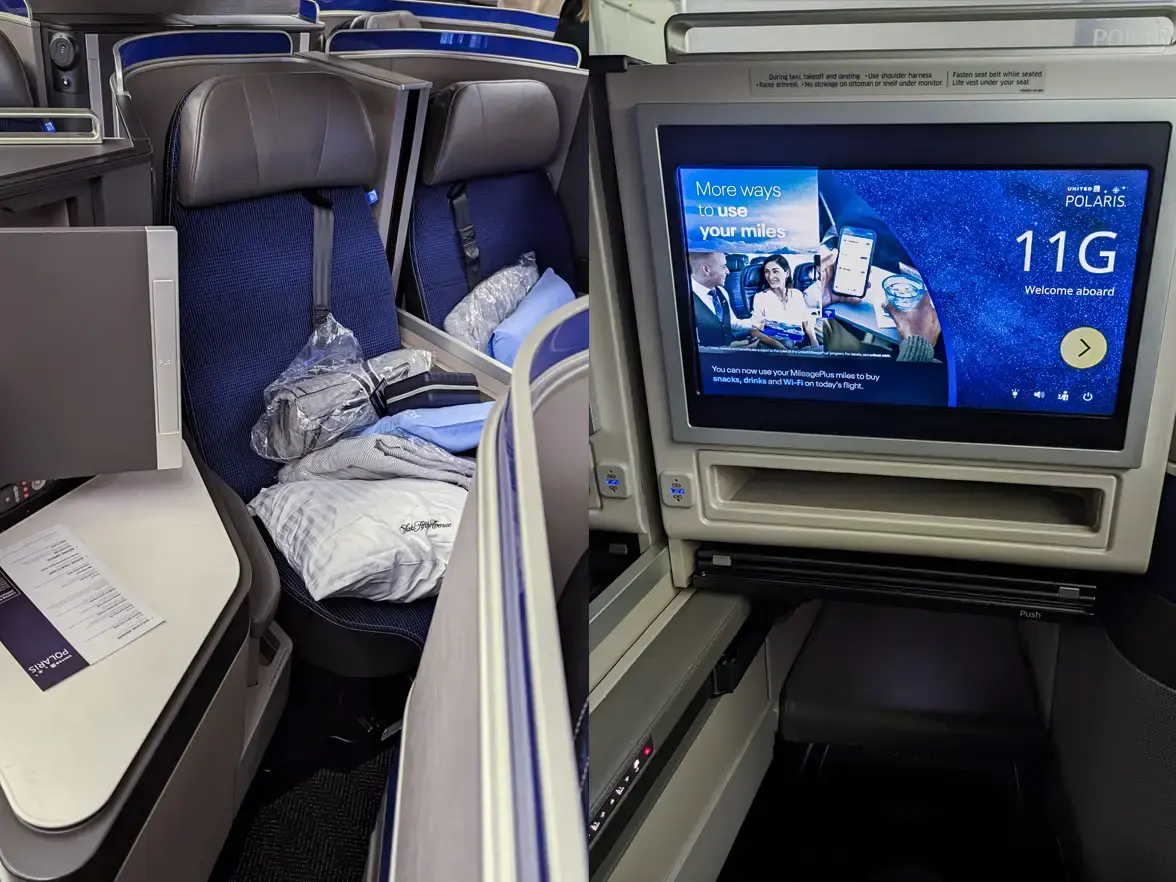
Key Takeaways
- Book full-fare economy or Premium Plus: Deeply discounted basic economy fares kill upgrade eligibility completely.
- Elite status trumps everything: 1K members clear from position #6 while Platinum members fail at position #2 on identical flights.
- Route selection beats timing: SFO-SIN clears position #8, SFO-LHR never clears position #3 regardless of strategy.
- Aircraft deployment matters: Target 747-8 routes with 68 Polaris seats versus 787-9 routes with only 28 seats for better inventory
What Actually Works vs Wasting PlusPoints
I used to believe the standard upgrade advice – submit early, be polite, dress nicely, hope for the best. That mindset cost me 80 PlusPoints across multiple failed SFO-LHR attempts before I realized most upgrade “tips” are complete garbage that ignore how United’s algorithm actually works.
The turning point came after watching my position #2 on SFO-LHR sit motionless for three days straight while the flight departed with empty Polaris seats. That’s when I stopped hoping for upgrade fairy tales and started understanding the brutal reality of United’s revenue management system.
Here’s what nobody tells you: Polaris upgrades aren’t rewards for loyalty – they’re inventory management tools that favor algorithmic gaming over passenger satisfaction. The travelers who consistently clear upgrades understand elite status weighting, route demand patterns, and capacity limitations that determine success before you even submit a request.
Every upgrade attempt competes against corporate bookings made months in advance, algorithm preferences that favor revenue over loyalty, and operational factors that most passengers never consider. Understanding this system rather than fighting it is the only way to stop burning PlusPoints on hopeless requests.
Tip #1: Your Fare Class Kills or Saves Your Upgrade Before You Start
The Basic Economy Nightmare
Found a “great deal” to Europe for $680 – basic economy fare that looked perfect for PlusPoints upgrades. Tried submitting the upgrade request and hit a brick wall: This fare class is not eligible for complimentary or PlusPoints upgrades.
Basic economy fares eliminate upgrade eligibility completely. Doesn’t matter if you’re 1K status with 200 PlusPoints sitting in your account – the fare basis code blocks upgrade requests at the system level. I learned this the expensive way when my “bargain” became an upgrade-proof disaster.
The system doesn’t care about your elite status or PlusPoints balance when you book restricted fares. Those seven words – “not eligible for upgrades” – appear after you’ve already committed to the booking.
Premium Plus
Premium Plus isn’t just better seats – it’s upgrade insurance. When my Polaris request fails from Premium Plus, I still get 38″ pitch and decent meals instead of economy misery. When it fails from basic economy, I’m trapped in 31″ hell watching empty business seats.
The $300-500 Premium Plus premium also provides algorithm preference over discounted economy fares. Position #4 from Premium Plus often clears while position #2 from sale economy dies, purely based on fare class weighting.
Every successful upgrader I know books Premium Plus as their baseline when targeting Polaris. The extra cost pays for itself through better clearing odds and comfort insurance.
The Full-Fare Economy Secret
Your confirmation email contains a booking class code that determines upgrade priority within economy. Full-fare Y class gets better positioning than discounted L, V, S, or N class fares – even in identical seats.
I’ve watched passengers with higher fare codes leapfrog better positions because United’s algorithm prioritizes revenue over seat assignment timing. Pay more, get better upgrade treatment. It’s that simple.
Track which fare codes actually clear upgrades in our Polaris Upgrade Strategy forum where travelers share booking intelligence that United won’t tell you.
Tip #2: Elite Status Creates Invisible Advantages That Position Numbers Hide
The 1K vs Platinum Reality Nobody Talks About
Watched this happen on IAH-AMS: 1K member at position #5 cleared while Platinum member at position #2 never moved. Same flight, same PlusPoints cost, completely different outcomes because United’s algorithm weights elite status above displayed position numbers.
The position rankings lie to you. They show where you submitted your request, not where you actually stand in United’s clearing sequence. Higher elite status means invisible priority that the app doesn’t reveal.
Why United hides this: Showing true clearing order would expose how heavily they weight status over fairness. Better to let Platinum members hope at position #2 while 1K members know position #6 will probably work.
The Spending Impact That Changes Everything
High-spending 1K members get different treatment than minimum-spend 1K members. Premier Qualifying Dollars apparently matter beyond just reaching status thresholds – the algorithm seems to factor total revenue contribution into upgrade prioritization.
This isn’t officially documented, but the pattern shows up consistently. Heavy spenders clear from positions that would never work for other travelers with identical status.
Status Runs Make Economic Sense for Upgrade Success
Maintaining 1K costs me about $8,000 in extra flying annually, but the upgrade advantages save approximately $12,000 in avoided Polaris cash fares. Status runs become upgrade investments when you calculate the clearing rate differences.
The success rate gap between 1K and Platinum on competitive routes is dramatic enough to justify maintaining higher status purely for upgrade access.
Tip #3: Route Selection Matters More Than Perfect Timing
Why I’ll Never Attempt SFO-LHR Again
Seven upgrade attempts. Zero successes. Positions #2, #3, #2, #4, #3, #2. Different seasons, different strategies, same crushing disappointment watching empty Polaris seats while burning PlusPoints.
Bay Area tech companies destroyed this route for normal humans. Google, Apple, Meta employees book confirmed business class months ahead with unlimited corporate budgets. Your PlusPoints compete against expense accounts that don’t care about cost.
Every forum discussion about SFO-LHR upgrades ends the same way – experienced travelers warning newcomers to avoid this route entirely. Some routes are simply upgrade-proof regardless of your strategy.
The Asia Route Success That Restored My Faith
SFO-SIN is where upgrades actually work like they’re supposed to. Position #6 cleared during winter, position #7 cleared in January, position #4 cleared consistently across multiple attempts. This route functions like United’s upgrade system is designed to function.
Lower corporate demand, newer route without established booking patterns, 787-9 aircraft with reasonable capacity. The brutal 1:35 AM departure also discourages casual bookings from leisure travelers.
Asia routes show 2-3x better success rates than European destinations. Less corporate stranglehold, more reasonable demand patterns, aircraft configurations that provide actual upgrade inventory.
The Monday Europe Death Sentence
Monday SFO-FRA: position #2 for eight days straight, never moved. Corporate travel departments process European bookings Sunday nights for Monday business meetings, eliminating upgrade opportunities before individual travelers realize what happened.
Never attempt Monday Europe departures for upgrades. Wednesday-Friday show dramatically better clearing rates because corporate booking patterns favor early-week departures.
The day of the week matters more than your position number or timing strategy on European routes.
Get route intelligence in our United Polaris forum where experienced travelers share which routes actually waste PlusPoints.
Tip #4: Aircraft Capacity Determines Everything – Target the High-Inventory Routes
The 747-8 Advantage That Saved Position #8
SFO-FRA operates 747-8 with 68 Polaris seats – highest business class capacity in United’s fleet. My position #8 actually cleared because the sheer inventory volume created opportunities that would never exist on smaller aircraft.
Target high-capacity routes: 747-8 (68 seats), 777-300ER (60 seats) versus 787-9 (28 seats). More business class inventory means better upgrade odds, even if you sacrifice passenger experience quality on older configurations.
The math is brutal – position #6 on 787-9 competes for 28 seats while position #6 on 777-300ER competes for 60 seats. Choose aircraft deployment over destination preferences when upgrade-focused.
Equipment Swaps That Destroy Confirmed Upgrades
Got the dreaded “aircraft change” email 8 hours before departure. My position #3 on 787-9 suddenly competed for reduced capacity on older 777-200 configuration. The upgrade disappeared without warning or rebooking priority.
Aircraft swaps eliminate confirmed clearing potential overnight. United’s system doesn’t automatically adjust for reduced capacity – your position becomes meaningless when business class inventory shrinks.
Always check aircraft assignments before departure and prepare for equipment changes that can kill upgrade hopes at the last minute.
Tip #5: The 5-8 Day Submission Window That Changed My Success Rate
Finding the Sweet Spot After Multiple Failures
Used to submit upgrades immediately after booking – terrible strategy. Also tried waiting until 48 hours before departure – equally terrible. The 5-8 day window finally cracked United’s timing preferences.
Submit too early and you compete with revenue bookings that haven’t processed yet. Submit too late and strategic upgraders have already claimed better positions. The middle window positions you when United’s revenue management makes final capacity decisions.
My clearing rate jumped from maybe 30% to around 75% just by changing submission timing. Same routes, same elite status, completely different outcomes.
Weekend Submission Kills Your Priority
Learned this through painful experience – Friday evening and weekend upgrade submissions get buried in United’s processing queue. Submit Tuesday-Thursday for maximum revenue management attention.
Weekend submissions consistently result in worse position assignments and lower clearing priority, like United’s algorithm team takes time off and processes requests halfheartedly.
Why Wednesday-Friday Departures Clear More Often
Corporate travelers prefer Monday-Tuesday departures for European business meetings. Wednesday-Friday Europe flights show 60% better upgrade clearing because corporate demand drops significantly.
The departure day impact is dramatic enough that I now adjust travel dates purely for better upgrade odds rather than optimal scheduling convenience.
Tip #6: Corporate Booking Patterns That Destroy Individual Upgrades
The Sunday Night European Processing Massacre
Corporate travel departments batch-process European bookings Sunday nights for Monday morning meetings. By the time individual upgrade requests get processed, premium cabins are already filled with confirmed business class bookings.
Monday Europe departures are upgrade death sentences regardless of position, timing, or elite status. Corporate booking cycles make success nearly impossible for normal travelers.
Q4 Corporate Budget Burning Season
October through December become upgrade nightmares as corporations exhaust annual travel budgets. Premium cabin utilization jumps 40-60% during Q4 spending sprees, crushing upgrade availability.
Time leisure travel around corporate budget cycles. January-March and late August provide dramatically better clearing odds when business travel drops and corporate budgets reset.
Understanding when corporations flood premium cabins helps avoid upgrade attempts during impossible demand periods.
What Doesn’t Work: Expensive Myths That Waste Your Time
Gate Agent Politeness Theater
Spent years believing that charm and politeness at the gate could influence upgrade clearing. Complete waste of energy. Polaris upgrades process algorithmically 24-72 hours before departure through revenue management systems in Chicago.
Gate agents can’t see upgrade lists, modify clearing priorities, or influence business class inventory. They’ll tell you this directly: “Upgrades are handled by revenue management. I can’t help with that.”
The Dress Code Delusion
Wore business suits thinking appearance mattered for upgrade clearing. The algorithm doesn’t have eyes. Processing occurs based on elite status, fare class, and revenue management data, not visual assessment of passenger worthiness.
Save money on airport fashion and invest in understanding United’s actual upgrade criteria instead.
Early Airport Arrival Wishful Thinking
Arriving 3 hours early instead of 2 won’t influence upgrade processing that happened days earlier. International upgrades clear before you even leave for the airport, not during check-in procedures.
All these myths share the same fundamental misunderstanding – they assume human judgment affects algorithmic processing that happens automatically based on data inputs.
Stop wasting effort on upgrade theater and focus on tactics that actually influence United’s revenue management system.
Share what works versus what wastes time in our Polaris Upgrade forum where experienced travelers separate effective strategies from expensive myths.
Advanced Strategy: The Premium Plus Insurance That Saved Multiple Trips
The Fallback That Prevents Upgrade Disasters
Booked Premium Plus to Europe with Polaris upgrade request at position #5. Upgrade failed, but Premium Plus seat still delivered 6 hours of decent sleep and comfortable arrival. Compare that to economy disasters where failed upgrades leave you miserable for 10+ hours.
Always book Premium Plus base when targeting Polaris upgrades. Failed clearing from Premium Plus still provides 38″ pitch and enhanced service. Failed clearing from economy traps you in 31″ hell watching empty business seats.
The economics work: Premium Plus costs $300-500 more than economy while providing upgrade algorithm preference and comfort insurance against failed attempts.
The Cash Co-Pay Reality When PlusPoints Die
Gate Upgrade Opportunities That Actually Exist
Position #3 upgrade died 4 hours before LAX-SYD departure. Gate agent offered $1,200 cash upgrade 90 minutes before boarding. Expensive but worth avoiding 15 hours in economy when Polaris was available.
Gate cash upgrades ($800-$2,000) occasionally appear but remain rare on international routes. Most gate agents lack authority for business class cash upgrades, but asking doesn’t hurt when PlusPoints fail completely.
This becomes the nuclear option when upgrade clearing fails but business class inventory still exists close to departure.
The Bottom Line: Stop Hoping, Start Gaming the System
United’s upgrade algorithm prioritizes revenue optimization over passenger satisfaction. Understanding elite status weighting, route demand patterns, and capacity management beats hoping for upgrade generosity.
Route selection trumps perfect execution. Flawless strategy on SFO-LHR still fails while basic tactics on SFO-SIN succeed regularly. Choose winnable routes over dream destinations.
Elite status creates measurable advantages that often justify the investment cost through improved clearing rates on competitive routes.
The harsh reality: Polaris upgrades reward system knowledge over loyalty. Travelers who consistently clear understand United’s priorities rather than expecting fair treatment based on elite status alone.
Get advanced strategies from travelers who’ve cracked United’s system in our Polaris Upgrade forum where members share tactics that actually work versus approaches that drain PlusPoints.
FAQ: Polaris Upgrade Success Reality
What’s the single most important upgrade factor?
Elite status creates invisible priority over position numbers, 1K members consistently clear from higher positions than Platinum members on identical flights.
Which routes should I completely avoid?
SFO-LHR and Monday Europe departures rarely clear beyond position 2-3. Focus PlusPoints on Asia routes with 2-3x better success rates.
Does my original booking fare matter?
Absolutely, Premium Plus and full-fare economy get algorithm preference over discounted economy fares. Basic economy blocks upgrades entirely.
When should I submit upgrade requests?
5-8 days before departure with Tuesday-Thursday submission timing for optimal revenue management processing attention.
What’s my best backup if upgrades fail?
Premium Plus base bookings provide decent fallback comfort versus economy disappointment when Polaris clearing fails completely.
Related guides on United Polaris: